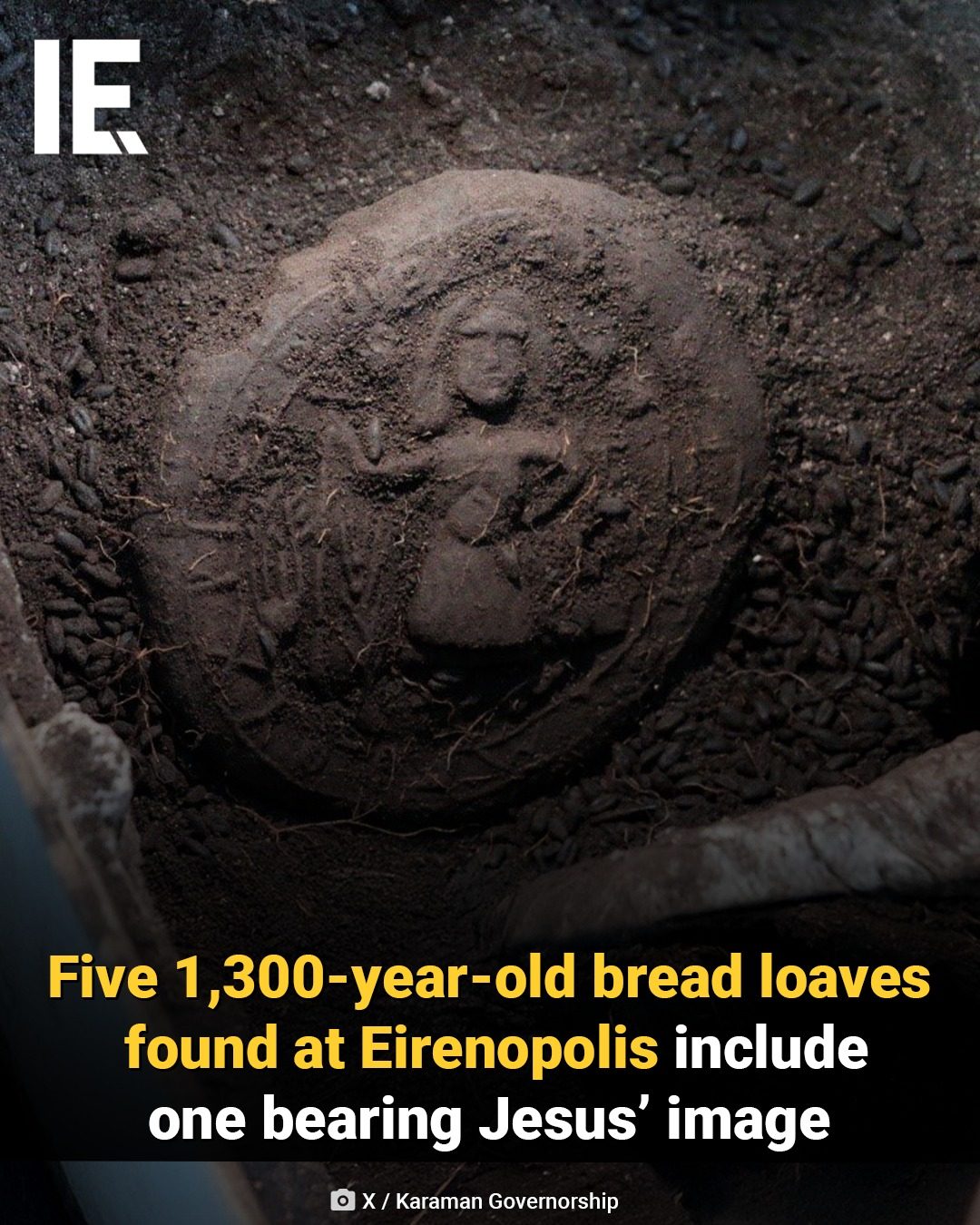
Ancient Bread Loaves
In the heart of ancient Eirenopolis, Turkey, archaeologists have unearthed a remarkable find: five carbonized bread loaves dating back to the 7th and 8th centuries. Among these ancient loaves, one bears an image of Jesus as a sower, accompanied by a Greek inscription that reads, “With our gratitude to the Blessed Jesus." This extraordinary discovery provides a unique glimpse into the rituals and practices of early Christianity, preserved in a way that is both rare and fascinating.
Context / Why this matters
These ancient bread loaves are more than just historical artifacts; they are tangible relics that offer a direct connection to the religious and cultural practices of early Christians. The carbonization process, combined with long-term burial, has preserved these loaves in an exceptional state. This level of preservation is incredibly rare for organic materials, particularly those as old as these. Such discoveries are invaluable for historians and archaeologists, as they provide concrete evidence of early Christian rituals and daily life.
Main discussion
The Discovery at Eirenopolis
The five bread loaves were discovered at Topraktepe, the site of ancient Eirenopolis in Turkey. This region, rich in historical significance, has yielded many significant archaeological finds over the years. The loaves were carbonized, a process that occurred due to fire, which preserved them for centuries. The exceptional condition of these loaves is a testament to the unique environmental conditions at the site, which have allowed them to survive so well.
The Significance of the Jesus Depiction
One of the loaves features a depiction of Jesus as a sower, an image that holds deep symbolic meaning in Christian tradition. In the New Testament, Jesus often uses agricultural parables to teach his followers about faith and the kingdom of God. The sower parable, in particular, is one of the most well-known and widely interpreted. Seeing this image on a bread loaf from the 7th-8th centuries underscores the importance of these parables in early Christian worship and ritual. The Greek inscription "With our gratitude to the Blessed Jesus" further emphasizes the reverence and gratitude that early Christians held for their faith.
The Ritual and Cultural Context
The discovery of these loaves provides valuable insights into the rituals and practices of early Christians. Bread has long been a central element in Christian rituals, symbolizing life and sustenance. The presence of religious images and inscriptions on the loaves suggests that they were used in religious ceremonies, possibly as part of communal meals or offerings. This find helps to paint a clearer picture of how early Christians practiced their faith and the significance of bread in their rituals.
The Role of Preservation
The preservation of these loaves is a remarkable feat of archaeology. Carbonization and long-term burial have worked together to maintain the structural integrity of the bread, allowing for detailed examination and study. This level of preservation is particularly significant for organic materials, which are often degraded over time. The environmental conditions at Eirenopolis, combined with the archaeological methods used to excavate the site, have played a crucial role in preserving these artifacts for future generations.
Practical tips
For Archaeologists
- Documentation: Thoroughly document every step of the excavation process, including environmental conditions and the state of the artifacts. This will help in understanding how and why the artifacts have been preserved.
- Conservation Techniques: Use advanced conservation techniques to preserve the artifacts post-excavation. This includes controlling humidity and temperature to prevent further degradation.
- Collaboration: Work closely with historians and religious scholars to interpret the findings accurately. This interdisciplinary approach can provide a more comprehensive understanding of the artifacts' significance.
For Historians
- Contextual Analysis: Examine the historical context in which these artifacts were made and used. This includes understanding the social, religious, and cultural practices of the time.
- Symbolism: Pay close attention to the symbols and inscriptions on the artifacts. These can provide valuable insights into the religious and cultural beliefs of early Christians.
- Comparative Study: Compare these findings with other archaeological discoveries from the same period. This can help in identifying broader patterns and practices.
Important takeaways
- The discovery of the five ancient bread loaves at Eirenopolis provides a unique window into the religious and cultural practices of early Christianity.
- The exceptional preservation of these loaves is a testament to the unique environmental conditions at the site and the effectiveness of archaeological preservation techniques.
- The depiction of Jesus as a sower and the accompanying inscription highlight the importance of bread in early Christian rituals and the significance of Jesus' teachings.
- This discovery underscores the value of interdisciplinary collaboration in archaeology and history, as it allows for a more comprehensive understanding of cultural practices and beliefs.
Conclusion
The discovery of these ancient bread loaves at Eirenopolis is more than just an archaeological find; it is a testament to the enduring significance of ritual and belief. These preserved loaves offer a tangible link to the past, providing valuable insights into the early Christian Church. As we continue to uncover and study such artifacts, we gain a deeper understanding of the cultural and religious practices that have shaped our world. The bread loaves of Eirenopolis serve as a poignant reminder of the power of faith and the enduring legacy of the people who came before us.
Watch the Reel
Questions readers ask
What significance do the ancient bread loaves hold for scholars and historians?
The ancient bread loaves discovered in Turkey offer significant insights into the religious beliefs and practices of early Christians. They provide a tangible connection to the past, illustrating how religious sentiments were incorporated into daily life.
What makes the discovery in Turkey unique?
The discovery is unique due to the presence of an image of Jesus as a sower on one of the loaves, along with a Greek inscription. This combination of visual and textual elements is exceptionally rare, making it a standout find in the field of archaeology.
Why were the bread loaves preserved for so long?
The bread loaves were preserved through a process of carbonization, which occurred due to their long-term burial. This process turned the bread into a charred, durable state, allowing them to withstand the test of time and remain intact for centuries.
Where were the ancient bread loaves found?
The bread loaves were discovered in Eirenopolis, Turkey, an ancient city that has yielded numerous artifacts shedding light on the early Christian period. The discovery was made by archaeologists during excavations in the region.
What is the significance of the Greek inscription on the bread loaf?
The Greek inscription 'With our gratitude to the Blessed Jesus' provides valuable context for understanding the religious sentiments of the time. It demonstrates the reverence held for Jesus and highlights the role of religious faith in the daily lives of early Christians.
What do the ancient bread loaves reveal about the diet of early Christians?
The discovery of these bread loaves suggests that bread was a staple food for early Christians. The carbonized state of the bread indicates that it was likely a common and essential part of their diet, reflecting the everyday meals of the period.
How do these artifacts contribute to our understanding of early Christian rituals and practices?
The artifacts offer a direct window into the rituals and practices of early Christians. The image of Jesus and the accompanying inscription suggest that religious themes were integrated into daily life, potentially indicating the use of bread in religious ceremonies or as a symbol of faith.
Related deep dives
Similar reads based on topic and creator.




Recent articles
Fresh deep dives from the latest Reels we unpacked.




Comments
Be the first to comment.