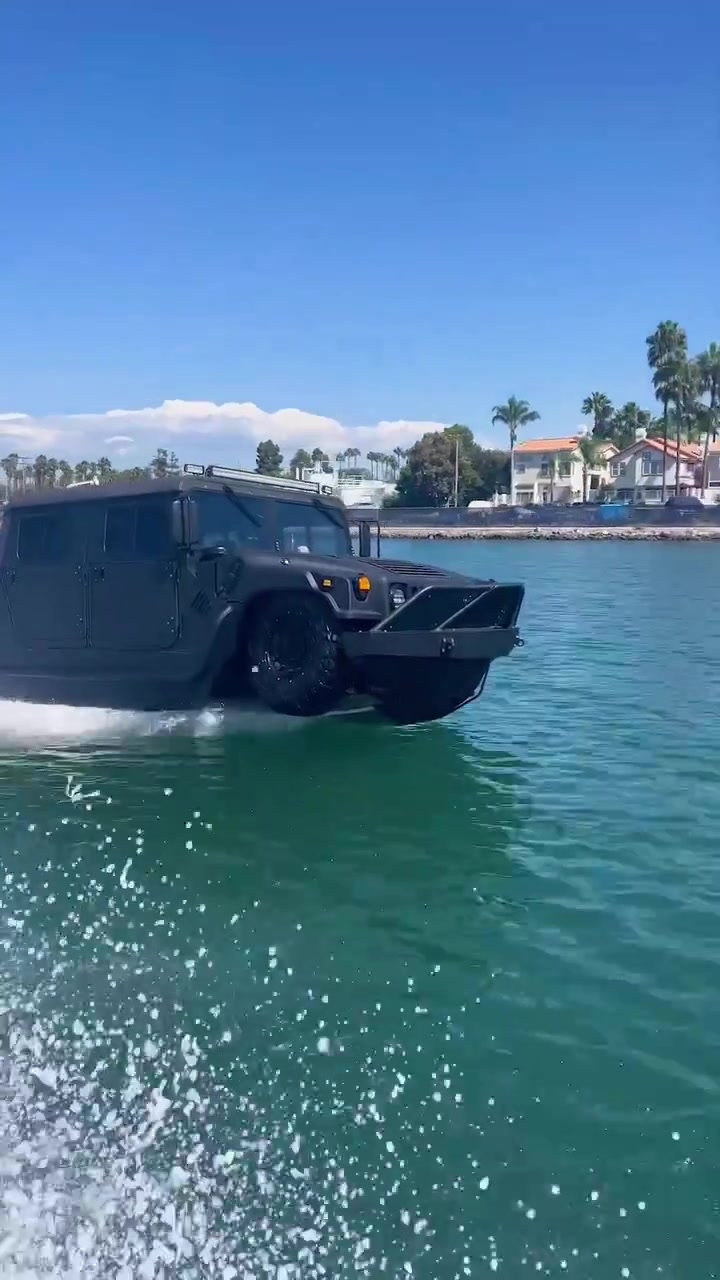
A black Hummer traverses the ocean with the same ease it would on a highway. This is no stunt—it's the work of a modified vehicle built to conquer both land and water, showcasing the intriguing world of amphibious vehicles. Amphibious vehicles are those engineering marvels that can seamlessly switch between driving on land and sailing on water.
Marina Marvels: What Is an Amphibious Vehicle?
An amphibious vehicle is a specialized automotive marvel designed to seamlessly transition between land and water. It combines the robustness of a land vehicle with the ability to float and steer in water. These vehicles typically feature sealed compartments, waterproofed engines, and specialized propellers or water jets for propulsion in the water. Some amphibious vehicles also incorporate retractable components, allowing them to morph from land to sea functionality. Amphibious vehicles draw from historical innovations. The simplest examples might be familiar: inflatable rafts that can transport small cars across calm lakes. The more sophisticated ones are military-grade amphibious vehicles, used by the army, navy, or coast guard. Most amphibious vehicles are modified versions of existing land vehicles, which may keep the look familiar. Some may keep some aesthetic details like the look of a Hummer, but the inner workings would be different.
Water-World Warriors Amid a Shifted World
Amphibious vehicles are not just for fun—or spectacle. They sail into a widely overlooked niche: roles where both land and water travel are necessary. Waterfront tourism, scientific research, land surveying for coastlines, and rescue operations are some of the use cases for these vehicles. In the wake of climate change, amphibious vehicles may also offer new ways to navigate rising flood zones. These vehicles are versatile and robust, able to maneuver through various terrains and conditions.
Under the Hood
The Core: How It Works
An amphibious vehicle carefully combines the mechanics of a typical car with the design of a watercraft. This demands a nuanced understanding of both. The key components are a specially designed hull, a waterproofed engine, and a propulsion system built for dual-mobility. These vehicles typically have a watertight compartment for the engine, high-capacity bilge pumps, and reinforced hulls to withstand the pressure of water.
Terrain Transitions: Driving vs. Sailing
Driving transitions are not merely a question of a flat sea. Each element must be optimized. Steering wheels can convert into tiller wheels, and propellers retract when land is reached. The design and operation of an amphibious vehicle are fundamentally geared towards minimizing resistance in water while maximizing grip on land. The vehicle's design must be balanced and thoughtful to ensure that the vehicle can move seamlessly between these two environments, as if it were designed for each.
Coasts and Colors
The video of a Hummer taking to the water showcases not just the vehicle or the water. It highlights an often overlooked aspect: the natural beauty of the coastline. This vehicle isn't just a machine — it's a vehicle that seems to be designed for a specific aesthetic: a waterfront paradise. Most amphibious vehicles are black or metallic. The combination of bright blue waters and palm trees with the vehicle suggests they might be better suited for sunny vacations or luxury waterfront drives.
Eyeing the Wet Wheels
Given that amphibious vehicles might not be mainstream, they often come with high price tags (though details on pricing are scarce). Potential buyers must evaluate practical needs, budget constraints, and local regulations. People interested in amphibious vehicles should also consider maintenance requirements, as servicing these unique machines can be more demanding than standard vehicles.
Toward the Waves
Amphibious vehicles might not be for everyone, but they offer a unique blend of adventure and practicality. This is particularly true for those navigating coastal landscapes. The ability to transition from water to land without the need for a separate boat can open up new possibilities. Forging new, aquatic roads is not just a fun trick. It's a whole new way of interacting with the world. Whether for waterfront tourism, navigation, or exploring new frontiers, amphibious vehicles offer a glimpse into a world where traditional boundaries are redefined.
Watch the Reel
Questions readers ask
What makes an amphibious vehicle different from a regular car or a boat?
Amphibious vehicles are engineered to operate both on land and water, which is a unique combination. Unlike regular cars, they have waterproofed engines, sealed compartments, and specialized propulsion systems like propellers or water jets. Unlike boats, they have the robust design of a land vehicle, with features like a steering wheel that converts to a tiller wheel for water navigation.
How do amphibious vehicles transition from land to water?
The transition involves several key components. The vehicle's steering wheel can convert into a tiller wheel, and propellers or water jets are deployed for propulsion in water. When the vehicle returns to land, these propellers retract, and the vehicle resumes driving like a regular car. This seamless transition is designed to minimize resistance in water and maximize grip on land.
Can I buy an amphibious vehicle for personal use, and if so, where?
Amphibious vehicles are typically modified versions of existing land vehicles, and they can be purchased for personal use. They are often customized by specialist companies, so you might need to look for custom builders or manufacturers that specialize in amphibious conversions. Some companies that modify vehicles for amphibious use are listed in the article.
What are the practical uses of amphibious vehicles beyond recreation?
Amphibious vehicles have several practical applications. They are used in waterfront tourism, scientific research, land surveying for coastlines, and rescue operations. In the face of climate change, they also offer new ways to navigate rising flood zones, making them versatile tools for various terrains and conditions.
Are there different types of amphibious vehicles, and how do they compare?
Yes, there are different types, ranging from simple inflatable rafts that can transport small cars to sophisticated military-grade vehicles. Most amphibious vehicles are modified versions of existing land vehicles, but some are purpose-built for specific roles. The choice depends on the intended use, whether it's for recreation, research, or emergency services.
How do amphibious vehicles handle rough water and varying terrain?
Amphibious vehicles are designed to be robust and versatile. They have reinforced hulls and high-capacity bilge pumps to handle rough water. On land, they have features like all-terrain tires and reinforced suspensions to navigate varying terrain. The design ensures that the vehicle can move seamlessly between these environments, optimizing for both water and land conditions.
Related deep dives
Similar reads based on topic and creator.



Recent articles
Fresh deep dives from the latest Reels we unpacked.




Comments
Be the first to comment.