Backpacking in the Amazon Rainforest
The Amazon rainforest, the world's largest tropical rainforest, is a place of unparalleled beauty and biodiversity. It's also a place that can be incredibly challenging for backpackers. Whether you're a seasoned adventurer or a first-time explorer, navigating the Amazon requires a blend of survival skills and preparedness. It is essential to know what to do if you ever find yourself lost in this vast, dense wilderness.
Why this matters
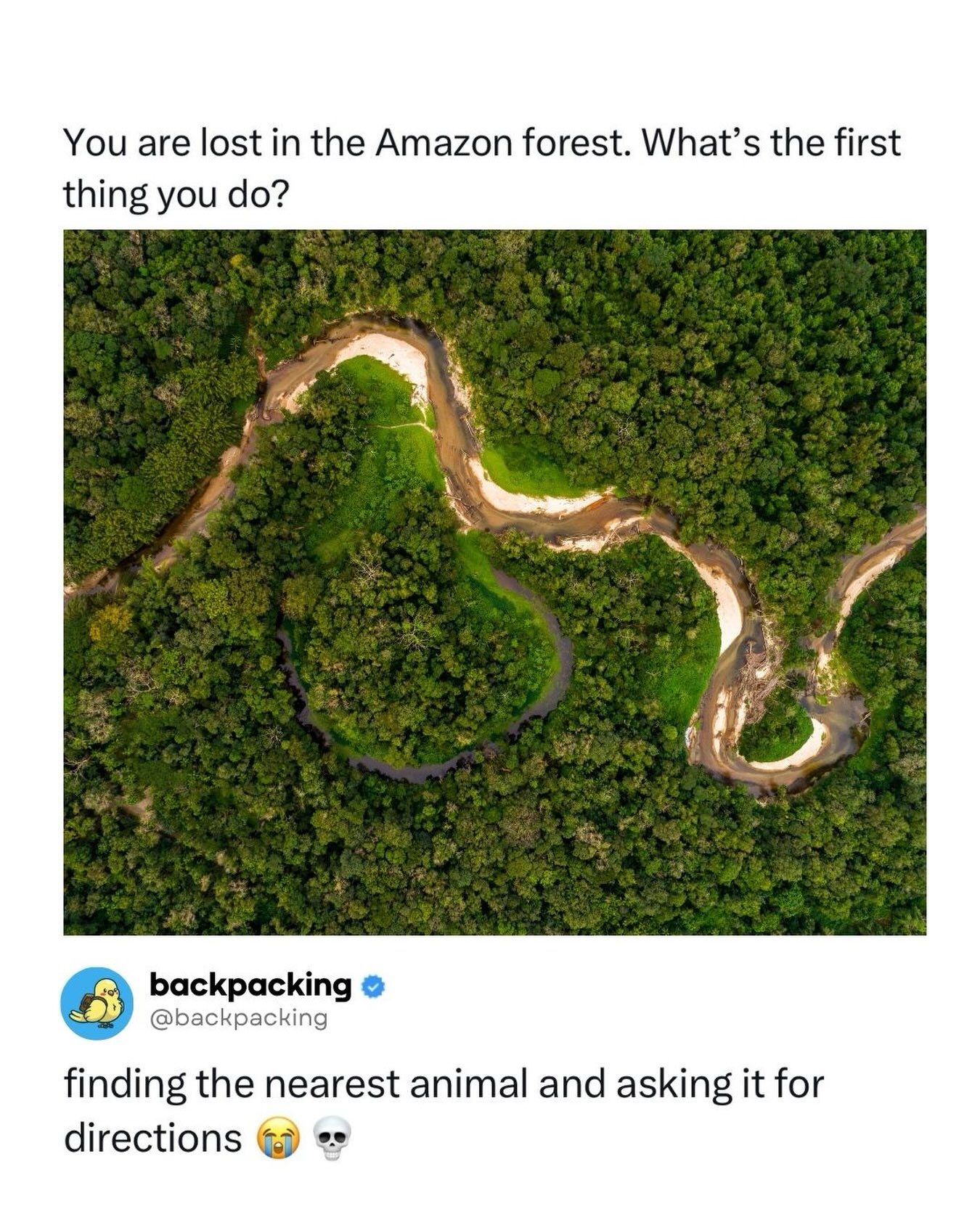
The Amazon rainforest spans over 2.12 million square miles across nine countries, with the majority lying in Brazil. It's a place of immense beauty but also of formidable challenges. That’s why backpackers need to be ready to deal with unexpected situations and be prepared to find their way. The caption humorously suggests asking animals for directions, highlighting a common fear and the need to stay calm and focused in such a scenario.
The Amazon Rainforest: A Backpacker's Challenge
The Amazon rainforest is one of the most biodiverse places on Earth. It's home to millions of plant and animal species, many of which are yet to be discovered. However, this biodiversity also makes the Amazon a challenging place to navigate. The dense canopy and winding rivers can make it difficult to find your way, and the presence of dangerous wildlife adds an extra layer of complexity. But with the right skills and preparation, backpacking in the Amazon can be a rewarding and unforgettable experience.
The Importance of Survival Skills
Survival skills are crucial when backpacking in the Amazon. These skills include navigation, finding and purifying water, building shelters, and starting fires. It's essential to know how to use a map and compass, as GPS devices may not always be reliable in the dense canopy. Finding and purifying water is also critical, as dehydration can set in quickly in the hot, humid climate.
Navigation
The Amazon's dense canopy can make it difficult to navigate, even with a map and compass. It's essential to know how to use both and to have a basic understanding of the area you'll be exploring. If you're planning to venture off the beaten path, consider hiring a guide or joining a group with more experience.
Finding and Purifying Water
Water is essential for survival, but it's important to ensure it's safe to drink. In the Amazon, water sources can be contaminated with bacteria and parasites, so it's crucial to purify it before drinking. Boiling water is the most reliable method, but water purification tablets and filters can also be effective.
Dealing with Wildlife
The Amazon is home to some of the world's most dangerous animals, including jaguars, anacondas, and poisonous snakes. It's important to be aware of your surroundings and to take precautions to avoid encounters with these animals. This includes making noise while hiking to alert animals to your presence, storing food securely, and wearing appropriate clothing to protect against bites and stings.
Immediate Panic vs. Survival Skills
When lost in the Amazon, immediate panic can be a natural response, but it's essential to stay calm and focused. Panic can lead to poor decisions and increase the risk of injury or death. The caption humorously suggests finding the nearest animal and asking for directions, but in reality, it's important to take a deep breath, assess the situation, and prioritize your needs. Survival skills are key to navigating this environment successfully.
Practical Tips for Surviving in the Amazon
When backpacking in the Amazon, it's essential to be prepared and to have a basic understanding of survival skills. Here are some practical tips to help you stay safe and enjoy your adventure:
- Bring a First Aid Kit: A well-stocked first aid kit is essential for treating minor injuries and illnesses. Make sure to include items like bandages, antiseptic wipes, and over-the-counter medications.
- Carry a Map and Compass: Even if you plan to stick to established trails, a map and compass can be invaluable if you get lost. Make sure you know how to use them before heading out.
- Stay Hydrated: The Amazon's hot, humid climate can lead to dehydration quickly. Make sure to drink plenty of water and bring a water purification system to ensure a safe water supply.
- Wear Appropriate Clothing: Dress in light, breathable clothing to protect against insects and the sun. Long sleeves and pants can help protect against bites and stings, and a hat can provide additional sun protection.
- Be Prepared to Shelter: If you're planning a multi-day hike, consider carrying a lightweight tent or tarp to provide shelter from the elements. A hammock can also be a comfortable and convenient option for staying off the ground.
- Carry a Multi-tool: A good multi-tool can be invaluable in a survival situation. Use it for everything from repairing gear to building a shelter.
- Stay Calm and Focused: Panic can lead to poor decisions and increase the risk of injury or death. Take a deep breath, assess the situation, and prioritize your needs.
Important Takeaways
Surviving in the Amazon rainforest requires a combination of preparation, knowledge, and the right mindset. Whether you're a seasoned backpacker or a first-time explorer, it's essential to be aware of the challenges and to be prepared to face them. By understanding the importance of survival skills, navigation, and dealing with wildlife, you can increase your chances of having a safe and enjoyable adventure in the Amazon.
Conclusion
The Amazon rainforest is a place of unparalleled beauty and diversity, but it's also a challenging environment for backpackers. By being prepared and knowing the right survival skills, you can increase your chances of having a safe and enjoyable adventure. Whether you're a seasoned explorer or a first-time visitor, the Amazon offers a unique and unforgettable experience. Make sure to stay calm and focused, prioritize your needs, and be prepared for anything.
Watch the Reel
Questions readers ask
What are the most important survival skills for backpacking in the Amazon Rainforest?
Key survival skills include navigation, first aid, and the ability to find and purify water. It's also crucial to know how to build a basic shelter and start a fire using minimal resources. Understanding how to signal for help and avoid dangerous wildlife encounters are also vital skills to have.
How can I prepare for potential animal encounters in the Amazon Rainforest?
The Amazon is home to a variety of wildlife, some of which can be dangerous. Familiarize yourself with the types of animals you might encounter, such as snakes, spiders, and jaguars. Learn how to store food properly to avoid attracting animals to your campsite. Carry a first aid kit with antivenom for common snake bites if possible, and know basic first aid procedures for animal encounters.
What should I do if I get lost in the Amazon Rainforest?
If you get lost, stay calm and remain in one place if possible, making it easier for search and rescue teams to find you. Use a whistle or mirror to signal for help. If you must move, try to follow water sources or prominent landmarks to help maintain a sense of direction. Remember, it’s easier for searchers to find you if you stay in one place.
What are the best ways to navigate through dense foliage in the Amazon Rainforest?
Use a compass and a map, and learn basic orienteering skills. A GPS device can also be helpful, but always carry a backup method in case of battery failure. Look for natural features like rivers, hills, and clearings to help guide your path. Avoid cutting through dense vegetation as it can be disorienting and energy-draining.
How can I ensure I have enough clean water while backpacking in the Amazon Rainforest?
Carry a water purification system, such as purification tablets, a UV purifier, or a portable filter. Always treat water from natural sources before drinking. You can also collect rainwater using a tarp or poncho. Aim to drink at least 2-3 liters of water daily to stay hydrated in the humid rainforest environment.
What items should be included in a first aid kit for Amazon Rainforest backpacking?
A comprehensive first aid kit should include bandages, antiseptic wipes, tweezers, pain relievers, and any personal medications. Also, pack insect repellent, sunblock, and antihistamines for allergic reactions. For snake bites, include a pressure bandage and antivenom if possible. Be prepared for both minor and major injuries and have a plan for handling them.
Why is it important to know basic first aid for backpacking in the Amazon Rainforest?
Knowing basic first aid can be lifesaving in the Amazon. Injuries from falls, bites, or cuts can occur, and medical help may not be readily available. Being able to treat injuries promptly can prevent infections and complications. Additionally, knowing how to handle heat exhaustion, dehydration, and other environmental issues is crucial for a safe and enjoyable trip.
Related deep dives
Similar reads based on topic and creator.


Recent articles
Fresh deep dives from the latest Reels we unpacked.




Comments
Be the first to comment.