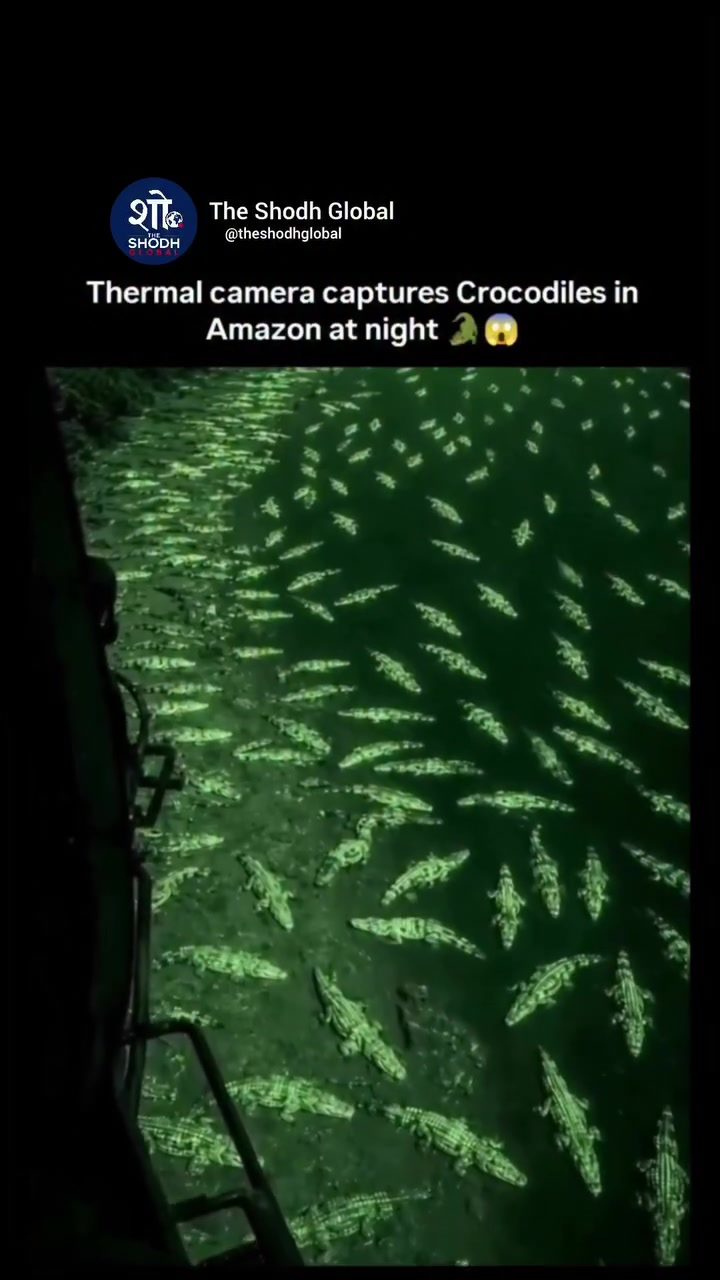
Thermal Imaging of Crocodiles in the Amazon
The Amazon River, at night, might appear serene and uninhabited from above. However, thermal imaging technology reveals a vastly different reality. Using thermal cameras, researchers from The Shodh Global have captured an extraordinary view of hundreds of crocodiles scattered across the riverbanks, sandbars, and shallow channels. This footage offers a profound insight into the nocturnal activities of these formidable predators and the ecological dynamics of the Amazon rainforest.
Why This Matters
Understanding the behavior and distribution of crocodiles in the Amazon is crucial for several reasons. These reptiles play a pivotal role in the ecosystem, influencing everything from water quality to the populations of other wildlife. By using thermal imaging, scientists can monitor these animals without disturbing their natural habitats, providing valuable data that can inform conservation efforts and ecological research. More broadly, this technology demonstrates the power of night-vision tools in revealing the hidden world of nocturnal wildlife.
The Amazon as a Crocodile Habitat
The Amazon's Wildlife and Thermal Imaging
The Amazon rainforest and its river system are home to a diverse array of wildlife, including crocodiles. These reptiles are well-adapted to the aquatic environment and are known for their powerful jaws and stealthy hunting techniques. However, their nocturnal behavior and often hidden habitats make them challenging to study using traditional methods.
Thermal imaging changes this landscape. By detecting the heat signatures of crocodiles, thermal cameras can reveal their presence and movements even in low-light conditions. This capability is particularly useful in the Amazon, where the dense vegetation and murky waters can obscure visual observations.
The Amazon River at Night
At night, the Amazon River presents a unique challenge for wildlife observation. The dense canopy and dark water make it difficult to see wildlife using conventional methods. However, thermal imaging technology can penetrate these obstacles, providing a clear view of the river's hidden inhabitants. The footage captured by The Shodh Global shows crocodiles in various states—some swimming just below the surface, others gathered along the muddy shoreline, and many more moving through the shallow channels. This highlights the extensive use of the Amazon river by these predators, showcasing their activity patterns and territorial behavior.
The Science of Thermal Imaging
How Thermal Cameras Work
Thermal cameras operate by detecting infrared radiation, which is emitted by all objects with a temperature above absolute zero. This technology can capture the heat signatures of animals, even in total darkness, making it an invaluable tool for nocturnal wildlife observation. The cameras convert the detected thermal energy into a visible image, where warmer objects appear brighter and cooler objects appear darker.
Benefits of Thermal Imaging in Wildlife Research
Thermal cameras offer several advantages for wildlife research. Firstly, they allow for non-invasive observation, meaning animals can be studied without human interference. This is particularly important for species like crocodiles, which are sensitive to disturbance. Secondly, the cameras can operate in complete darkness, making them ideal for studying nocturnal animals. Lastly, thermal imaging can help identify animals that are otherwise difficult to spot, such as those hidden underwater or under dense vegetation.
Thermal Imaging in the Amazon
In the Amazon, thermal imaging has proven to be a game-changer. The dense vegetation and dark conditions make it challenging to observe wildlife using conventional methods. Thermal cameras, however, can penetrate these obstacles, providing a clear view of the river's hidden inhabitants. This technology has been used to study a variety of species, including crocodiles, jaguars, and tapirs, and has provided valuable insights into their behavior and ecology.
Practical Tips for Thermal Imaging
Choosing the Right Equipment
When selecting a thermal camera, it's essential to consider the specific needs of your project. For wildlife observation, a camera with a high resolution and a long detection range is ideal. Additionally, look for a camera with a wide field of view and the ability to capture video, as this will allow for more detailed analysis. The Shodh Global's footage demonstrates the effectiveness of high-quality thermal imaging equipment.
Conducting Effective Thermal Imaging Surveys
To ensure successful thermal imaging surveys, plan your observations carefully. Choose a time when the target animals are most active, and avoid periods of high humidity or heavy rainfall, which can interfere with the camera's detection capabilities. Position the camera at an appropriate height and angle to capture the maximum number of animals without causing disturbance.
Interpreting Thermal Images
Interpreting thermal images requires a good understanding of the technology and the behavior of the target species. Different animals will emit varying heat signatures, and these can change with their activity levels and environmental conditions. Pay close attention to the shapes and heat patterns in the images, and consider the context of the observations, such as the time of day and the location.
Important Takeaways
Thermal imaging has revolutionized the study of nocturnal wildlife in the Amazon. By revealing the hidden activities of crocodiles and other animals, this technology provides valuable insights into their behavior and ecology. Key takeaways from the thermal imaging of crocodiles in the Amazon include:
- Crocodiles' nocturnal activity: Thermal imaging shows that crocodiles are highly active at night, using the cover of darkness to hunt and move through the river.
- Distribution and density: The footage highlights the widespread distribution of crocodiles in the Amazon, with individuals found in various habitats, including riverbanks, sandbars, and shallow channels.
- Habitat use: Crocodiles in the Amazon exploit a range of habitats, and thermal imaging helps to understand their preferences and how they use these environments.
Conclusion
Thermal imaging of crocodiles in the Amazon offers a captivating glimpse into the nocturnal world of these formidable predators. By revealing their hidden activities and distribution, this technology provides valuable data for conservation efforts and ecological research. As we continue to explore the mysteries of the Amazon, thermal imaging will undoubtedly play a crucial role in uncovering the secrets of its diverse wildlife.
Watch the Reel
Questions readers ask
What is thermal imaging and how does it help in studying crocodiles?
Thermal imaging is a technology that detects heat signatures. In the context of studying crocodiles, it allows researchers to observe the nocturnal activities of these animals, which are otherwise difficult to track and study in the dense and vast Amazon rainforest. It provides a clear view of their distribution and behavior, especially at night.
How do crocodiles benefit the Amazon ecosystem?
Crocodiles play a significant role in maintaining the ecological balance of the Amazon. They regulate the populations of other animals, both by predation and by serving as a food source for larger predators. Additionally, their activities, such as digging burrows, can influence water quality and create habitats for other species.
Why is it important to study crocodiles at night?
Crocodiles are primarily nocturnal creatures, meaning they are most active during the night. Studying them at night provides a better understanding of their hunting patterns, territorial behaviors, and overall ecology. This knowledge is crucial for effective conservation strategies and ecosystem management.
What are some of the challenges in studying crocodiles in the Amazon?
The Amazon rainforest's dense vegetation and vast, often inaccessible terrain make it challenging to study crocodiles. Traditional methods of observation can be ineffective due to the limited visibility during the day and the nocturnal behavior of crocodiles. Thermal imaging technology helps overcome these challenges by providing a clear view of crocodile activity, regardless of time or environmental conditions.
Who are The Shodh Global and what is their role in this research?
The Shodh Global is a research organization that has been instrumental in using thermal imaging to study crocodiles in the Amazon. Their work involves capturing thermal footage to understand the distribution and behavior of these reptiles, which aids in developing effective conservation strategies. Their research provides valuable insights into the ecological dynamics of the Amazon rainforest.
What are the implications of thermal imaging for wildlife conservation?
Thermal imaging offers a non-invasive and efficient method to monitor wildlife populations and their behaviors. For conservationists, this technology can reveal critical information about endangered or elusive species, helping to develop targeted protection measures and understand the broader impacts on the ecosystem.
How does thermal imaging work in capturing images of crocodiles?
Thermal cameras detect the heat emitted by objects, including the bodies of crocodiles. In the Amazon's nighttime environment, these cameras can pinpoint the locations and activities of crocodiles, even in complete darkness. This allows researchers to map out their movements and behaviors, providing a clear picture of their nocturnal world.
Related deep dives
Similar reads based on topic and creator.


Recent articles
Fresh deep dives from the latest Reels we unpacked.




Comments
Be the first to comment.