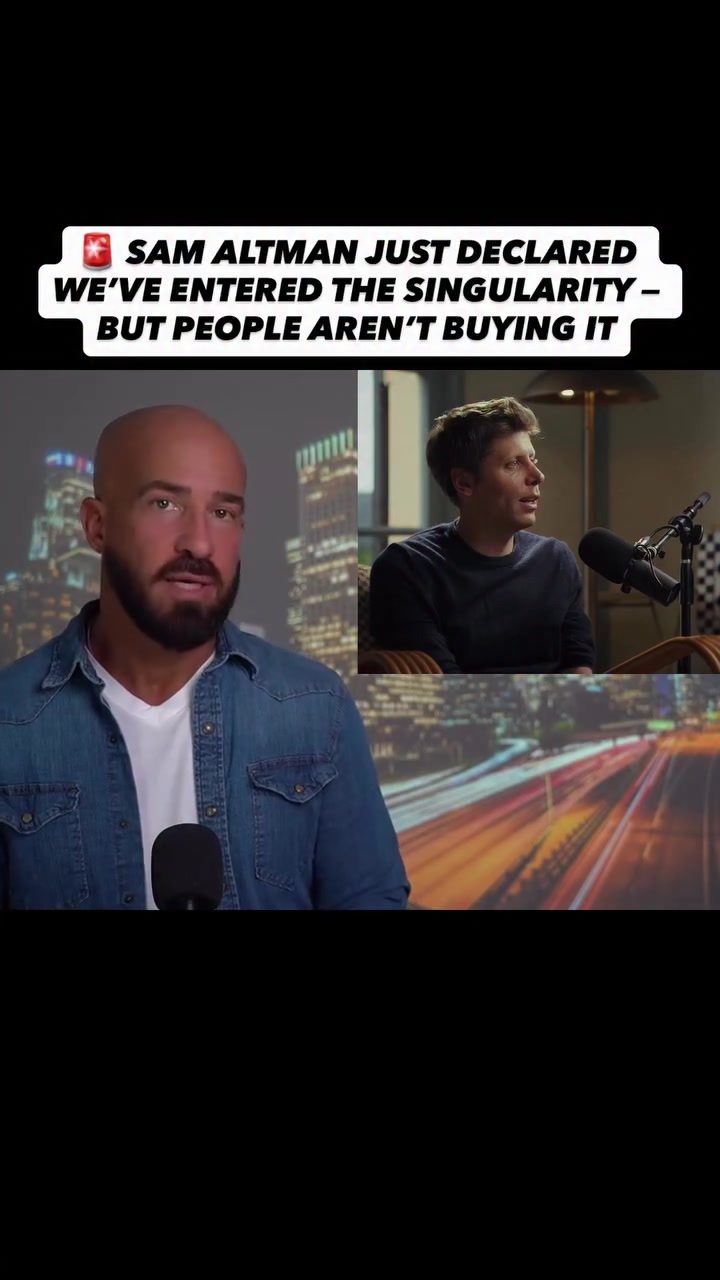
The AI Singularity: Hype or Reality?
Sam Altman's recent declaration that AI has reached the singularity has sparked intense debate. The CEO of OpenAI has called this moment "the most interesting and important thing I can imagine doing," suggesting that the world has entered a new era once thought to be a distant dream. Altman is even set to showcase OpenAI's most powerful model at the White House. However, many are skeptical, viewing this announcement as mere corporate hype.
Why This Matters
The concept of the singularity refers to a hypothetical future point in time when artificial intelligence will have progressed to the point of a greater-than-human intelligence, radically changing human civilization. Altman's declaration is significant because it suggests that this point may have already been reached, at least in some form. However, the timing of this announcement is notable. It comes at a time when the world is growing weary of AI hype, and chip stocks are falling. Google, one of the technology giants, recently posted its first-ever loss as a public company. These factors contribute to a sense of skepticism surrounding Altman's claims.
The AI Landscape Today
The Declining AI Bubble
The AI bubble, which has been inflated with immense hype and investment, is showing signs of deflation. Chip stocks, which are crucial for AI development, are falling. This decline is not just a temporary dip but a sign that the market is adjusting to the reality of AI's current capabilities and limitations.
Google's Financial Woes
One of the most stunning developments is Google's recent financial performance. Google, a company synonymous with AI innovation, posted its first-ever loss as a publicly traded company. This is a significant event, given that Google has been one of the biggest companies on the planet since the beginning of the internet. Google's AI infrastructure is widely regarded as one of the best, and its business model has been one of the few that made sense in the AI landscape. The fact that even Google is struggling financially raises questions about the current state of AI and its economic viability.
Skepticism and Criticism
Corporate Hype vs. Reality
Many are calling Altman's declaration just another marketing ploy. The timing of the announcement, coupled with the current market conditions, fuels this skepticism. The AI bubble has already burst, and companies are now trying to maintain investor interest despite the reality of the situation. This approach is not new; companies often try to ride the wave of hype as long as possible before facing the truth.
Altman's Contradictory Statements
Altman's past statements about AI have been notably grim. He has spoken about the loss of freedom, agency, and privacy, painting a picture of a dystopian future where AI controls every aspect of human life. This stark contrast to his current optimistic view makes it hard for some to trust his latest claims. His attempt to criticize other companies for making AI sound scary while admitting his own terrifying visions adds to the confusion and skepticism.
Practical Tips
Evaluating AI Claims
When evaluating claims about AI advancements, it is essential to consider the source and the context. Look at the financial health of the company making the claim, as well as their past statements and actions. Be wary of hype and marketing ploys, and always seek out independent verification of claims.
Staying Informed
Staying informed about the latest developments in AI is crucial. Follow reliable sources and experts in the field to gain a balanced and accurate understanding of the current state of AI. Be cautious of sensational headlines and focus on the facts.
Important Takeaways
The AI Landscape is Complex
The AI landscape is complex and ever-changing. While there are genuine advancements, there is also a lot of hype and misinformation. It is essential to approach claims about AI with a critical eye and a healthy dose of skepticism.
The Singularity is Not Here Yet
While Altman's declaration is exciting, it is essential to recognize that the singularity, as envisioned, is not here yet. AI has made significant strides, but it is still far from surpassing human intelligence in all aspects.
Trust but Verify
When it comes to AI claims, the motto should be "trust but verify." Do not take claims at face value but seek out independent verification and reliable sources of information.
Conclusion
Sam Altman's declaration that AI has reached the singularity is a bold and exciting claim. However, it is essential to approach this claim with a critical eye. The current market conditions and past statements from Altman raise questions about the validity of his claims. While AI has made significant advancements, it is still far from the singularity as envisioned. Staying informed and critically evaluating claims is crucial in navigating the complex and ever-changing landscape of AI.
Watch the Reel
Questions readers ask
What does Sam Altman mean by 'the singularity' in the context of AI?
Sam Altman, as the CEO of OpenAI, refers to the singularity as the point at which AI surpasses human intelligence. This is a hypothetical moment where AI's capabilities exceed those of humans, leading to profound changes in society and technology.
Why has Altman's claim about the AI singularity caused debate?
Altman's declaration has sparked debate because many view it as part of the AI hype cycle and possibly as an attempt to boost interest during a perceived downturn in the AI bubble. Skeptics argue that the technology may not be as advanced as Altman suggests, while advocates see it as a significant milestone.
What is the significance of Altman's announcement about showcasing an AI model at the White House?
The decision to showcase OpenAI's most powerful model at the White House underscores the importance and potential impact of AI. This move could be seen as a way to gain political support and influence, highlighting the growing significance of AI in both technological and policy discussions.
What are the key differences between those who support and oppose the singularity claim?
Supporters of Altman's claim believe that AI has indeed reached a point where it surpasses human capabilities, predicting a transformative future. On the other hand, opponents argue that the claim is exaggerated and part of the AI hype cycle, asserting that current AI technology still lags behind human intelligence in many critical areas.
How does the concept of the AI singularity challenge our understanding of AI vs. human intelligence?
The AI singularity challenges traditional views of AI vs. human intelligence by predicting a future where AI surpasses human capabilities, potentially leading to radical changes in how humans interact with and rely on technology. This concept raises questions about the future of human work, creativity, and decision-making.
What are some common criticisms of the AI singularity claim by AI companies and experts?
Critics often argue that the singularity claim oversimplifies the complexities of AI development and ignores the current limitations of AI technology. They point out that while AI has made significant strides, it still struggles with tasks that humans find simple, such as understanding context and common sense reasoning, and making ethical decisions.
Related deep dives
Similar reads based on topic and creator.




Recent articles
Fresh deep dives from the latest Reels we unpacked.




Comments
Be the first to comment.