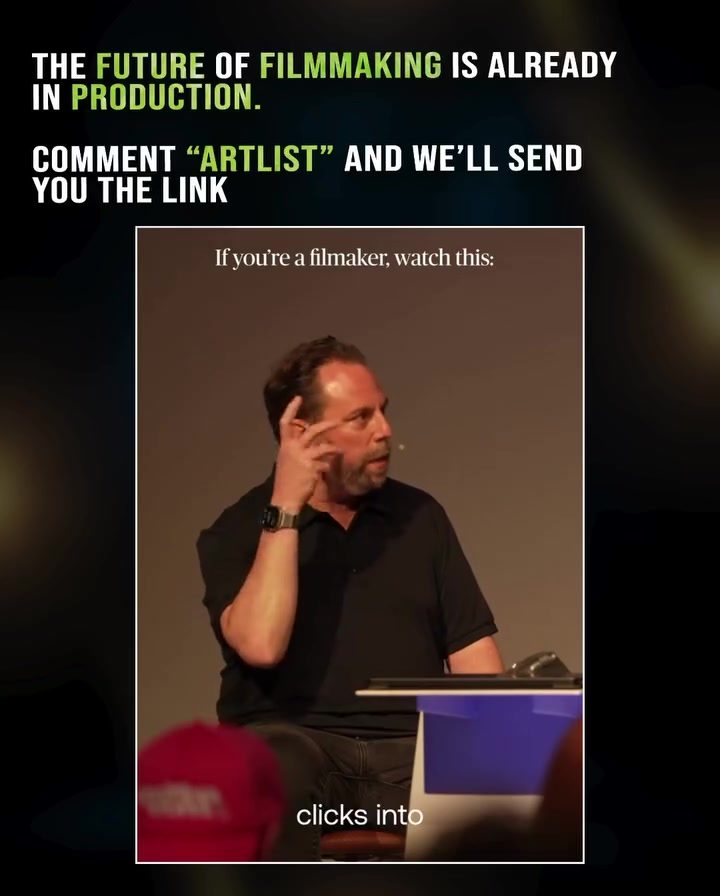
Filmmaking in the Age of AI: The Future of Cinema
The integration of AI in filmmaking is revolutionizing the industry, making way for innovative and cost-effective storytelling. Terrarium, an upcoming AI-hybrid feature film, is a testament to this transformation. The project, announced by Artlist, brings together the legendary horror producer Steven Schneider, known for his work on Paranormal Activity and Insidious, and the team at Secret Level. This collaboration seamlessly blends traditional filmmaking techniques with AI-powered creative tools throughout the production process. The film is a landmark shift from the previous short-form experiments and proof-of-concept trailers that have dominated AI's presence in film.
Why This Matters Now
The future of filmmaking is already here, and it's powered by AI. This isn't just about making movies cheaper; it's about redefining what's possible in cinema. AI can create entirely new worlds, enhance storytelling, and even democratize the filmmaking process. For those in the industry, staying ahead of this technological wave is crucial. Understanding and integrating AI into filmmaking workflows can change how directors approach shoots, tell stories, and manage budgets.
Embracing AI in Filmmaking
AI and Creative Storytelling
AI's role in filmmaking extends beyond just visual effects. It can fundamentally change how stories are told. With AI, filmmakers can approach storytelling differently. They can experiment with new narrative structures, create immersive worlds, and even predict audience reactions to make their stories more impactful.
Traditional filmmaking often involves significant budget constraints, leading to compromises in storytelling. AI can level the playing field. For instance, AI-powered tools can generate high-quality visual effects that would otherwise require a massive budget, allowing filmmakers to create a $10 million look for a fraction of the cost. This democratization of visual effects means that even low-budget films can achieve high production values.
AI and Production Workflow
AI's integration into the filmmaking process can significantly streamline workflows. From pre-production to post-production, AI tools can automate repetitive tasks, allowing creatives to focus on the storytelling aspect. AI can assist in scriptwriting, character development, and even edit scripts. Tools like these allow for a more efficient, accurate, and flexible production pipeline.
AI is not just about saving time or money; it's about rethinking the entire workflow. For example, AI can generate realistic background scenes or digital doubles, reducing the need for extensive on-set equipment and personnel. This shift towards a hybrid approach—combining traditional filmmaking with AI—is redefining what's possible in cinema.
AI and Budget Management
AI can transform how filmmakers approach budgets. The traditional way of thinking is often constrained by financial limitations. However, with AI, filmmakers can reduce costs while increasing the quality and scale of their productions. For instance, AI can generate high-quality visual effects, reducing the need for expensive on-set equipment and personnel.
By leveraging AI, filmmakers can achieve a $10 million look on a smaller budget. This opens up new possibilities for storytelling, as directors can focus more on the narrative rather than the financial constraints. The integration of AI in filmmaking fundamentally changes the types of stories that can be told and how they are told, making it possible to achieve a higher production value on a more modest budget.
Practical Tips for Aspiring Filmmakers
Start Small
If you're a filmmaker looking to integrate AI into your workflow, start small. Experiment with AI tools for visual effects, scriptwriting, or editing. See how they can enhance your storytelling without completely overhauling your process. This incremental approach will help you understand the capabilities and limitations of AI in filmmaking.
Embrace the Hybrid Approach
Embrace a hybrid approach that combines traditional filmmaking techniques with AI. This way, you can leverage the strengths of both methods. For instance, use AI to generate high-quality visual effects while maintaining the authenticity of on-set footage. This hybrid approach can help you achieve a higher production value on a smaller budget.
Focus on Storytelling
Remember that AI is a tool to enhance your storytelling, not replace it. Use AI to experiment with new narrative structures, create immersive worlds, and even predict audience reactions. The goal is to make your stories more impactful, not to let the technology overshadow the narrative.
Collaborate with Experts
Collaborate with experts in AI and filmmaking to stay ahead of the curve. Learn from their experiences and insights to understand how AI can best be integrated into your workflow. This collaboration can help you explore new possibilities in storytelling and production.
Important Takeaways
- AI is Transforming Filmmaking: AI is more than just a tool for visual effects; it's a game-changer in how stories are told and produced. It can create higher production values on smaller budgets, making cinematic storytelling more accessible.
- AI and Budget Management: AI can help filmmakers achieve a $10 million look for a fraction of the cost, fundamentally changing how budgets are managed and stories are told.
- AI Enhances Storytelling: AI tools can generate new worlds, experiment with narrative structures, and even predict audience reactions, making storytelling more impactful.
- AI in Production Workflow: AI can streamline production workflows by automating repetitive tasks, allowing filmmakers to focus on the creative aspects.
- AI is a Tool, Not a Replacement: Remember that AI is a tool to enhance storytelling. It should complement your creative vision, not replace it.
Conclusion
The future of filmmaking is here, and it's powered by AI. From enhancing storytelling to streamlining workflows and managing budgets, AI offers countless possibilities for filmmakers. Whether you're an aspiring filmmaker or a seasoned professional, embracing AI can revolutionize your approach to filmmaking. Start small, experiment, and collaborate with experts to stay ahead of the curve. The integration of AI in filmmaking is not just about making movies; it's about redefining what's possible in cinema.
Watch the Reel
Questions readers ask
What makes Terrarium a significant project in AI filmmaking?
Terrarium is significant because it is one of the first AI-hybrid feature films, moving beyond short-form experiments and proof-of-concept trailers. It combines traditional filmmaking with AI tools throughout the entire production process, showcasing a new approach to film production.
Who are the key individuals and companies involved in the Terrarium project?
The Terrarium project is a collaboration between Artlist, horror producer Steven Schneider, known for his work on films like Paranormal Activity and Insidious, and the team at Secret Level.
How does AI contribute to cost savings in film production?
AI can automate certain tasks, reduce the need for large crews, and speed up the production process. This can result in significant cost savings, making film production more efficient and accessible.
What are some AI filmmaking techniques used in Terrarium?
While specific techniques aren't detailed, Terrarium likely employs AI for tasks such as scene generation, character development, and post-production processes, integrating AI tools seamlessly with traditional filmmaking methods.
How does AI enhance storytelling in films like Terrarium?
AI can generate unique story ideas, create realistic characters, and even write dialogue, opening up new creative possibilities. This blending of AI and traditional methods can lead to more innovative and engaging narratives.
What are the potential benefits of AI in horror film production?
AI can help generate innovative horror concepts, create more realistic and unpredictable scares, and streamline the production process, allowing for quicker turnaround times and potentially lower budgets.
What other AI filmmaking examples are there besides Terrarium?
While Terrarium is a standalone project, other AI filmmaking examples include short films and proof-of-concept trailers. These projects often experiment with AI-generated scripts, characters, and visual effects, showcasing the potential of AI in cinema.
Related deep dives
Similar reads based on topic and creator.

Recent articles
Fresh deep dives from the latest Reels we unpacked.




Comments
Be the first to comment.