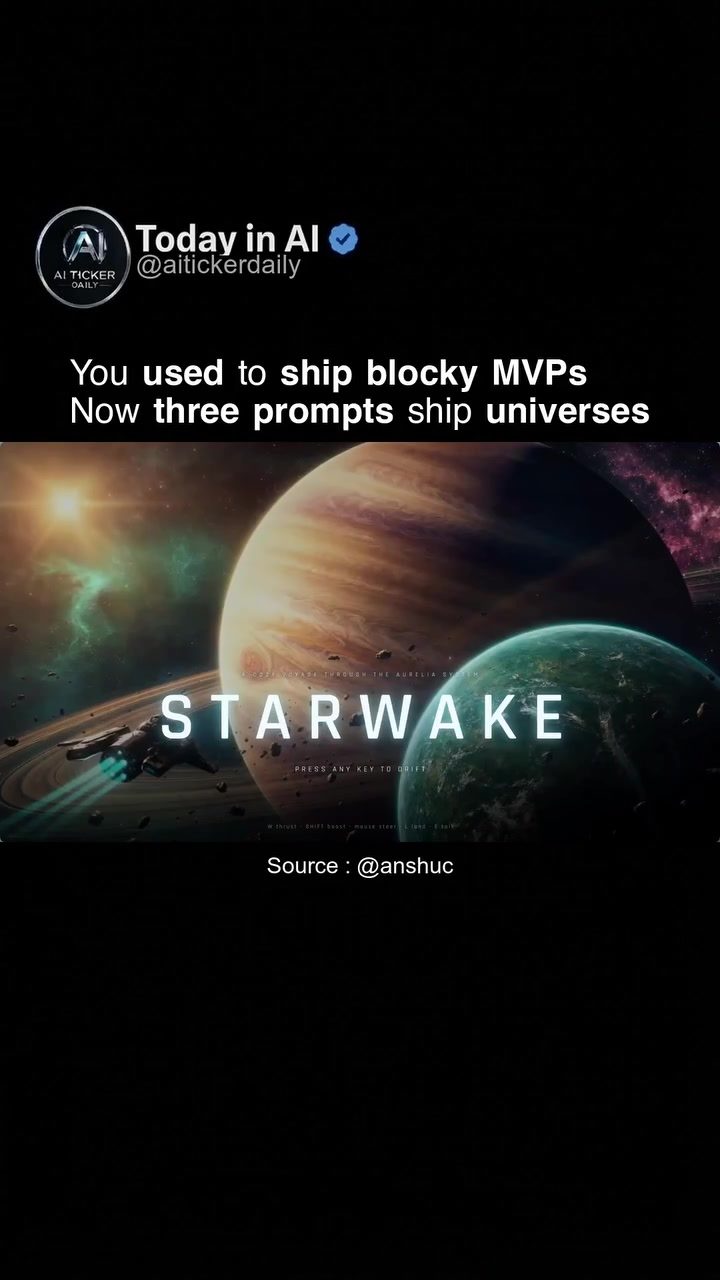
AI-Generated Universes: The Future of Software Development
AI-generated universes are revolutionizing the way software, particularly game development, is approached. This technology enables the creation of intricate and expansive digital worlds with just a few text prompts. The process involves using advanced AI models to generate not only the visual assets but also the underlying logic, characters, and even sound effects. This cutting-edge capability is transforming game development, making it faster and more efficient than ever before.
Context: Why This Matters
In the past, developing a game with an intricate universe required extensive manual labor. Artists and developers would spend countless hours creating assets, designing levels, and scripting gameplay. This process was not only time-consuming but also limited by the creativity and skill of the individuals involved. With the advent of AI-generated universes, these limitations are being overcome. Developers can now generate entire worlds in a matter of hours, freeing up time and resources for other aspects of development.
Main Discussion
The Evolution of AI in Game Development
The journey from simple, blocky models to complex, universe-generating AI capabilities is a testament to the rapid advancements in AI technology. Initially, game developers had to ship minimal viable products (MVPs) that were often visually and functionally primitive. These early stages involved a lot of trial and error, with developers manually creating assets and gameplay elements. However, with the integration of AI, the process has become much more streamlined.
One of the key innovations in this area is the self-verification loop. This technology allows the AI to generate assets and visually check its own output, ensuring that the final product meets the desired standards. This closed loop system eliminates the need for human intervention, speeding up the development process significantly.
Software like STARWAKE, highlighted in the reel, exemplifies this evolution. STARWAKE demonstrates the capability to generate an entire universe, complete with characters, lore, and assets, from just three text prompts. This software integrates various APIs, including Gemini for 2D image generation and fal.ai for converting 2D images into 3D models, to achieve this level of detail and complexity.
The Three-Prompt Workflow
The process of generating an AI universe typically involves three stages. The first pass focuses on creating a playable, albeit blocky, prototype. This initial version allows developers to test the core mechanics and gameplay elements without worrying about aesthetics. The second pass is dedicated to a full aesthetics overhaul. This stage involves generating high-quality visual assets that match the desired aesthetic. The third and final pass is about polishing the demo, ensuring that all elements, including motion, clipping, and models, are refined and visually appealing.
For example, in the demo of STARWAKE, the first pass resulted in a playable but blocky universe. The second pass transformed this into a visually stunning world with detailed assets. The third pass refined these assets, ensuring smooth motion and realistic models.
The Role of APIs
APIs like Gemini and fal.ai are crucial in this process. Gemini is used for generating 2D images, which are then converted into 3D models using fal.ai. This integration allows for the creation of detailed and immersive environments. Additionally, the self-verification loop ensures that the generated assets are of high quality and meet the desired standards.
The software also incorporates a browser-based self-verification loop, allowing the AI to generate assets and check its own output. This eliminates the need for human intervention, further speeding up the development process.
The Impact on Indie Game Development
For indie developers, the ability to generate entire universes from a few prompts is a game-changer. It compresses the development timeline, allowing for quicker prototyping and iteration. This means that indie developers can focus more on creativity and innovation rather than spending time on manual asset creation.
The integration of AI in game development also democratizes the process. With access to powerful AI tools, indie developers can compete with larger studios, creating high-quality games in a fraction of the time and resources.
Practical Tips
Integrating AI into Your Workflow
If you're a game developer looking to integrate AI into your workflow, here are some practical tips:
-
Start Small: Begin by integrating AI for generating simple assets like characters or environments. This will help you get familiar with the technology and its capabilities.
-
Leverage APIs: Utilize APIs like Gemini for 2D image generation and fal.ai for converting 2D to 3D. These tools can significantly speed up your development process.
-
Implement a Self-Verification Loop: Incorporate a self-verification loop to ensure that the generated assets meet your standards. This will save you time and resources in the long run.
-
Iterate Quickly: Use AI to quickly prototype and iterate on your ideas. This will allow you to experiment with different concepts and refine your game faster.
Important Takeaways
- Speed and Efficiency: AI-generated universes significantly speed up the development process, allowing for quicker prototyping and iteration.
- Quality and Detail: The integration of AI ensures high-quality, detailed assets, making the final product visually appealing and immersive.
- Indie Game Development: For indie developers, this technology can level the playing field, allowing them to compete with larger studios.
- Continuous Improvement: The self-verification loop ensures that the generated assets are of high quality, continuously improving the development process.
Conclusion
The future of software development, particularly in the gaming industry, is being shaped by AI-generated universes. This technology not only speeds up the development process but also ensures high-quality, detailed assets. By integrating AI into your workflow, you can create immersive and engaging games in a fraction of the time and resources. As the technology continues to evolve, we can expect even more innovative and exciting developments in this field.
Watch the Reel
Questions readers ask
How do AI-generated universes streamline the game development process?
AI-generated universes simplify game development by using text prompts to create detailed digital worlds, including visuals, logic, characters, and sound effects. This reduces the need for manual labor, speeding up the development process and allowing for more creative exploration.
What are the key benefits of using AI in gaming development?
Using AI in gaming development accelerates the creation of intricate game universes, reduces the need for extensive manual work, and opens up new creative possibilities. It also allows for the generation of a wide variety of game assets, from visuals to sound effects, with just a few text inputs.
Can AI really create a complete game from a text prompt?
While AI can generate a significant amount of content from a text prompt, including visuals, characters, and underlying logic, creating a complete game typically requires additional refinement by human developers. The AI-generated content serves as a strong foundation that can be built upon and polished to create a final product.
How does AI-generated content impact the creativity in game development?
AI-generated content expands creative possibilities by providing a vast array of initial ideas and assets. This allows developers to explore new concepts and iterate more quickly, leading to innovative and diverse gaming experiences.
What kinds of assets can be generated by AI in game development?
AI can generate a wide range of game assets, including visuals such as landscapes and characters, underlying game logic, character behaviors, and even sound effects. This comprehensive generation capability makes AI a powerful tool in the game development process.
Is there a limit to the size or complexity of the universes AI can create?
AI's capability to create universes is continually evolving, but currently, there is significant potential for generating vast and complex digital worlds. The technology can handle intricate details and expansive environments, making it a valuable asset in game development.
How does AI-generated content affect the traditional roles in game development?
AI-generated content shifts traditional roles by automating many of the tasks previously done manually, such as asset creation and level design. This allows developers to focus more on creative direction, refinement, and innovation, rather than spending extensive time on repetitive tasks.
Related deep dives
Similar reads based on topic and creator.




Recent articles
Fresh deep dives from the latest Reels we unpacked.




Comments
Be the first to comment.