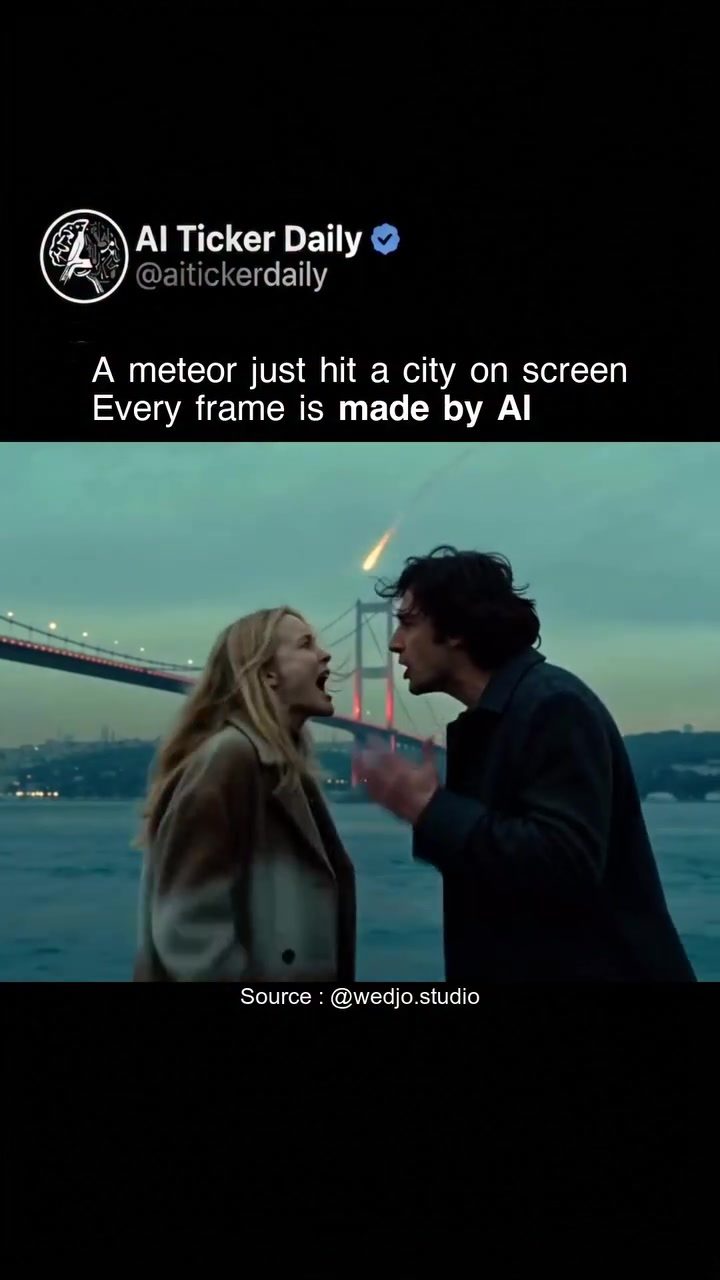
AI-Generated Cinematic Scenes: The Future of Visual Effects
AI-generated visual effects are revolutionizing the filmmaking industry, creating stunning, realistic scenes that were once impossible to produce with traditional methods.
Context: Why This Matters
The ability to generate high-quality, realistic cinematic scenes using AI has significant implications for the film and visual effects industries. Traditionally, creating disaster scenes required large teams and extensive post-production work. However, AI is changing this landscape by enabling the creation of realistic and dramatic scenes with minimal human intervention. This shift is not just a technological marvel; it's a game-changer for content creators, studios, and audiences alike.
Main Discussion
The Power of AI in Visual Effects
The power of AI in visual effects goes beyond just creating impressive visuals. It fundamentally alters the production process, making it faster, more cost-effective, and more accessible. For instance, a scene of a meteor striking a city and causing a megatsunami would typically require hundreds of people and a year of post-production work. With AI, the same scene can be generated from a single text prompt, dramatically reducing the time and resources needed.
AI-generated scenes hold up to the standards of traditional visual effects. The pacing, lighting, and overall cinematic weight of the water and destruction are meticulously crafted, making the scene indistinguishable from real-life footage. This level of realism is a testament to the advancements in AI technology and its potential to transform the visual effects industry.
The Impact on Traditional Filmmaking
The traditional bottlenecks in filmmaking—budget, crew size, and render farms—are being redefined by AI. The primary constraint is now the creativity of the idea. This shift means that smaller studios and independent filmmakers can produce high-quality visual effects without the need for extensive resources. The ability to create realistic and dramatic scenes from a single prompt opens up new avenues for storytelling and creativity.
The original cut of the AI-generated meteor scene has garnered over 80 million views and nearly 6 million likes, a feat that most VFX studios would never achieve in a career. This level of engagement highlights the public's acceptance and appreciation for AI-generated content. The audience's inability to distinguish between AI-generated and real footage underscores the authenticity and quality of AI-generated visuals.
The Role of AI in Future Film Production
AI's role in future film production is set to expand significantly. As the technology continues to advance, we can expect even more realistic and intricate visual effects. The ability to generate entire scenes from a prompt means that filmmakers can focus more on storytelling and less on the technicalities of visual effects. This shift could lead to a new era of filmmaking where creativity is the primary driver of production.
Moreover, the use of AI in visual effects is not limited to disaster scenes. It can be applied to various genres and situations, from sci-fi landscapes to historical battles. The versatility of AI technology makes it a valuable tool for filmmakers, allowing them to bring their creative visions to life with unprecedented ease and speed.
Practical Tips
For Filmmakers
- Explore AI Tools: Familiarize yourself with AI tools that offer visual effects generation. Many of these tools are user-friendly and can significantly reduce the time and resources required for post-production.
- Experiment with Prompts: Since AI-generated visuals are based on text prompts, experiment with different prompts to see the variety of scenes you can create. This experimentation can lead to unique and innovative ideas for your projects.
- Blend AI with Traditional Methods: While AI can generate impressive visuals, it doesn't necessarily replace traditional filmmaking techniques. Consider blending AI-generated visuals with traditional methods to achieve the best results.
For Audiences
- Stay Open-Minded: As AI-generated content becomes more prevalent, stay open-minded about its quality and creativity. Just because a scene is AI-generated doesn't mean it's any less impressive or engaging.
- Question the Source: While AI-generated visuals can be incredibly realistic, it's essential to question the source. Not all AI-generated content is created equally, and some may be of lower quality than others.
- Appreciate the Craft: Finally, appreciate the craftsmanship that goes into both AI and traditional visual effects. Both require a high level of skill and creativity, and both can produce stunning, memorable scenes.
Important Takeaways
AI technology is transforming the landscape of visual effects in filmmaking. The ability to generate realistic and dramatic scenes from a single prompt is a game-changer for the industry, making it faster, more cost-effective, and more accessible. As AI continues to evolve, its role in film production will only become more significant, opening up new avenues for storytelling and creativity.
Conclusion
The future of visual effects is here, and it's powered by AI. From disaster scenes to sci-fi landscapes, AI technology is enabling filmmakers to create high-quality, realistic visuals with minimal effort. This shift is not just a technological advance; it's a paradigm shift in the way we create and consume visual content. As AI continues to evolve, its impact on the film and visual effects industries will only grow, paving the way for a new era of cinematic storytelling.
Watch the Reel
Questions readers ask
How does AI enhance the creation of cinematic disaster scenes?
AI enhances the creation of cinematic disaster scenes by utilizing advanced algorithms to generate highly realistic and detailed visuals. This includes simulating natural disasters, explosions, and complex environmental changes, all with a level of precision that would be difficult to achieve manually.
What are the cost benefits of using AI for generating disaster scenes?
AI significantly reduces the cost of producing disaster scenes by minimizing the need for expensive on-set elements and extensive post-production work. This makes high-quality visual effects more accessible to smaller productions and independent filmmakers.
Can AI replace human visual effects artists entirely?
While AI can handle many aspects of visual effects creation, it is not likely to replace human artists entirely. Human creativity and intuition are still essential for conceptualizing scenes, directing the narrative, and ensuring that the AI-generated content aligns with the film's overall vision and storytelling goals.
What kinds of disasters can AI realistically simulate?
AI can realistically simulate a wide range of disasters, including natural disasters like earthquakes, hurricanes, and floods, as well as man-made catastrophes such as explosions, fires, and structural collapses. The technology is also capable of generating detailed environmental effects like smoke, dust, and debris.
How does AI impact the film production timeline?
AI can significantly speed up the film production timeline by automating many of the labor-intensive tasks associated with visual effects. This allows for faster iteration and adjustment of scenes, reducing the time needed for post-production and enabling quicker turnaround times for film releases.
Related deep dives
Similar reads based on topic and creator.




Recent articles
Fresh deep dives from the latest Reels we unpacked.




Comments
Be the first to comment.