Airport Reviews and Appropriate Responses
Airport reviews can be a double-edged sword for both travelers and airport management. While they provide valuable feedback, they also present an opportunity for public relations disasters. Negative reviews can severely impact an airport's reputation, and how management responds to these reviews can make or break their public image. Let's dive into a specific example of a poorly handled review and explore best practices for responding to negative feedback.
Context: Why This Matters
Airports are critical hubs for travel, and the experiences travelers have within them are influential in shaping public opinion. A poorly handled negative review can lead to a significant drop in customer satisfaction and trust, affecting the airport's reputation and possibly leading to financial losses. Effective communication and customer service are key to maintaining a positive image, and understanding how to respond to negative reviews is a crucial aspect of this.
Main Discussion
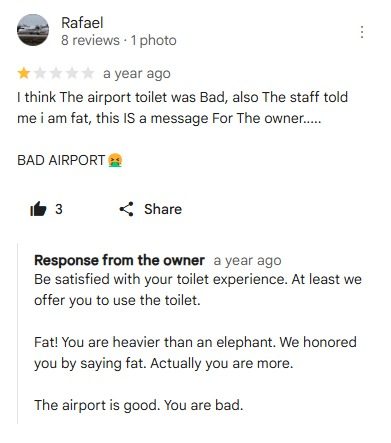
The Incident: A Negative Review
A recent review by a traveler named Rafael shed light on a distressing experience. The review highlighted two major issues: the condition of the airport toilet and the rude behavior of the staff. Rafael described the toilet as bad, which is a common complaint in public spaces but can be particularly jarring in places like airports where hygiene is paramount. The staff's behavior, however, took the situation to a new low. Rafael reported that the staff told him he was fat, a comment that was not only offensive but also highly inappropriate.
The Owner's Response: A Misstep
The owner's response to Rafael's review was equally problematic. Instead of addressing the legitimate concerns raised, the owner's response was dismissive and offensive. They pointed out that at least the toilet was available for use, which is a trivialization of a valid complaint. Furthermore, the owner went on to insult Rafael, comparing his weight to that of an elephant and suggesting that calling him fat was a compliment. The response concluded with the statement, "The airport is good. You are bad," which only escalated the situation and demonstrated a lack of professionalism.
The Impact of Poor Responses
Such responses can have far-reaching consequences. They not only fail to address the original complaint but also create a negative impression of the airport in the minds of other travelers. In an age where public reviews and social media can make or break a brand, an offensive response can quickly go viral, leading to widespread criticism and potential boycotts.
Lessons Learned
This incident underscores the importance of handling negative reviews with care and empathy. Here are a few key points to consider:
- Acknowledge the Complaint: Address the issues raised in the review directly. Do not dismiss or belittle the concerns of the reviewer.
- Apologize and Empathize: Show empathy and apologize for the inconvenience or discomfort caused. This can go a long way in diffusing tension and showing that the airport values its customers' experiences.
- Offer a Solution: Provide a clear plan of action to resolve the issue. This could include an investigation into the matter, improvements to the facilities, or staff training to prevent similar incidents in the future.
- Professionalism: Maintain a professional and respectful tone in all communications. Avoid personal attacks or dismissive language, as these can escalate the situation and damage the airport's reputation.
Practical Tips
1. Develop a Clear Review Policy
Airports should have a clear policy for handling negative reviews. This policy should outline the steps to be taken, from acknowledging the complaint to offering a solution and following up with the customer. A well-defined policy can help ensure consistency and professionalism in all responses.
2. Train Staff on Customer Service
Staff training is crucial for maintaining a positive customer experience. Employees should be trained to handle complaints with empathy, professionalism, and a focus on resolving the issue rather than escalating it. Regular training sessions can help ensure that staff are equipped to handle a variety of situations.
3. Monitor and Respond Promptly
Monitoring reviews and feedback is essential. Prompt responses to negative reviews can help mitigate damage and show customers that their concerns are being taken seriously. This proactive approach can improve customer satisfaction and enhance the airport's reputation.
4. Encourage Positive Feedback
Encouraging travelers to leave positive reviews can also help balance out negative feedback. Publicly recognizing and rewarding positive experiences can create a more positive image and encourage more travelers to share their good experiences.
Important Takeaways
Don't Dismiss Customer Concerns
Dismissing or belittling customer concerns can be highly detrimental. Every complaint, no matter how small, should be taken seriously and addressed appropriately. Customers appreciate being heard and valued, and addressing their concerns can significantly improve their experience.
Empathy and Professionalism Are Key
Empathy and professionalism are crucial in customer service. Acknowledging the customer's feelings, apologizing for any inconvenience, and offering a solution can go a long way in resolving issues and maintaining a positive image.
Public Relations Matter
In today's connected world, public relations matter more than ever. How an airport responds to negative reviews can have a ripple effect, influencing public opinion and potentially leading to widespread criticism or support. Therefore, managing reviews and feedback with care and professionalism is essential.
Conclusion
Negative reviews and ineffective responses can have far-reaching consequences, impacting an airport's reputation and public perception. By acknowledging complaints, apologizing and empathizing, offering solutions, and maintaining professionalism, airports can handle negative reviews effectively and enhance their overall customer experience. Developing a clear review policy, training staff on customer service, monitoring reviews, and encouraging positive feedback are practical steps that can help in managing reviews effectively.
Addressing negative reviews with care and professionalism is not just about resolving individual complaints; it's about building a positive image and ensuring that travelers have a pleasant experience. By taking these steps, airports can turn negative experiences into opportunities for improvement and growth.
Watch the Reel
Questions readers ask
Why is it important for airports to address negative reviews?
Addressing negative reviews is crucial for airports as it directly impacts their reputation and customer satisfaction. Prompt and appropriate responses can mitigate damage, while dismissive reactions can exacerbate issues and lead to further criticism. Effective review management ensures that travelers feel heard and valued, fostering a positive public image.
What are the consequences of a poorly handled review?
A poorly handled review can result in a significant drop in customer satisfaction, trust, and overall airport reputation. It can lead to further negative publicity, as dissatisfied passengers may share their experiences widely, potentially deterring future travelers and impacting the airport's operational and financial standing.
What are some common mistakes in responding to negative reviews?
Common mistakes include dismissing the reviewer’s concerns, becoming defensive, using inadequate language, and failing to offer a resolution. These mistakes can escalate tensions and reinforce the impression of poor customer service. It’s important to approach each review with empathy and a genuine desire to resolve the issue.
How should an airport respond to a rude or offensive review?
When faced with a rude or offensive review, an airport should maintain professionalism and avoid engaging in a heated exchange. The response should acknowledge the reviewer’s feelings, apologize for any inconvenience, and focus on the underlying issue, while avoiding personal attacks or misunderstandings.
What steps should airport staff follow when handling a complaint?
Airport staff should listen attentively to the complaint, empathize with the customer, and gather all relevant details. They should then offer a sincere apology, propose a solution, and follow up to ensure the issue has been resolved. It’s essential to document the complaint and the steps taken to address it, both for transparency and for future reference.
How can airports improve their public relations through review management?
Airports can improve their public relations by fostering a culture of responsiveness and accountability. Training staff to handle complaints effectively, encouraging transparency, and adopting a proactive approach to customer feedback can significantly boost an airport’s image. Regularly analyzing and acting on review data can also help identify areas for improvement.
What are the key lessons from the recent airport review mishandling incident?
The key lessons include the importance of professionalism, empathy, and prompt action in responding to negative feedback. The incident underscores the need for staff to be trained in handling complaints and the necessity of maintaining a calm and respectful demeanor. It also highlights the potential for a single mishandled review to have far-reaching impacts on an airport’s reputation.
Related deep dives
Similar reads based on topic and creator.




Recent articles
Fresh deep dives from the latest Reels we unpacked.




Comments
Be the first to comment.