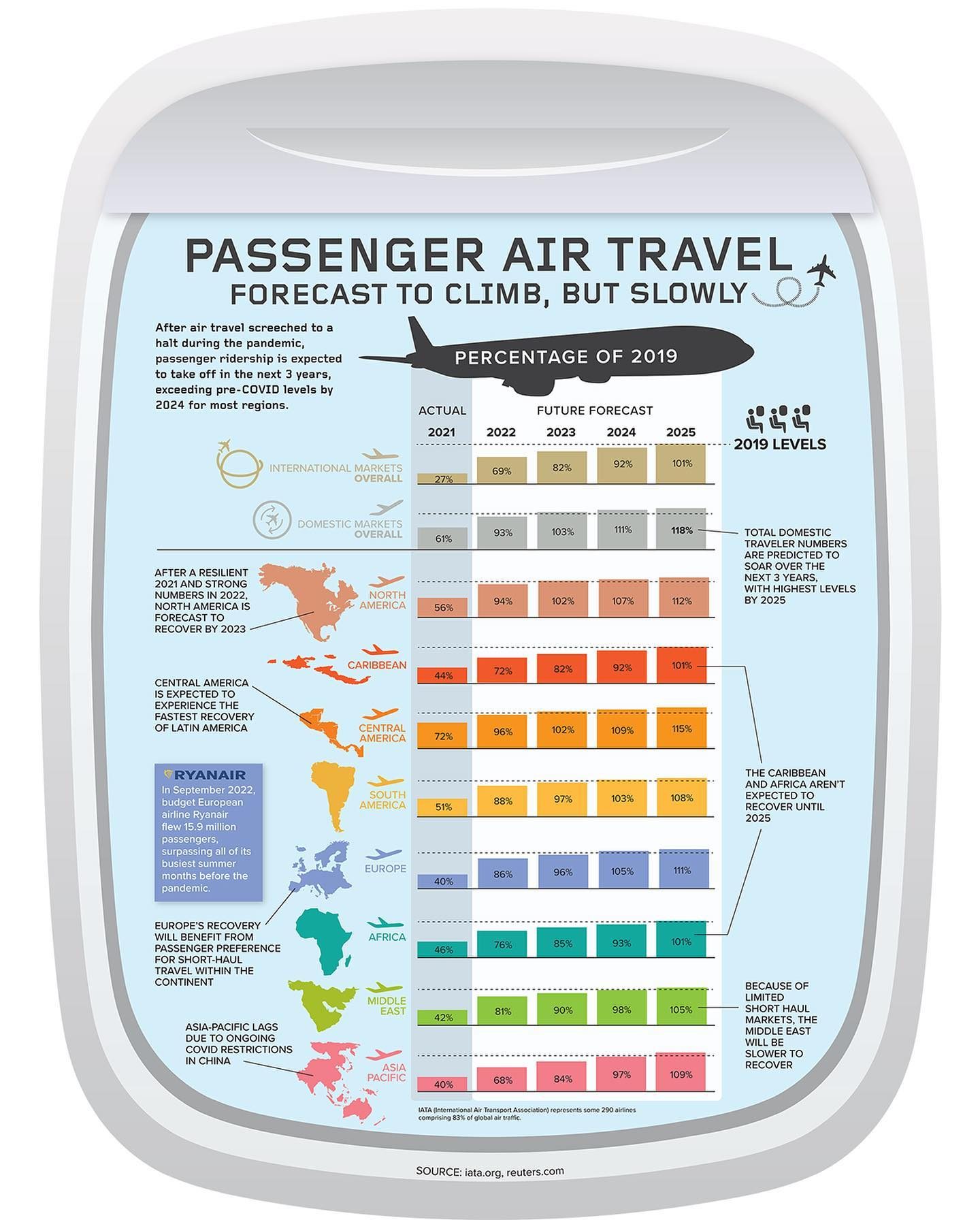
Passenger Air Travel Forecast
Air travel has been one of the most affected industries by the COVID-19 pandemic. The global halt in travel led to a significant drop in passenger numbers, with many countries closing their borders and implementing strict travel restrictions. As travel restrictions ease and vaccination rates increase, the air travel industry is slowly recovering. The return to pre-pandemic levels of air travel is a topic of great interest, especially for travelers, airlines, and other stakeholders in the industry.
Why This Matters
The air travel industry is a crucial component of the global economy, contributing to tourism, trade, and business activities. Understanding the forecast for passenger air travel is essential for various reasons:
- Economic Recovery: The air travel industry supports millions of jobs worldwide. A return to pre-pandemic levels would signal a positive step towards economic recovery.
- Travel Planning: Travelers need to know when they can expect normal travel conditions to resume, allowing them to plan vacations, business trips, and family visits.
- Investment Opportunities: Airlines, airports, and related businesses need reliable forecasts to make informed investment decisions.
- Policy Making: Governments and regulatory bodies use air travel data to shape policies and protocols related to travel and tourism.
Main Discussion
Global Air Travel Recovery
The recovery of air travel varies significantly across different regions. International markets, which were severely impacted by border closures and travel bans, are expected to climb back slowly. The forecast indicates that while international travel will increase, it may not reach pre-pandemic levels by 2025.
Regional Differences
North America
North America is projected to be one of the first regions to exceed pre-COVID levels. This is largely due to the early rollout of vaccines and the lifting of travel restrictions. By 2024, North America is expected to see a significant increase in air travel, potentially surpassing 2019 levels.
Europe
Europe's recovery is closely tied to the performance of short-haul airlines, which are expected to drive the region's air travel growth. The European market recovery will benefit significantly from the short-haul market, which includes airlines like Ryanair.
Ryanair, Europe's largest low-cost carrier, has been a key player in the region's recovery. The airline is expected to fly 55 million passengers in the near future, showing a strong recovery trajectory. Ryanair's performance is a good indicator of the broader European market's recovery, as it serves a large number of short-haul routes.
Central America, Caribbean, and South America
These regions are expected to see a steady recovery, with passenger numbers gradually increasing over the next few years. However, travel to these regions may not fully return to pre-pandemic levels until 2025.
Africa, Middle East, and Asia-Pacific
Africa, the Middle East, and the Asia-Pacific region are also expected to recover, though at varying paces. Some regions, like the Middle East, are likely to see a faster recovery due to their strategic global positions and strong tourism sectors. However, the Asia-Pacific region, particularly countries like China and Japan, may take longer to fully recover due to ongoing travel restrictions and strict COVID-19 protocols.
Domestic vs. International Travel
Domestic travel has shown a faster recovery compared to international travel. This is largely due to the ease of travel within countries and the relaxation of domestic travel restrictions. As a result, total domestic traveler numbers are projected to surpass 2019 levels by 2025. This trend is expected to continue as more people become comfortable with traveling again and as vaccination rates increase.
Practical Tips
If you're planning to travel or are involved in the air travel industry, here are some practical tips to help you navigate the current landscape:
For Travelers
- Stay Informed: Keep an eye on travel advisories and regulations for your destination. Requirements can change rapidly, affecting your travel plans.
- Plan Ahead: Book your flights and accommodations well in advance, as demand can be unpredictable.
- Be Flexible: Consider flexible tickets and travel insurance to protect your plans in case of unexpected changes.
- Follow Health Guidelines: Adhere to health and safety guidelines, including wearing masks, practicing social distancing, and getting vaccinated if possible.
For Airlines and Industry Stakeholders
- Monitor Data: Regularly review air travel forecasts and data to make informed decisions.
- Adapt Your Strategies: Be prepared to adjust your operations based on the latest trends and forecasts. This could mean adjusting routes, pricing, or services.
- Focus on Safety: Prioritize health and safety measures to build passenger confidence and trust.
- Innovate and Diversify: Explore new markets and services to diversify your revenue streams and reduce dependence on traditional travel patterns.
Important Takeaways
- Regional Variability: The recovery of air travel is not uniform across regions. North America is expected to recover faster, while other regions may take longer.
- Domestic vs. International: Domestic travel is expected to recover faster than international travel.
- Importance of Data: Accurate and up-to-date data is crucial for making informed decisions in the air travel industry.
- Health and Safety: Adhering to health guidelines and prioritizing safety measures will be key to rebuilding passenger confidence.
Conclusion
The forecast for passenger air travel recovery is a complex and evolving landscape. While significant progress has been made, the return to pre-pandemic levels will vary by region and type of travel. Understanding these trends and staying informed will be essential for travelers, airlines, and industry stakeholders as they navigate the road to recovery.
Watch the Reel
Questions readers ask
When is air travel expected to return to 2019 levels?
The recovery of air travel to 2019 levels is anticipated to be gradual, with different regions progressing at varying paces. North America is leading the recovery, while international markets are expected to lag behind.
What are the key factors influencing the air travel recovery timeline?
The easing of travel restrictions, increasing vaccination rates, and the overall global health situation are key factors influencing the timeline for air travel recovery. Additionally, changes in travel policies and consumer confidence in air travel play a significant role.
How will the recovery of passenger numbers impact the economy?
The recovery of passenger numbers is crucial for economic recovery, as air travel contributes significantly to tourism, trade, and business activities. A resurgence in air travel can lead to increased investments, job creation, and overall economic growth.
What are the differences between domestic and international air travel recovery?
Domestic air travel is generally recovering faster than international travel due to fewer restrictions and reduced health concerns. International travel faces additional challenges related to border controls and varying health regulations across countries.
What trends are expected in the air travel market in the coming years?
In the coming years, the air travel market is expected to see a rise in domestic travel and an increase in leisure travel. Business travel is also anticipated to recover, although it may take longer than leisure travel. Additionally, there may be an increased focus on health and safety protocols within the industry.
Which airlines, like Ryanair, are expected to lead the recovery in European air travel?
Low-cost carriers like Ryanair are expected to play a significant role in the recovery of European air travel. These airlines often focus on leisure travel and domestic routes, which are likely to rebound more quickly than international business travel.
How can travelers and investors stay informed about the latest trends in air travel?
Travelers and investors can stay informed by following industry reports, monitoring government policy changes, and keeping an eye on visual trends in air travel. Additionally, consulting with industry experts and analyzing market data can provide valuable insights into the latest trends and developments.
Related deep dives
Similar reads based on topic and creator.




Recent articles
Fresh deep dives from the latest Reels we unpacked.




Comments
Be the first to comment.