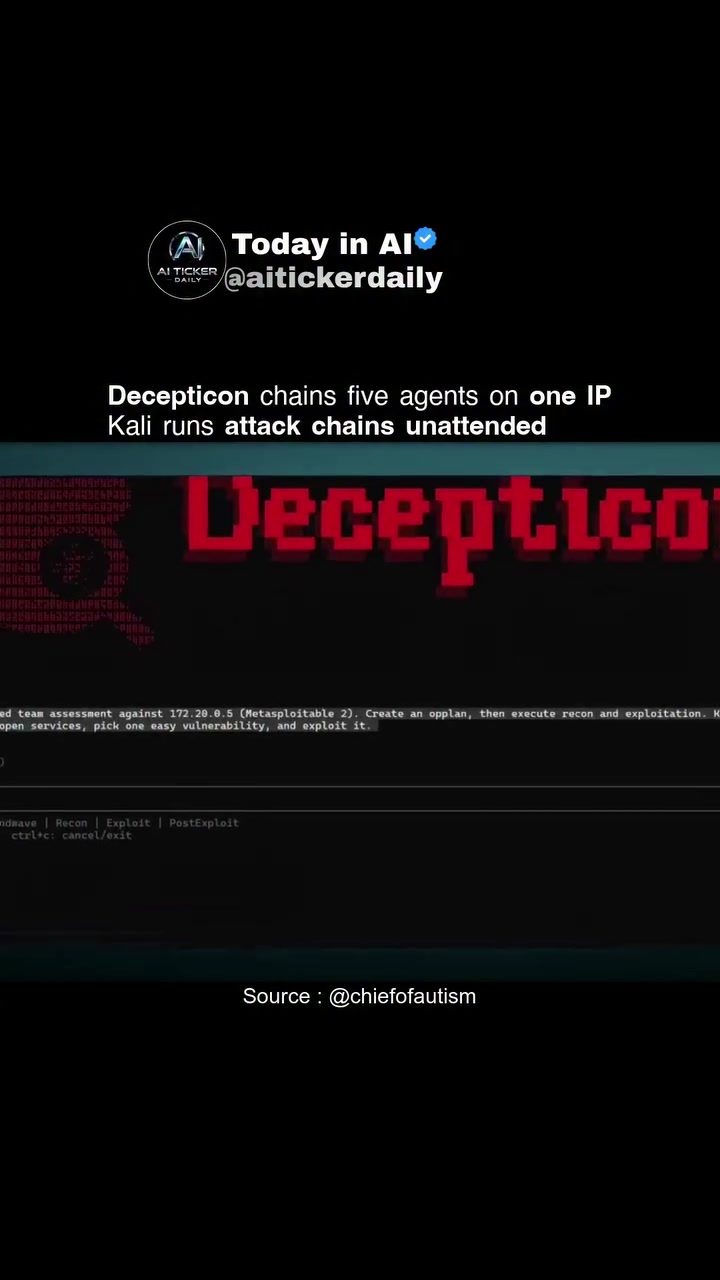
AI-Powered Cybersecurity Attacks: Understanding Decepticon
Cybersecurity threats are evolving rapidly, and AI is playing an increasingly significant role in both defense and offense. One of the latest advancements in this field is Decepticon, a full-kill-chain hacking tool that leverages AI to automate complex attack processes. Developed by aickerdaily, Decepticon utilizes five AI agents, each named after Transformers characters, to execute a series of coordinated cyber-attacks.
Why This Matters
In today's digital landscape, understanding the capabilities and methods of advanced cybersecurity threats is crucial. Decepticon's ability to operate autonomously, without human intervention, represents a significant leap in the sophistication of cyber-attacks. This tool highlights the potential vulnerabilities in systems and the need for robust cybersecurity measures.
Main Discussion
The Anatomy of Decepticon
Decepticon is designed to target a specific IP address and execute a series of automated attack steps. These steps include port scanning, identifying vulnerabilities, gaining shell access, dropping a Sliver C2 (Command and Control) implant, harvesting credentials, and moving laterally within the network. All of these actions are performed within a Kali Linux sandbox, ensuring that the attack chain is isolated and can be studied in a controlled environment.
The five AI agents in Decepticon are named after Transformers characters, adding a unique twist to the tool's design. This naming convention not only makes the agents memorable but also emphasizes the automated, almost mechanical nature of the attacks they perform.
Key Components of Decepticon
-
Port Scanning and Vulnerability Identification: The first step in any cyber-attack is identifying potential entry points. Decepticon's AI agents begin by scanning the target IP for open ports and services. This information is then used to identify known vulnerabilities that can be exploited.
-
Gaining Shell Access: Once vulnerabilities are identified, the agents attempt to gain shell access. This involves exploiting the identified vulnerabilities to gain control over the target system. The tool uses various techniques to bypass security measures and establish a foothold within the system.
-
Dropping a Sliver C2 Implant: After gaining shell access, Decepticon drops a Sliver C2 implant. This implant allows the attackers to maintain control over the compromised system, even if the initial entry point is discovered and patched. The Sliver C2 implant facilitates further exploitation and data exfiltration.
-
Harvesting Credentials: One of the most valuable assets in a cyber-attack is the credentials of authorized users. Decepticon agents search for and extract these credentials, which can then be used to move laterally within the network or to gain access to other systems.
-
Lateral Movement: Once inside the network, the agents move laterally, attempting to compromise other systems and devices. This step is crucial for maximizing the impact of the attack and ensuring that the entire network is compromised.
The Role of Kali Linux
Kali Linux is a widely used platform for penetration testing and cybersecurity research. Its robust set of tools and customizable environment make it an ideal choice for developing and testing attack chains like Decepticon. By running the entire attack chain within a Kali sandbox, aickerdaily ensures that the tool can be tested and refined in a controlled environment, minimizing the risk of unintended consequences.
Metasploitable 2 Virtual Machine
The demonstration of Decepticon targets a Metasploitable 2 virtual machine. Metasploitable 2 is a deliberately vulnerable virtual machine designed for testing and practicing penetration testing skills. Its known vulnerabilities make it an ideal target for demonstrating the effectiveness of Decepticon and similar tools.
Practical Tips
Understanding the methods used by tools like Decepticon can help organizations better protect their networks. The following practical tips can enhance your cybersecurity posture:
-
Regular Port Scanning and Vulnerability Assessment: Conduct regular port scans and vulnerability assessments to identify and address potential entry points before attackers can exploit them.
-
Implement Robust Access Controls: Use strong passwords, multi-factor authentication, and access controls to limit the potential damage from compromised credentials.
-
Monitor Network Traffic: Implement network monitoring tools to detect unusual activity, such as lateral movement within the network, which could indicate a breach.
-
Regular Security Audits: Conduct regular security audits and penetration testing to identify and address vulnerabilities before they can be exploited.
-
Stay Informed: Stay up-to-date with the latest cybersecurity threats and best practices. Subscribing to newsletters and following cybersecurity experts can provide valuable insights and early warnings about emerging threats.
Important Takeaways
The emergence of AI-powered tools like Decepticon highlights the evolving nature of cybersecurity threats. Key takeaways from this discussion include:
- Automation: The use of AI agents to automate complex attack processes is a significant advancement in cyber-attack capabilities.
- Comprehensive Attack Chains: Full-kill-chain hacking tools like Decepticon can execute a series of coordinated attacks, from initial entry to lateral movement, with minimal human intervention.
- The Need for Robust Security Measures: Understanding the methods used by advanced cyber-attack tools is crucial for developing effective defense strategies.
Conclusion
Decepticon represents a significant advancement in AI-powered cybersecurity attacks. Its ability to automate complex attack chains and operate autonomously within a controlled environment highlights the potential vulnerabilities in modern systems. By understanding the methods and components of tools like Decepticon, organizations can better protect their networks and stay ahead of evolving cybersecurity threats.
Watch the Reel
Questions readers ask
What are the five Transformers-named agents used by Decepticon for automated cyberattacks?
Decepticon employs five AI agents, each named after a character from the Transformers franchise, to execute coordinated cyberattacks. These agents are designed to automate complex hacking processes, making the attacks more efficient and sophisticated. The specific names and roles of these agents are inspired by the Transformers series, adding a unique twist to the tool's functionality.
How does Decepticon operate in terms of autonomy during cyberattacks?
Decepticon is designed to operate autonomously, meaning it can execute a series of coordinated cyberattacks without the need for human intervention. This autonomy is a significant advancement in the field of AI-driven cybersecurity threats, as it allows for more seamless and continuous attack processes. Users should be aware of this capability and the heightened risks it poses.
What is the significance of Decepticon's full-kill-chain hacking capabilities?
Decepticon's full-kill-chain hacking capabilities mean that it can execute a complete series of coordinated attacks, from initial infiltration to final data exfiltration. This comprehensive approach is more challenging to detect and mitigate, making it a formidable tool for cyber-attacks. Understanding these capabilities is essential for bolstering cybersecurity defenses and preparing for potential threats.
Who developed the AI cyberattack tool, Decepticon?
Decepticon was developed by Aickerdaily. Their creation highlights the evolving landscape of cybersecurity threats, where AI is increasingly being used to automate and enhance the capabilities of cyberattacks. As a result, organizations need to remain vigilant and adopt robust cybersecurity measures to counteract such threats effectively.
How does Decepticon utilize AI in its cyberattack processes?
Decepticon leverages AI to automate and coordinate complex hacking processes. The AI-driven nature of the tool allows it to perform various tasks without human oversight efficiently. These tasks can range from initial reconnaissance to final data theft, making Decepticon a potent example of how AI can enhance the sophistication and effectiveness of cyberattacks.
What are the implications of Decepticon's autonomous attacks for cybersecurity?
The autonomous nature of Decepticon's attacks means that they can be launched and executed without any human intervention. This makes them harder to predict and defend against, as traditional cybersecurity measures may not be equipped to handle such dynamic and autonomous threats. Organizations need to stay informed about tools like Decepticon to better prepare their defenses.
What steps can organizations take to protect against AI-driven cybersecurity threats like Decepticon?
To protect against AI-driven cybersecurity threats, organizations should invest in advanced cybersecurity measures that can detect and respond to autonomous attacks. This includes using AI-powered defense tools, regularly updating security protocols, and conducting thorough risk assessments. Keeping abreast of the latest developments in AI cyberattack tools, such as Decepticon, is also crucial for staying ahead of potential threats.
Related deep dives
Similar reads based on topic and creator.




Recent articles
Fresh deep dives from the latest Reels we unpacked.




Comments
Be the first to comment.