AI and Football Broadcasts
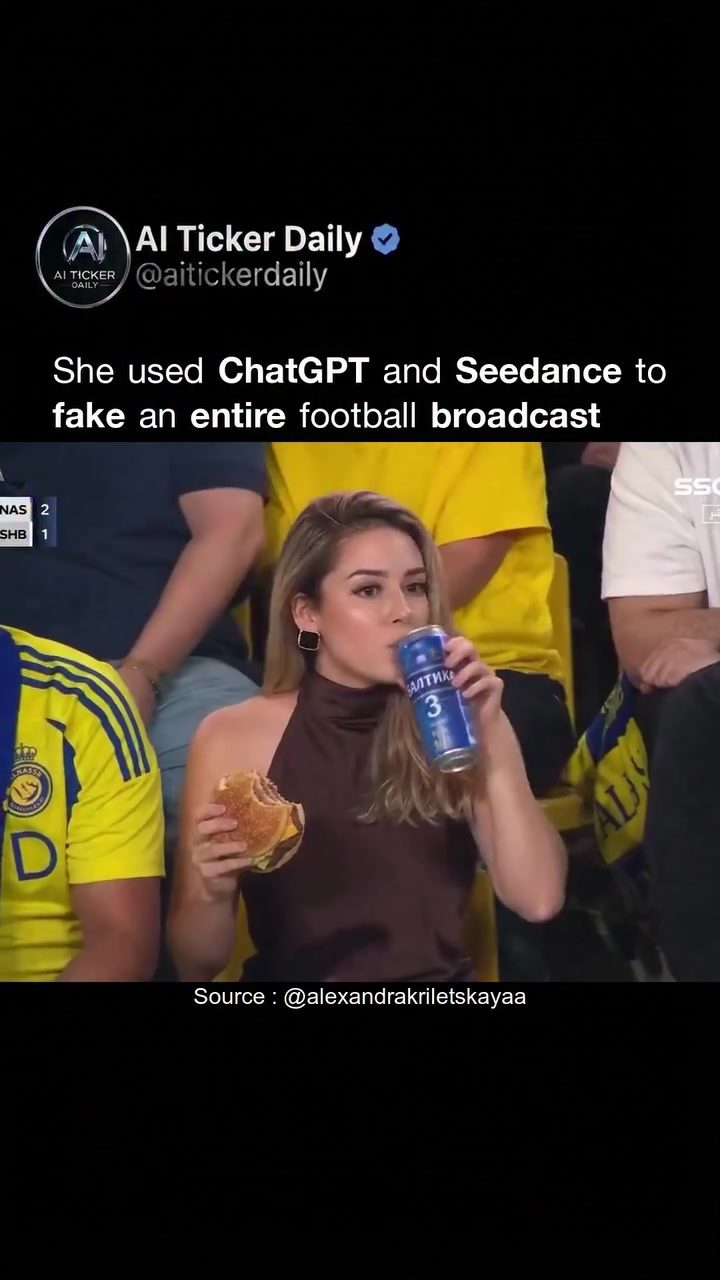
AI tools are revolutionizing the way content is created, and one of the most impressive examples is the ability to generate synthetic media. Recently, a viral demonstration showcased how AI can be used to create convincing fake sports broadcasts. In this case, a creator named Sasha Kriletskaya used tools like ChatGPT and Seedance 2.0 to produce a fake live football broadcast.
Context / Why this matters
The implications of AI in content creation are profound, especially in the realm of live sports broadcasting. The ability to generate realistic synthetic media raises questions about authenticity, misinformation, and the future of content production. As AI becomes more advanced, understanding its capabilities and limitations is crucial for both creators and consumers.
The Tools: ChatGPT and Seedance
ChatGPT is an AI model capable of generating text, images, and even complex visual content. This model has been used to generate stills. It is particularly effective in creating high-quality images that can be manipulated to appear realistic.
Seedance is an AI animation tool developed in China. It's particularly useful for animating still images, turning them into dynamic, moving content. Seedance 2.0 enhances this capability, making it possible to create seamless, realistic animations from static images.
The Process: Creating the Fake Broadcast
The process involved several steps:
-
Generating Stills with ChatGPT: Kriletskaya began by using ChatGPT to generate the necessary still images. These images included herself eating a burger in the stands, kicking the ball into the goal, and receiving a scolding from the sideline, mimicking the style of Jose Mourinho.
-
Animating with Seedance 2.0: Once the stills were generated, she used Seedance 2.0 to animate them. This step was crucial in making the images dynamic and realistic, enhancing the illusion of a live broadcast.
-
Adding Broadcast Elements: The final step involved overlaying broadcast elements like the timer, network watermark, and other visual effects. These elements are essential for creating a convincing live broadcast, as they mimic the authentic look and feel of a real sports broadcast.
Main discussion
The Viral Trend of AI at the Stadium
The "AI at the stadium" trend was already gaining traction, but Sasha Kriletskaya took it to another level. The ability to generate such high-quality, convincing content from a single prompt marks a significant leap in AI capabilities.
The Uncanny Valley to the Broadcast Booth
Initially, fake AI clips often faced challenges in appearing fully realistic. They often fell into the "uncanny valley," where the content was almost but not quite realistic, making it obvious it was fake. However, recent advancements have propelled these clips from the uncanny valley into the broadcast booth, making them appear almost indistinguishable from real content.
The Cost of Producing Fake Content
The cost and complexity of producing high-quality synthetic media have significantly decreased. Previously, creating such content would require a team of experts and substantial resources. Now, it can be done by a single creator with access to the right AI tools and a prompt.
Implications for Future Elections
The ability to generate convincing fake broadcasts has serious implications, especially for future election cycles. The potential for misinformation and manipulation is high, making it essential to develop countermeasures and ensure the integrity of broadcast content.
Practical Tips
For Creators
-
Understand the Tools: Familiarize yourself with AI tools like ChatGPT and Seedance. Experiment with different prompts and settings to achieve the desired results.
-
Refine Your Prompts: The quality of the generated content heavily depends on the prompt. Spend time refining your prompts to get the best output.
-
Add Authentic Details: Pay attention to small details like lighting, crowd reactions, and broadcast overlays. These details can make a significant difference in the realism of the content.
For Consumers
-
Stay Informed: Keep up-to-date with the latest AI advancements and understand the capabilities and limitations of synthetic media.
-
Verify Sources: Always verify the sources of the content you consume. Look for signs of authenticity and be skeptical of content that appears too good to be true.
-
Use Critical Thinking: Develop a critical eye for content. Question the authenticity of what you see and be aware of the potential for manipulated or fake content.
Important takeaways
- AI tools like ChatGPT and Seedance 2.0 can generate highly convincing synthetic media.
- The cost and complexity of producing fake content have decreased significantly.
- The potential for misinformation and manipulation is high, especially in future election cycles.
- Understanding the tools and staying informed is crucial for both creators and consumers.
Conclusion
The ability to create highly convincing fake broadcasts using AI is a game-changer in the world of content creation. As AI tools become more sophisticated, it is essential to understand their capabilities and implications. Whether you are a creator looking to push the boundaries or a consumer aiming to stay informed, staying ahead of the curve is crucial in this rapidly evolving landscape.
Watch the Reel
Questions readers ask
What are some examples of AI tools used in creating synthetic sports content?
AI tools like ChatGPT for text generation and Seedance 2.0 for video synthesis have been used to create convincing fake sports broadcasts. These tools can generate realistic dialogue, commentary, and video footage, making the synthetic content almost indistinguishable from genuine broadcasts.
How does AI impact the authenticity of live sports broadcasts?
AI's ability to create realistic synthetic media raises concerns about authenticity in live sports broadcasting. Viewers may struggle to differentiate between real and AI-generated content, leading to potential misinformation and deception.
Who is Sasha Kriletskaya and what did she do with AI?
Sasha Kriletskaya is a creator who utilized AI tools to produce a fake live football broadcast. She demonstrated the power of synthetic media by generating convincing, AI-driven content that mimicked the style and quality of authentic sports broadcasts.
What are the implications of AI-generated sports broadcasts?
AI-generated sports broadcasts can lead to misinformation and undetrmin the trust in sports media. They can also revolutionize content production by enabling new creative possibilities and engaging audiences with innovative content.
What is synthetic media in the context of sports broadcasting?
Synthetic media in sports broadcasting refers to AI-generated content that mimics real sports events, commentary, and footage. This can include fake broadcasts, commentary, and other media that appear authentic but are entirely computer-generated.
What should viewers and broadcasters be aware of regarding AI in sports content?
Viewers and broadcasters should be aware of the potential for misinformation and the need for critical thinking. AI's ability to create realistic content means that viewers must be discerning, while broadcasters need to implement measures to maintain content authenticity and integrity.
How can AI tools like ChatGPT and Seedance 2.0 be used responsibly in sports broadcasting?
AI tools can be used responsibly by being transparent about their use, ensuring that any AI-generated content is clearly labeled as such. Broadcasters should also implement verification processes to maintain the integrity of live sports broadcasts and prevent the spread of misinformation.
Related deep dives
Similar reads based on topic and creator.




Recent articles
Fresh deep dives from the latest Reels we unpacked.




Comments
Be the first to comment.