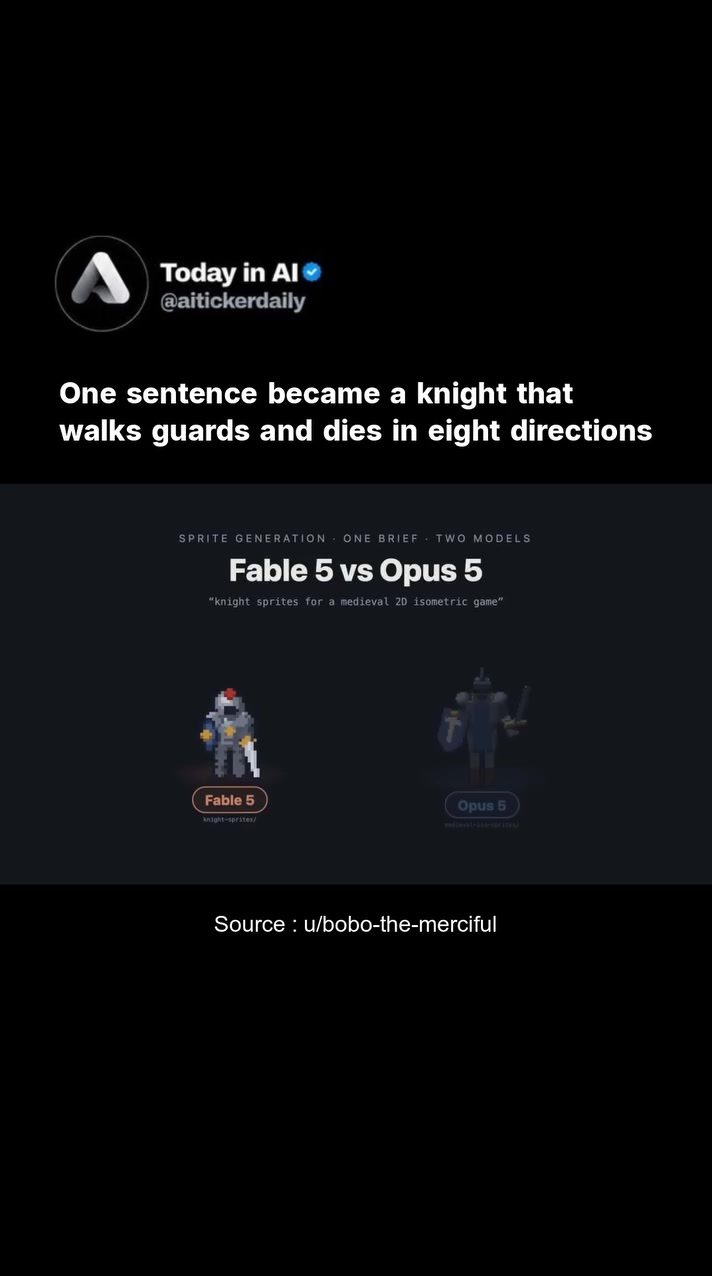
AI-Generated Sprite Packs: A Comparison of Style, Scope, and Delivery
Sprite packs are critical for bringing video games to life, and AI is revolutionizing how we create them. AI Sprite Generation tools have enabled the creation of detailed sprite packs with remarkable efficiency, but as we will see in the comparison of Fable 5 and Opus 5, the creative freedom and variety in delivery can be staggering.
Context: The Importance of Sprite Paks in the Video Game Industry
Sprite packs are sets of 2D images that represent characters, objects, or environments in a video game. The efficiency and visual quality of these sprite packs can significantly impact the game’s overall appeal and performance. AI-generated sprite packs are increasingly popular due to their ability to produce high-quality, detailed, and diverse sprites quickly. But the creative interpretations by AI models can lead to vastly different outcomes, even when given the same design brief.
The Challenges and Opportunities of AI Sprite Generation
When designing a sprite pack for a medieval 2D isometric game, AI models can deliver various outputs. Fable 5 and Opus 5 are two AI-generated sprite packs created from the same brief. This comparison of these two packs offers insight into the variety and complexity of AI-generated sprite packs. The outputs feature different facing directions, color variants, and delivery methods, including pixel art and 3D-rendered production packs.
The Fable 5 sprite pack, for example, focuses on classic pixel art directly produced in code. It includes three animations, a single color scheme, a README document, and 10 files totaling 174 KB. This pack is straightforward and efficient, ideal for quick development and prototyping.
In contrast, the Opus 5 sprite pack, written as a 3D model in code, and then flattened to pixels, is more comprehensive. It includes six animations (including guard, hurt, and death) in eight facing directions, four team liveries, 1024 unique frame cells, and a separate shadow layer. The pack also comes with an engine manifest, making it a production-ready asset. This pack totals 49 files and weighs in at 9.3 MB, roughly 8 times the animation frames of Fable 5.
Understanding the Deliverables: Pixel Art vs. 3D-Rendered Production Packs
The key difference between the two packs lies in their approach and scope. The Fable 5 pack can be seen as a starting point. It provides a basic set of animations and a single color scheme, allowing developers to build on and customize the sprites further. This approach is useful for early development stages or when the project budget is limited.
The Opus 5 pack, on the other hand, is a production-ready asset. It includes various animations, multiple color variants, and a shadow layer, making it suitable for final game development. The 3D-rendered production pack approach ensures high visual quality and detailed animations, which are essential for a polished game experience. However, this level of detail comes with a trade-off: the pack is more data-intensive and may require more processing power to run smoothly.
Sprite Packs: Artwork and Asset Depth
The difference in the two sprite packs emphasizes the importance of clear and specific design briefs. Both packs were created from the same brief, yet the outputs vary significantly due to each model's unique interpretation of the task.
Fable 5 features a single palette, making it versatile for various game environments. This pack is ideal for developers who need a straightforward and easy-to-implement solution. The simplicity of the Fable 5 pack ensures that it can be quickly integrated into a game, making it a valuable asset for rapid development cycles.
Opus 5, with its four team liveries, offers more customization options. This makes it suitable for games that require multiple character variations or unique team designs. The additional animations and the shadow layer in Opus 5 provide a more dynamic and immersive gameplay experience, enhancing the player's interaction with the game world.
Practical Tips for Creating Effective Sprite Packs
When commissioning AI-generated sprite packs, it's crucial to consider the following:
- Define the Scope Clearly: Be explicit about the animations, color variants, and additional features required. This clarity will help the AI model deliver a pack that meets your specific needs.
- Consider the Development Stage: Determine whether you need a basic starting point or a production-ready asset. This decision will influence the type of sprite pack you should request.
- Test and Iterate: Review the initial outputs and provide feedback to refine the sprites. AI models can be adjusted to better match your vision, ensuring that the final product aligns with your game's aesthetic and requirements.
Important Takeaways
The comparison of Fable 5 and Opus 5 highlights the versatility and complexity of AI-generated sprite packs. While both packs were created from the same brief, they offer distinct features and delivery methods. Understanding these differences is crucial for developers looking to integrate high-quality, efficient sprite packs into their games.
Conclusion
AI sprite generation is transforming the video game industry by enabling the creation of detailed and diverse sprite packs. The comparison of Fable 5 and Opus 5 demonstrates the range of outputs possible from AI models, even when given the same brief. By understanding the strengths and limitations of each approach, developers can better integrate AI-generated sprite packs into their projects, ensuring a balance between efficiency and visual quality.
Watch the Reel
Questions readers ask
What are AI sprite packs and why are they important in game development?
AI sprite packs are collections of 2D images generated using artificial intelligence, representing characters, objects, and environments in video games. They are crucial in game development as they enable developers to swiftly create high-quality, detailed visuals, enhancing both the game's appeal and performance. The use of AI sprite packs allows for a more efficient workflow, allowing developers to focus on other aspects of game creation such as gameplay and narrative.
How do Fable 5 and Opus 5 sprite packs differ in style and delivery?
Fable 5 and Opus 5 sprite packs offer distinct styles and delivery methods. Fable 5 is known for its isometric and medieval-themed sprites, providing a consistent and cohesive aesthetic for fantasy games. In contrast, Opus 5 offers a broader range of styles, including pixel art and modern designs, and provides more flexible delivery options, such as customizable sprite packs tailored to specific game requirements.
What types of games are best suited for Fable 5 and Opus 5 sprite packs?
Fable 5 sprite packs are ideal for games with a medieval or fantasy theme due to their detailed, isometric style. Opus 5 sprite packs, with their varied styles, are suitable for a wide range of games, from retro pixel art to contemporary designs. Opus 5's flexibility makes it a great choice for developers looking to create unique and diverse game worlds.
Can AI sprite packs be customized to fit the specific needs of a game?
Yes, AI sprite packs can often be customized to fit the specific needs of a game. Opus 5, in particular, offers customization options, allowing developers to adjust the styles and details of the sprites to better match their game's art direction. This level of customization ensures that the sprite packs integrate seamlessly into the game's overall design, enhancing the visual cohesion and storytelling.
How does the use of AI in sprite generation benefit developers?
AI in sprite generation benefits developers by significantly speeding up the creation process, allowing for the production of high-quality visuals in a fraction of the time it would take to create them manually. This efficiency enables developers to iterate more quickly, experiment with different designs, and ultimately deliver a more polished and engaging final product.
What are the key differences in the delivery methods of Fable 5 and Opus 5 sprite packs?
Fable 5 delivers sprite packs in a consistent, isometric style, typically focusing on medieval themes. This makes Fable 5 a reliable choice for developers aiming for a specific, cohesive aesthetic. Conversely, Opus 5 offers a more flexible delivery method, providing a wide array of styles and customization options. This allows developers to tailor the sprite packs to the unique requirements of their game, offering greater versatility in design.
Are AI-generated sprite packs suitable for both indie and large-scale game development?
Yes, AI-generated sprite packs are suitable for both indie and large-scale game development. For indie developers, AI sprite packs provide a cost-effective way to achieve professional-quality visuals without needing a large art team. For large-scale development, AI sprite packs offer a way to streamline the production process, enabling teams to focus on more complex aspects of game creation while still maintaining high visual standards.
Related deep dives
Similar reads based on topic and creator.




Recent articles
Fresh deep dives from the latest Reels we unpacked.




Comments
Be the first to comment.