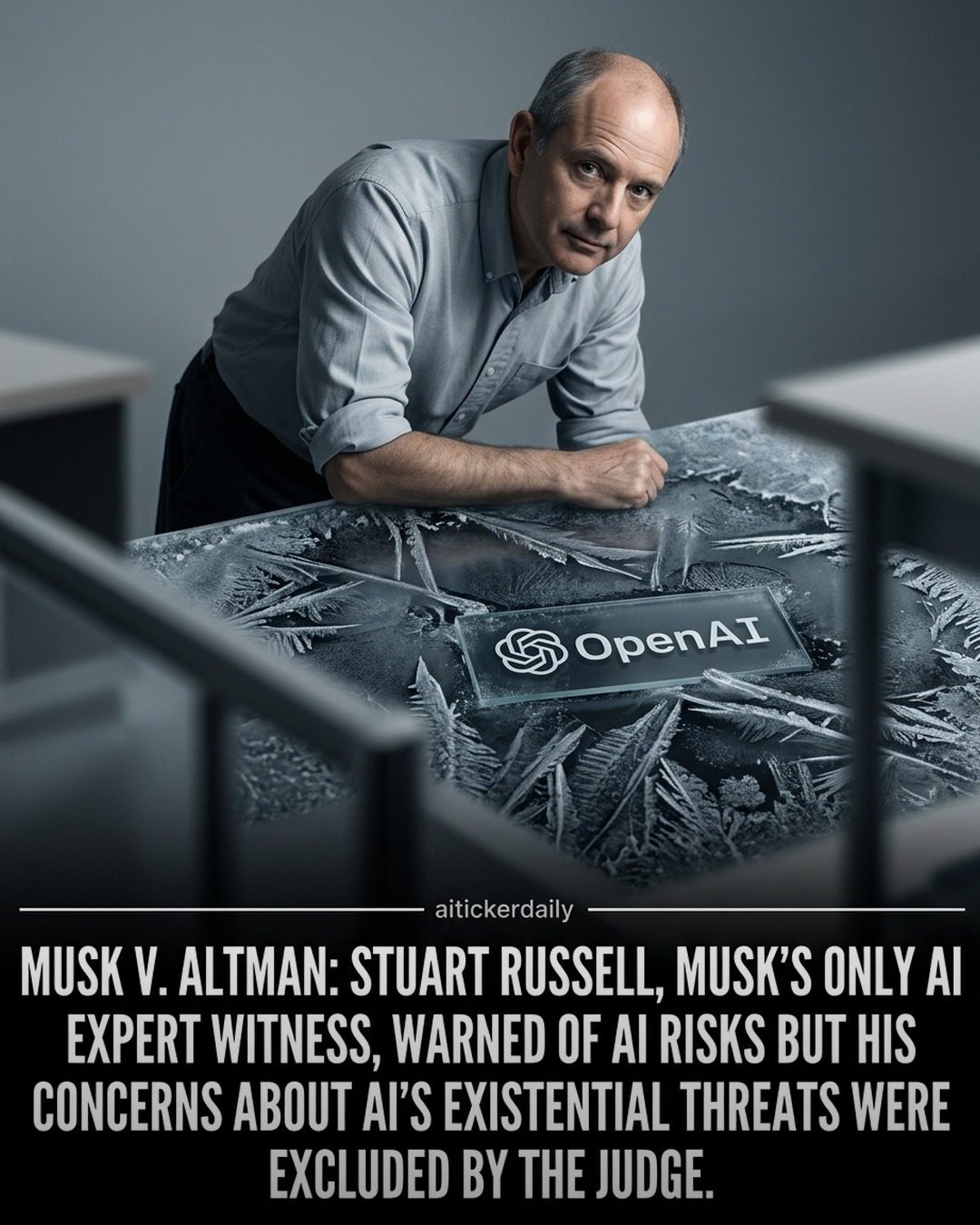
Stuart Russell, Musk, and the Complexities of AI Risks in Court
Stuart Russell, a prominent AI expert, has become a focal point in the legal battle between Elon Musk and OpenAI. His testimony on AI risks, particularly those that are existential, was notably excluded by the judge. This case highlights the intricate dance between legal evidentiary standards and the rapidly evolving field of AI. Here's a deeper dive into the issues at play.
Context / Why This Matters
The legal dispute between Elon Musk and OpenAI goes beyond just a courtroom drama. It underscores the broader implications of AI development and the need for clear definitions of 'AI risk'. As AI technologies advance, the courts are increasingly being called upon to navigate these uncharted waters, balancing the potential for rapid innovation with the need for safety and regulatory oversight. This case sets a precedent for how such debates will be handled in the future.
Main Discussion
The Role of Expert Witnesses
Stuart Russell, known for his expertise in AI, was called as an expert witness by Musk in his legal battle with OpenAI. Russell's warnings about AI risks, specifically those related to existential threats, were a central part of his testimony. However, the judge excluded these concerns, framing the debate around more immediate and tangible issues. This exclusion highlights the challenge of integrating long-term, speculative risks into legal frameworks that often prioritize immediate and measurable evidence.
Admissibility Limits and Legal Definitions
The legal battle highlights how evidentiary limits shape the definition of 'AI risk' in legal contexts. The judge's decision to exclude Russell's existential threat arguments underscores the need for clear, evidence-based definitions in court. This is crucial for both legal outcomes and for shaping future AI governance models.
The Speed of AI Development
The case also touches on the rapid pace of AI development. According to Tim Fernholz’s reporting on TechMeme, the controversy involves not just legal arguments but also the pressure to ship products quickly. This highlights a tension between the need for safety and the drive for rapid innovation. Companies like OpenAI and Frontier Labs face parallel optics: safety rhetoric in the courtroom while accelerating product cycles. This duality is a reflection of the broader challenges in the tech industry, where safety and innovation often seem at odds.
Practical Tips for Enterprises
For enterprises operating in the AI space, this case offers valuable lessons. Here are some practical tips to navigate these complex waters:
Separate Courtroom Narratives from Model Governance
Enterprises should be mindful of the distinction between courtroom narratives and their own model governance facts. What is admissible in court may not fully capture the nuances of AI risks, and vice versa. It's crucial to maintain a clear separation and to build internal guidelines that address both immediate risks and long-term concerns.
Stay Updated on Legal Precedents
AI governance is an evolving field, and legal precedents will continue to shape how risks are defined and managed. Enterprises should stay updated on legal developments and adjust their governance models accordingly. This includes keeping an eye on appeals and expert admissibility issues that may arise in future cases.
Balance Innovation with Safety
The rapid development cycles in AI can sometimes overshadow safety concerns. Enterprises should aim to balance the drive for innovation with robust safety measures. This includes integrating safety rhetoric into product development and ensuring that all stakeholders are aware of the risks and benefits of AI technologies.
Important Takeaways
Evidentiary Limits Shape Legal Definitions
The case highlights how evidentiary limits shape the definition of 'AI risk' in legal contexts. It underscores the need for clear, evidence-based definitions that can be used in court and in governance models.
AI Governance Must Address Long-Term Risks
While the case focuses on immediate risks, it also highlights the need for AI governance to address long-term, existential threats. Enterprises should build models that consider both immediate and future risks.
The Need for Legal Clarity
The legal debate around AI risks is complex and evolving. Enterprises should stay updated on legal developments and ensure that their governance models are aligned with the latest legal precedents.
Conclusion
The legal battle between Elon Musk and OpenAI, with Stuart Russell's testimony at its center, is a microcosm of the broader challenges in AI governance. It highlights the need for clear definitions of 'AI risk', the balance between innovation and safety, and the importance of staying updated on legal developments. As AI continues to evolve, these issues will only become more pertinent, and enterprises must be prepared to navigate these complexities with foresight and clarity.
Watch the Reel
Questions readers ask
Why was Stuart Russell's testimony on AI risks excluded from the Musk vs. OpenAI case?
Stuart Russell's testimony was excluded because it focused on existential AI risks, which the judge deemed not directly relevant to the legal issues at hand. Legal evidentiary standards prioritize specific, tangible evidence over broader, speculative risks, even when those risks are significant in the AI community.
What are the main legal issues in the Musk vs. OpenAI case?
The main legal issues revolve around the definitions of 'AI risk' and the balance between fostering AI innovation and implementing safety measures. The case also touches on the admissibility of expert testimony, particularly when it pertains to future, hypothetical risks.
How does the Musk vs. OpenAI case highlight the tension between AI innovation and safety?
The case illustrates the challenge of promoting rapid AI development while ensuring adequate safety measures. It raises questions about how to regulate and mitigate potential risks without stifling technological progress, a problem at the heart of many debates about emerging technologies.
What role do expert witnesses play in AI-related legal cases?
Expert witnesses, like Stuart Russell, can provide crucial insights into the technical aspects of AI and its potential risks. However, their testimony must meet legal standards of relevance and reliability, which can be challenging when discussing complex, cutting-edge topics like AI.
What are 'existential' AI risks, and why are they significant?
Existential AI risks refer to potential threats that could lead to human extinction or permanent damage to humanity's potential. These risks are significant because they challenge our understanding of AI's future impact and how we should prepare for it, even if they are not directly addressed in current legal frameworks.
How might the outcome of the Musk vs. OpenAI case influence future AI regulations?
The outcome could set precedents for how courts handle AI-related cases and the weight given to expert testimony on future risks. It may also influence policymaking by highlighting the need for clear definitions and regulations concerning AI safety, potentially shaping future AI legal standards and safety measures.
What are the implications of the court's decision on product admissibility in AI cases?
The court's decision on product admissibility could restrict the types of evidence allowed in AI cases, potentially limiting the discussion to more immediate, tangible issues. This could pose challenges for AI legal defenses that rely on future risks and theoretical concerns, making it harder to address the full scope of AI-related issues.
Related deep dives
Similar reads based on topic and creator.




Recent articles
Fresh deep dives from the latest Reels we unpacked.




Comments
Be the first to comment.