AI Trailer Generation
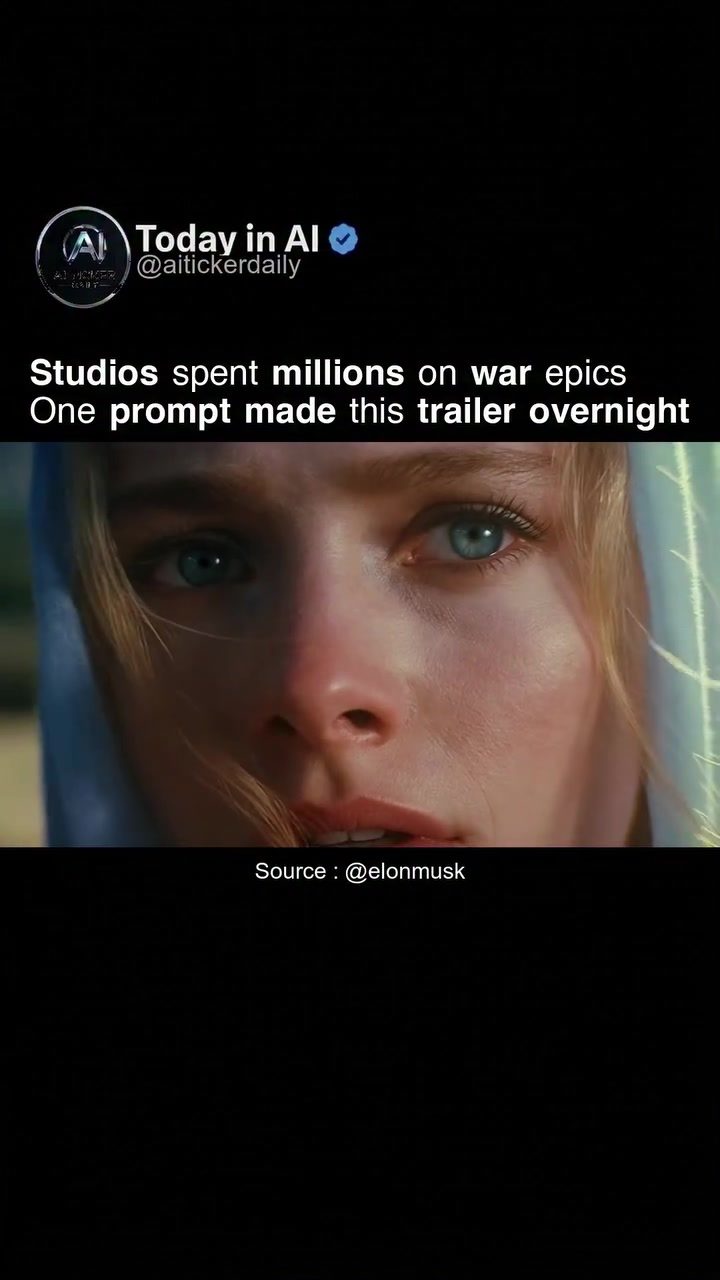
The world of filmmaking is undergoing a revolutionary shift with the advent of AI-generated trailers. Traditional methods of producing cinematic trailers, which often involve substantial budgets and extensive production time, are being complemented and sometimes even replaced by AI. This shift was dramatically illustrated with the creation of a cinematic Iliad-style trailer showcasing ancient warfare and mythic scale, all generated through a single prompt.
Context / Why This Matters
The traditional process of producing a high-quality trailer involves a combination of scriptwriting, casting, filming, and post-production. This often requires a team of professionals, including directors, cinematographers, and editors, and can consume months of work. The cost of these productions can easily reach millions of dollars. The emergence of AI in this sector promises to streamline and potentially reduce the cost of trailer production, making it accessible to a broader range of filmmakers and studios.
Main Discussion
The Rise of AI in Filmmaking
AI's role in filmmaking has been growing rapidly, with applications ranging from scriptwriting to special effects. One of the most recent and striking developments is the ability of AI to generate high-quality trailers from a single prompt.
From Ancient Epics to Modern trailer
Traditionally, studios have invested significant resources into creating trailers for ancient epics. These trailers often required extensive visual effects, battle sequences, and a deep understanding of historical contexts. The AI-generated trailer showcases how this process can be simplified and expedited. The trailer, which is reminiscent of iconic scenes from the Iliad, demonstrates the AI's capability to produce visually stunning and emotionally resonant content with minimal input.
The Process of AI Trailer Generation
The creation of the AI-generated trailer involved a single prompt that included details about the desired content, such as ancient warfare and mythic scale. The AI model then generated a trailer overnight, complete with battle scenes, dramatic dialogue, and a cinematic score. This process not only saves time but also reduces the cost significantly, making it a viable alternative to traditional methods.
How AI Models Work
AI models used for trailer generation typically rely on machine learning algorithms trained on vast datasets of film footage, dialogue, and sound effects. These models can analyze and synthesize different elements to create a cohesive and compelling trailer. The process involves several steps, including:
- Text Analysis: The AI interprets the prompt to understand the desired themes, characters, and settings.
- Content Generation: The model generates visuals, sound, and dialogue based on the prompt.
- Post-Production: The AI refines the generated content, ensuring it meets the required quality standards.
The Future of AI in Film and Production
The impact of AI on the film industry extends beyond trailer generation. As AI capabilities continue to evolve, we can expect to see more innovative applications in film production, including scriptwriting, character development, and even directorial decisions. The ability to generate high-quality content quickly and cost-effectively opens up new possibilities for independent filmmakers and smaller studios.
Potential Challenges
While the potential benefits of AI in filmmaking are significant, there are also challenges to consider. One of the main concerns is the issue of authenticity and creativity. Critics argue that AI-generated content may lack the emotional depth and nuance that human creativity provides. Additionally, there are ethical considerations related to the use of AI, including job displacement and the potential for misuse.
Comparing Traditional and AI-Generated Trailers
Traditional trailers are crafted with meticulous attention to detail, often involving extensive research and artistic direction. In contrast, AI-generated trailers rely on algorithms and data-driven decisions. While this can lead to quicker production times and cost savings, it also raises questions about the quality and originality of the content.
Practical Tips
If you're considering using AI for trailer generation, here are some practical tips to help you get started:
Understand the Limitations
While AI can generate impressive results, it's important to understand its limitations. Treat the output as a starting point rather than a finished product. Be prepared to refine and edit the generated content to meet your specific needs.
Choose the Right AI Model
Different AI models have different strengths and weaknesses. Research the available options and choose one that best suits your project's requirements. Consider factors like the quality of the generated content, the ease of use, and the cost.
Leverage Human Expertise
AI can be a powerful tool, but it's not a replacement for human expertise. Collaborate with filmmakers, editors, and other industry professionals to ensure that the final product meets the highest standards of quality.
Important Takeaways
AI trailer generation is a groundbreaking development in the film industry, offering new possibilities for creativity and efficiency. As AI technology continues to evolve, we can expect to see even more innovative applications in film production. However, it's important to approach this technology with a critical eye, understanding its strengths and limitations. By leveraging the power of AI while maintaining a human touch, filmmakers can create compelling and authentic content.
Conclusion
The advent of AI trailer generation marks a significant milestone in the film industry. It offers a new way to approach the traditional process of creating trailers, potentially saving time and resources. While there are challenges and considerations to keep in mind, the potential benefits are enormous. As AI continues to advance, the future of filmmaking looks brighter and more exciting than ever. The ability to generate high-quality trailers overnight, complete with dramatic dialogue and battle scenes, is a testament to the power of AI and its potential to revolutionize the industry.
Watch the Reel
Questions readers ask
How does AI generate a cinematic trailer from a single prompt?
AI uses advanced algorithms to interpret a single prompt, which can include descriptive text and specific instructions. The AI then synthesizes visuals, audio, and even narrative elements to create a cohesive and engaging trailer. This process can mimic the style and scale of ancient epics, as demonstrated by the Iliad-style trailer.
What are the benefits of using AI for trailer generation?
AI trailer generation offers significant benefits, including cost savings, reduced production time, and accessibility to high-quality filmmaking for a broader range of creators. It can streamline the production process, from scripting to post-production, making it easier to produce professional-quality trailers quickly.
Can AI-generated trailers match the quality of traditionally produced trailers?
Yes, AI-generated trailers can indeed match, and even surpass, the quality of traditionally produced trailers. With advancements in AI technology, the visuals, audio, and overall narrative can be crafted to a high standard, often indistinguishable from traditionally produced content. This includes complex scenes like battle and war sequences.
How does AI handle the creation of intricate and action-packed scenes, such as ancient warfare?
AI can generate intricate and action-packed scenes by utilizing vast datasets of film footage and action sequences. It can analyze and replicate these scenes, creating realistic and engaging battle and war sequences. This is achieved through sophisticated algorithms that understand and mimic the visual and narrative elements of high-intensity scenes.
How long does it typically take to create a trailer using AI?
The duration can vary, but one of the standout advantages of AI trailer generation is its speed. In many cases, a high-quality trailer can be produced overnight, significantly reducing the months-long production times required for traditional trailers. This rapid turnaround is one of the key benefits of AI in film production.
Can anyone use AI to generate a trailer, or is it limited to professionals?
AI trailer generation tools are increasingly becoming accessible to a wide range of users, not just professionals. Many platforms offer user-friendly interfaces that allow creators to input a prompt and receive a cinematic trailer in return. This democratizes film production, enabling even beginners to create impressive trailers.
What are the cost implications of using AI for trailer generation?
AI trailer generation can significantly reduce costs by eliminating the need for large teams of professionals and extensive production resources. While there may be initial costs associated with accessing AI tools, the overall savings can be substantial, especially for smaller productions and independent filmmakers. Additionally, the ability to generate a free trailer reel with AI can be a game-changer for budget-conscious creators.
Related deep dives
Similar reads based on topic and creator.




Recent articles
Fresh deep dives from the latest Reels we unpacked.




Comments
Be the first to comment.