Assessing Solar Potential: How AI Streamlines Commercial Roof Inspections
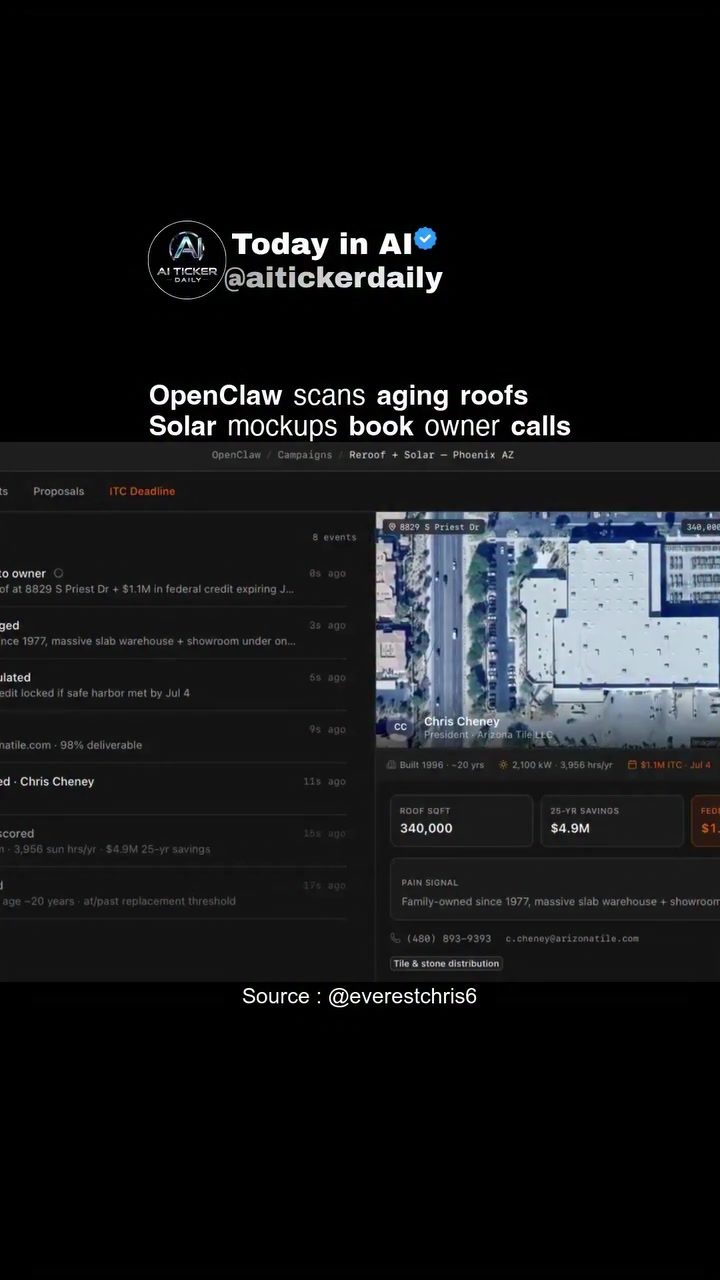
For commercial roofers, identifying which roofs are suitable for solar panels can be a time-consuming process. However, advancements in AI and automation are revolutionizing this task, making it faster and more efficient. One such innovation is the OpenClaw-style bot, which is designed to scan large numbers of commercial roofs, flag those that are aging and fit for solar installation, and even render solar panel mockups directly onto the building geometry.
Context / Why this matters
In the commercial solar industry, identifying potential sites is a critical first step. Traditional methods involve manual inspections, which can be labor-intensive and time-consuming. Moreover, with the federal tax credit for solar installations still in place, there is a significant incentive to expedite the identification and installation process.
Main discussion
The Role of AI in Solar Panel Installation
AI plays a pivotal role in streamlining the process of assessing solar potential. Using tools like OpenClaw, commercial roofers can quickly scan and analyze large numbers of roofs, identifying those that are most suitable for solar panel installation.
How OpenClaw Works
OpenClaw employs advanced algorithms to scan commercial roofs and extract relevant data. This data includes the age of the roof, potential solar savings, and the possibility of federal tax credits. By automating this process, OpenClaw enables roofers to focus on the installation process, thereby increasing efficiency and reducing costs.
Identifying Aging Roofs
One of the key benefits of using OpenClaw is its ability to identify aging roofs that are fit for solar. Roofs built in the 1990s and 2000s, for instance, may be nearing the end of their lifespan. By flagging these roofs, OpenClaw helps roofers prioritize their inspection efforts, ensuring that they are targeting roofs that are both in need of repair and suitable for solar installation.
Rendering Solar Panel Mockups
OpenClaw doesn't just identify suitable roofs; it also renders solar panel mockups directly onto the building geometry. This feature allows potential clients to visualize how the solar panels will look and function on their property, making it easier to sell the idea of solar installation.
Practical Tips
Utilizing OpenClaw for Maximum Efficiency
To get the most out of OpenClaw, it's important to understand its capabilities and limitations. Here are some practical tips for using this tool effectively:
- Data Integration: Ensure that the data extracted by OpenClaw is integrated with your existing systems. This will allow you to manage your leads and projects more efficiently.
- Regular Scans: Schedule regular scans to keep your database up-to-date. This will help you identify new opportunities as they arise.
- Client Engagement: Use the solar panel mockups generated by OpenClaw to engage with clients. Visual aids can be a powerful tool in convincing clients to invest in solar.
- Follow-Up: Once you've identified a suitable roof, don't delay in reaching out to the owner. Timely follow-up can make all the difference in securing a contract.
Important Takeaways
In the rapidly evolving world of solar energy, staying ahead of the competition requires embracing new technologies. AI tools like OpenClaw are not just a luxury—they are a necessity. By automating the process of identifying suitable roofs, rendering solar panel mockups, and streamlining the booking process, OpenClaw helps commercial roofers stay competitive and efficient.
The Benefits of AI in Solar Installation
AI-driven tools offer several advantages for commercial roofers:
- Time Savings: Automated scans and data extraction significantly reduce the time spent on identifying potential sites.
- Cost Efficiency: By targeting roofs that are both aging and suitable for solar, roofers can minimize costs associated with unnecessary inspections.
- Enhanced Client Engagement: Solar panel mockups and detailed analysis reports make it easier to sell the idea of solar installation to clients.
Conclusion
AI is transforming the way commercial roofers approach solar panel installation. Tools like OpenClaw offer a range of benefits, from automating data extraction to rendering solar panel mockups. By leveraging these technologies, roofers can identify potential sites more efficiently, reduce costs, and stay ahead of the competition. As the demand for solar energy continues to grow, embracing AI will be crucial for those looking to thrive in this industry.
Watch the Reel
Questions readers ask
How does AI improve the efficiency of commercial roof inspections?
AI streamlines commercial roof inspections by using algorithms to quickly analyze large numbers of roofs. This helps identify aging roofs and assess their suitability for solar panels, saving time and resources compared to manual inspections.
What is an OpenClaw-style bot and how does it aid in solar viability assessment?
An OpenClaw-style bot is an AI-driven tool designed to scan commercial roofs and determine their solar potential. It can flag roofs that are aging and suitable for solar installation, and even create visual mockups of how solar panels would fit on the roof.
What are the benefits of using AI for assessing solar energy potential on commercial roofs?
AI significantly accelerates the process of assessing solar energy potential by analyzing data quickly and accurately. This allows roofers to identify the best candidates for solar installation, maximize efficiency, and optimize potential solar savings.
How can AI help in detecting aging roofs during commercial roof inspections?
AI can detect aging roofs by analyzing various factors such as roof material condition, structural integrity, and other signs of wear. This information is crucial for determining if a roof is fit for solar panel installation or if repairs are needed before proceeding.
What is the role of solar panel mockups in commercial solar scans?
Solar panel mockups created by AI help visualize how solar panels would look and fit on a commercial roof. This is useful for planning and presenting the project to stakeholders, ensuring that the installation is both feasible and aesthetically pleasing.
Why are traditional methods of commercial roof inspections being replaced by AI?
Traditional methods involve manual inspections, which can be labor-intensive and time-consuming. With AI, commercial roof inspections can be conducted much faster and more accurately, allowing for more efficient identification of solar viability.
How does AI contribute to the overall efficiency of the commercial solar industry?
AI contributes to the efficiency of the commercial solar industry by automating the inspection process, quickly identifying suitable roofs for solar installation, and providing detailed analyses. This helps roofers and solar companies focus their efforts on the most promising projects and increase the overall adoption of solar energy.
Related deep dives
Similar reads based on topic and creator.




Recent articles
Fresh deep dives from the latest Reels we unpacked.




Comments
Be the first to comment.