AI-Powered Crop Monitoring: Saving Harvests with Smart Technology
AI-powered crop monitoring is revolutionizing agriculture, particularly for medium to large-scale farms. This technology leverages satellite imagery and advanced algorithms to monitor crop health in real time, providing farmers with critical insights to optimize their operations. Here’s a deep dive into how AI-powered crop monitoring works, its benefits, and practical tips for farmers looking to implement this technology.
Context / Why This Matters
For farms generating between $500,000 and $2,000,000 annually, crop health is paramount. Early detection of stressed crops can mean the difference between a successful harvest and a significant loss. AI-powered crop monitoring tools, such as those offered by aitickerdaily, provide an autopilot solution, watching over fields and alerting farmers to issues before they become critical.
Main Discussion
Real-Time Monitoring with Satellite Imagery
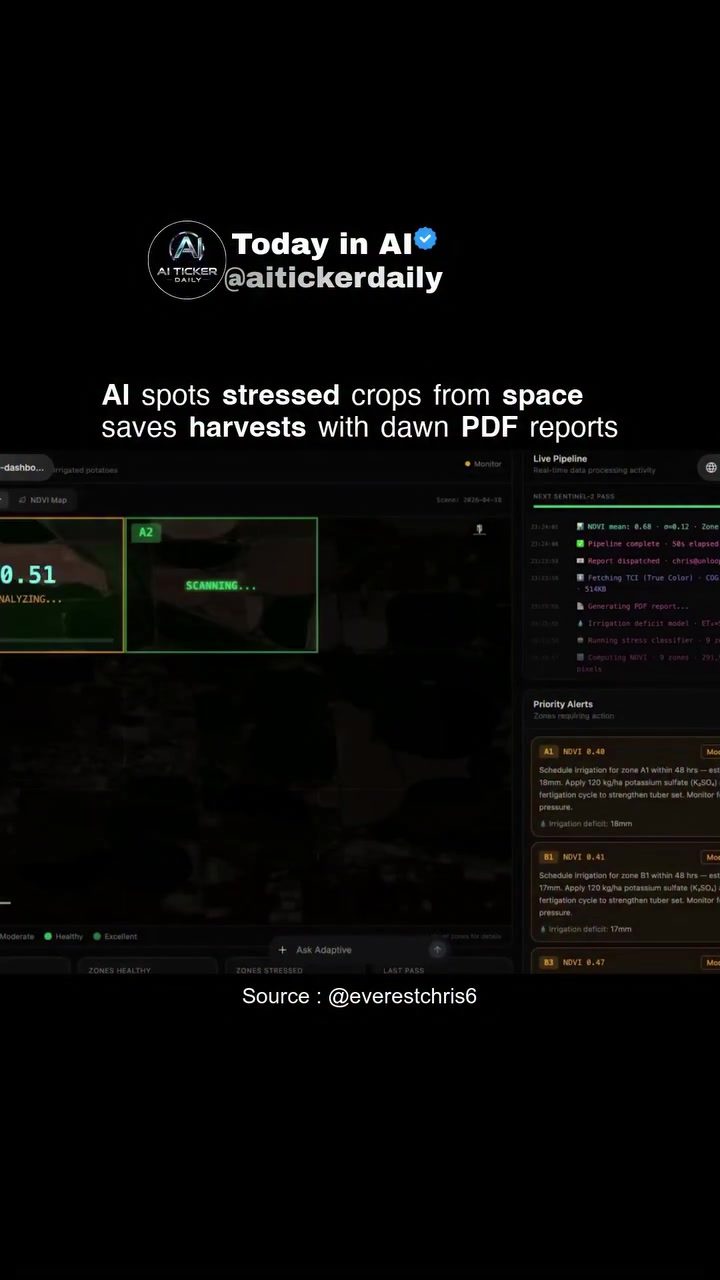
AI-powered crop monitoring systems use data from satellite passes, such as those from the Sentinel-2 program. These satellites capture high-resolution images of Earth’s surface, providing detailed views of farmland. The AI agent, part of the software, analyzes these images in real time, identifying which zones are under stress. This early detection allows farmers to take corrective actions promptly, whether that means adjusting irrigation, applying fertilizers, or addressing pest infestations.
NDVI and Crop Health Assessment
One key metric used in AI-powered crop monitoring is the Normalized Difference Vegetation Index (NDVI). NDVI values range from -1 to +1, with values closer to +1 indicating healthier vegetation. The software interface displays NDVI values for different zones within a field, helping farmers pinpoint areas that require attention.
For example, an NDVI value of 0.67 indicates healthy crops, while a value of 0.40 might signal stress. These values, combined with the software's predictive analytics, provide farmers with a clear picture of their field's health, enabling them to make data-driven decisions.
Priority Alerts and Recommendations
The software not only identifies stressed crops but also generates priority alerts and actionable recommendations. These alerts are based on historical data, current weather conditions, and real-time imagery. For instance, if the software detects a sudden drop in NDVI values in a specific zone, it might recommend increased irrigation or the application of specific fertilizers.
These alerts help farmers prioritize their actions, ensuring that critical issues are addressed first. This proactive approach can significantly reduce the risk of crop loss, saving entire harvests.
Zonal Analysis and Precision Agriculture
AI-powered crop monitoring software provides a detailed zonal analysis of fields. This means that instead of treating an entire field uniformly, farmers can target specific zones that need attention. This level of precision is a cornerstone of precision agriculture, allowing farmers to optimize the use of resources like water and fertilizers.
By focusing on specific zones, farmers can apply treatments only where needed, reducing waste and increasing efficiency. This targeted approach also helps in maintaining the overall health of the field, as healthy zones are not unnecessarily disturbed.
Practical Tips
Integrating AI Tools into Farm Management
For farmers looking to integrate AI-powered crop monitoring, the first step is to choose the right software. Look for tools that offer real-time monitoring, detailed zonal analysis, and actionable alerts. Ensure that the software is compatible with your existing farm management systems for seamless integration.
Training and Support
Once you have chosen the software, the next step is to train your team. Many software providers offer comprehensive training programs to help farmers and their teams get the most out of the technology. Additionally, consider subscribing to newsletters or joining online communities to stay updated on the latest developments and best practices.
Regular Monitoring and Adjustments
Regular monitoring is crucial for the success of AI-powered crop monitoring. Schedule regular checks of the software’s alerts and recommendations, and adjust your farming practices accordingly. This continuous feedback loop ensures that you are always taking the most effective actions for your crops.
Important Takeaways
- AI-powered crop monitoring uses satellite imagery to provide real-time insights into crop health.
- NDVI values are essential for assessing crop stress and determining the health of different field zones.
- Priority alerts and actionable recommendations help farmers take swift, effective actions to save harvests.
- Precision agriculture, enabled by AI, allows for targeted resource use and improved field health.
Conclusion
AI-powered crop monitoring is transforming agriculture by providing farmers with the tools they need to monitor and manage their crops more effectively. From real-time satellite imagery to detailed zonal analysis and actionable alerts, this technology offers a comprehensive solution for safeguarding harvests. By integrating AI-powered crop monitoring, farmers can enhance their operations, reduce risks, and ensure the health and productivity of their crops.
Watch the Reel
Questions readers ask
How does AI-powered crop monitoring improve farming practices?
AI-powered crop monitoring enhances farming by using satellite imagery and algorithms to assess crop health continuously. This allows farmers to identify and address issues like disease, pests, or nutrient deficiencies early, thus preventing potential harm to the crops. The technology provides detailed, actionable insights to optimize farm management strategies.
What are the key benefits of using AI for crop health monitoring?
AI offers numerous benefits, including the ability to monitor large fields in real-time, detect crop stress early, and predict potential issues. This leads to more efficient use of resources, reduced crop losses, and improved overall yield. Additionally, it helps farmers make data-driven decisions, enhancing their operational efficiency.
How does satellite imagery contribute to AI-powered crop monitoring?
Satellite imagery provides high-resolution, up-to-date visuals of farmlands, which AI algorithms analyze to detect variations in crop health. These images help identify patterns such as discoloration, wilting, or other signs of stress, which might not be visible to the naked eye. This allows for timely intervention and better management of crop health.
Can AI-powered crop monitoring be integrated with existing farm management systems?
Yes, many AI-powered crop monitoring tools are designed to integrate seamlessly with existing farm management systems. This integration allows farmers to consolidate data from various sources, providing a comprehensive view of their operations. It also enables automated alerts and notifications, ensuring that any issues are promptly addressed.
What types of alerts can farmers expect from AI-powered crop monitoring systems?
AI-powered crop monitoring systems can generate various alerts, such as notifications about crop stress, pest infestations, or nutrient deficiencies. They can also send reminders for scheduled tasks like irrigation, fertilization, or pest control. These alerts are typically customized based on the specific needs and conditions of the farm, ensuring timely and relevant information.
What should farmers consider when choosing an AI-powered crop monitoring tool?
Farmers should evaluate the accuracy and reliability of the satellite imagery, the sophistication of the AI algorithms, and the user-friendliness of the interface. Additionally, they should consider the cost, scalability, and compatibility with existing systems, as well as the level of support and training provided by the vendor. It’s also beneficial to look for tools that offer customizable alerts and reporting features.
How can AI-powered crop monitoring help prevent significant crop losses?
By continuously tracking crop health, AI-powered systems can detect early signs of stress or disease, allowing farmers to take immediate action. This proactive approach helps in addressing issues before they escalate, thereby saving entire harvests. Real-time data and alerts enable timely interventions, such as adjusting irrigation or applying pesticides, to mitigate potential losses effectively.
Related deep dives
Similar reads based on topic and creator.




Recent articles
Fresh deep dives from the latest Reels we unpacked.




Comments
Be the first to comment.