AI in Marketing: Thriving in the Age of Automation
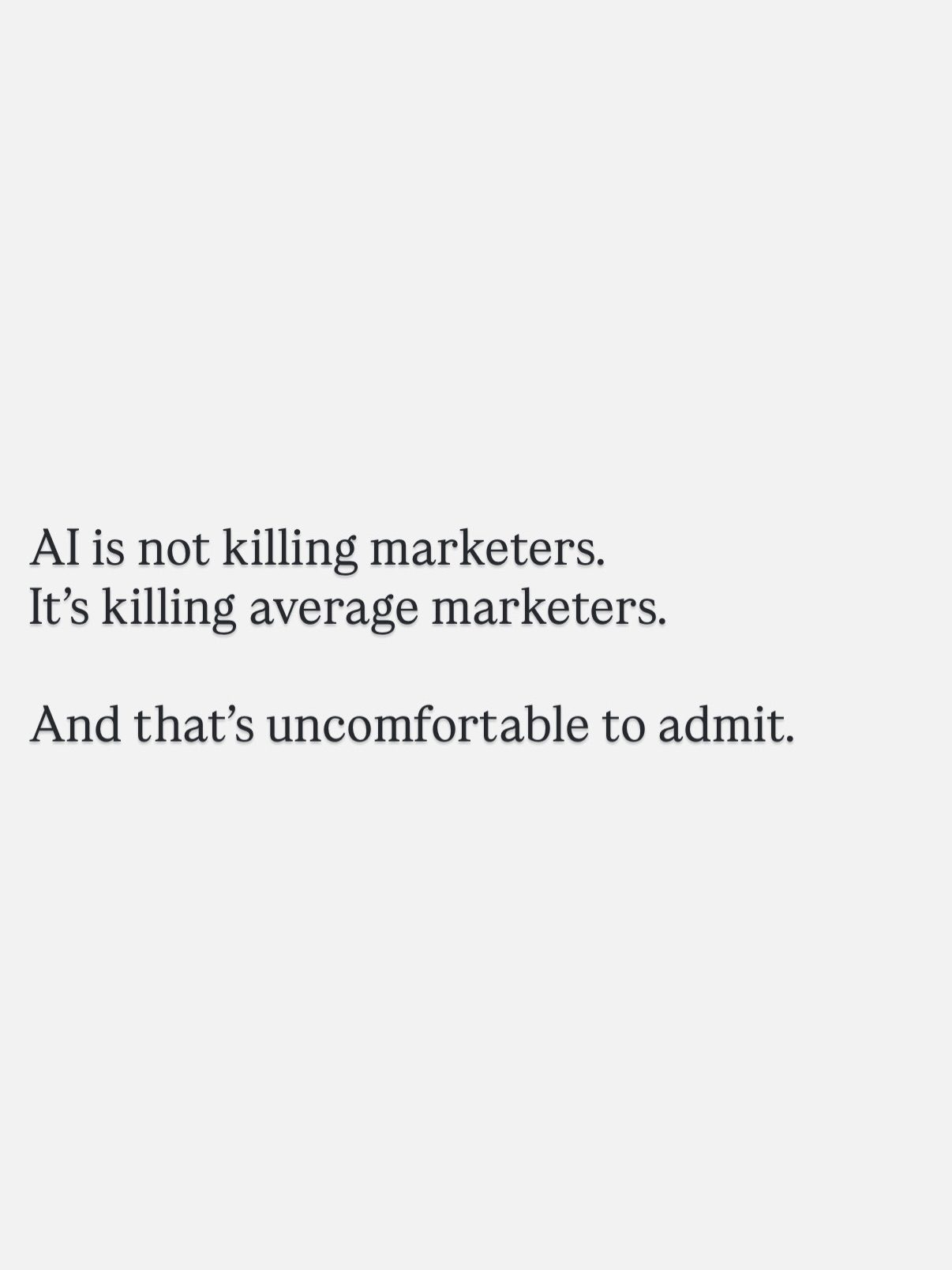
AI is reshaping the marketing landscape, and it's not just about automation and efficiency. The shift is more profound, targeting the core of how marketers operate and think. For those who rely solely on platform expertise and execution-only skill sets, the rise of AI can be unsettling. However, for those willing to adapt and evolve, AI presents an unprecedented opportunity to enhance their capabilities and strategic thinking.
Why This Matters
The marketing industry is undergoing a significant transformation driven by AI. Understanding this shift is crucial for marketers to stay relevant and competitive. The key is not to see AI as a threat but as a tool that can augment human capabilities. By focusing on business understanding, consumer psychology, and strategic funnel building, marketers can thrive in the age of AI.
Navigating the AI Revolution
The Impact of AI on Marketing
AI is not eliminating marketers; it is reshaping the role. Those with basic or surface-level skills are feeling the impact the most. Marketers who rely on speed and execution-only skill sets are finding AI to be a formidable competitor. AI can handle repetitive tasks, optimize ad sets, and analyze vast amounts of data more efficiently than humans. However, this doesn't mean that human marketers are obsolete. Instead, it means that the nature of their work is changing.
Upgrading Your Skill Set
To stay relevant, marketers need to upgrade their thinking and skills. Here are some concrete steps to consider:
1. Learn Business, Not Just Platforms
Platform expertise is no longer enough. Marketers need to deepen their understanding of business fundamentals. This includes financial acumen, strategic planning, and a holistic view of the market. By gaining a broader business perspective, marketers can make more informed decisions and drive better results.
2. Study Consumer Psychology
Understanding consumer behavior and psychology is crucial in the age of AI. AI can analyze data, but it can't replicate human empathy and intuition. Marketers who deeply understand consumer psychology can create more effective and resonant campaigns. This involves understanding not just what consumers do, but why they do it.
3. Master Funnels, Not Ad Sets
While ad sets are important, mastering the entire funnel is where real value lies. This means understanding the customer journey from awareness to conversion and beyond. By optimizing the entire funnel, marketers can create a seamless and effective customer experience.
4. Build First-Party Data Systems
First-party data is more valuable than ever. By building robust first-party data systems, marketers can gain insights that are unique to their business. This data can inform strategies, personalize experiences, and drive better outcomes.
5. Use AI as a Copilot, Not a Crutch
AI should be seen as a copilot, not a crutch. It can handle repetitive tasks, optimize processes, and provide valuable insights. However, the final decision-making and strategic thinking should still be done by humans. By leveraging AI correctly, marketers can focus on higher-value activities.
Choosing Your Path
In the age of AI, marketers have two choices: compete with AI or command it.
Compete with AI: Focus on areas where AI struggles, such as creativity, empathy, and strategic thinking. By leveraging these human strengths, marketers can deliver value that AI cannot.
Command AI: Use AI as a tool to enhance your capabilities. This means understanding how AI works, what it can do, and how to integrate it into your workflow. By commanding AI, marketers can achieve more than they ever could on their own.
The Future of Marketing
The marketers who upgrade their thinking will become unstoppable. They will be the ones who can navigate the complexities of the market, leverage AI effectively, and deliver real value to their organizations. The rest will feel replaced as AI takes over more and more tasks.
The rise of AI in marketing is a shift that requires adaptation and evolution. By focusing on business understanding, consumer psychology, and strategic funnel building, marketers can thrive in the age of AI. The key is to see AI as an opportunity, not a threat, and to upgrade your thinking and skills accordingly.
Practical Tips
-
Deep Dive into Business Fundamentals: Take courses or workshops on business strategy, financial planning, and market analysis. This will give you a more holistic view of the business and help you make better decisions.
-
Engage with Consumer Psychology: Read books, attend seminars, and engage with experts in consumer behavior. Understanding the psychology behind consumer decisions can help you create more effective campaigns.
-
Optimize the Entire Funnel: Break down the customer journey and identify areas for improvement. Use data and insights to optimize each stage of the funnel, from awareness to loyalty.
-
Invest in First-Party Data: Start collecting and analyzing first-party data. This can give you unique insights into your customers and help you create more personalized experiences.
-
Integrate AI into Your Workflow: Identify areas where AI can augment your capabilities. This could be anything from data analysis to content creation. The key is to use AI as a tool to enhance your work, not replace it.
Important Takeaways
- AI is reshaping the marketing landscape, but it is not eliminating marketers. It is targeting those with basic or surface-level skills.
- To thrive in the age of AI, marketers need to upgrade their thinking and skills. This includes a deeper understanding of business fundamentals, consumer psychology, and strategic funnel building.
- Marketers have two choices: compete with AI or command it. By leveraging human strengths and integrating AI effectively, marketers can deliver real value.
- The key to success in the age of AI is to see it as an opportunity, not a threat, and to focus on higher-value activities.
Conclusion
The rise of AI in marketing is a significant shift that requires adaptation and evolution. By focusing on business understanding, consumer psychology, and strategic funnel building, marketers can thrive in the age of AI. The key is to see AI as an opportunity, not a threat, and to upgrade your thinking and skills accordingly. The future belongs to those who can leverage AI effectively and deliver real value to their organizations.
Watch the Reel
Questions readers ask
How is AI transforming the marketing landscape beyond automation?
AI is not only streamlining processes but also shifting the focus of marketers from execution to strategic thinking. It enables a deeper understanding of consumer psychology and business strategies, allowing marketers to make more informed decisions.
What skills should marketers focus on to stay relevant in the age of AI?
Marketers should prioritize developing their strategic thinking and business understanding. With AI handling execution and platform expertise, marketers can focus on interpreting data, understanding consumer behavior, and making strategic decisions.
How can AI augment a marketer's capabilities?
AI can assist marketers by providing real-time data analysis and insights, predicting consumer trends, and suggesting strategic actions. This allows marketers to work more efficiently and effectively, focusing on high-level strategy rather than routine tasks.
What are some key AI marketing tools that can enhance marketing strategies?
AI marketing platforms, such as chatbots, predictive analytics tools, and AI-driven content creation platforms, can significantly enhance marketing strategies. These tools can help in personalizing customer experiences, optimizing ad spend, and creating tailored content.
How should marketers approach AI integration in their marketing systems?
Marketers should view AI as a tool to complement their skills, not replace them. It's important to start by identifying areas where AI can provide the most benefit, such as data analysis and consumer insights, then gradually integrate AI tools into the marketing workflow.
What is the impact of AI on consumer psychology in marketing?
AI offers marketers the ability to analyze large volumes of consumer data, identifying trends and patterns that would otherwise go unnoticed. This deeper understanding of consumer psychology enables marketers to create more targeted and effective campaigns, delivering the right message to the right audience at the right time.
How can AI help marketers evolve their strategy over time?
By leveraging AI, marketers can continuously collect and analyze data, allowing them to adapt their strategies in real-time. AI can help identify new opportunities, optimize campaigns, and provide insights into emerging trends, enabling marketers to stay ahead of the competition and evolve their strategies as the market changes.
Related deep dives
Similar reads based on topic and creator.

Recent articles
Fresh deep dives from the latest Reels we unpacked.




Comments
Be the first to comment.