AI Knowledge Graphs and the Power of Connected Thinking
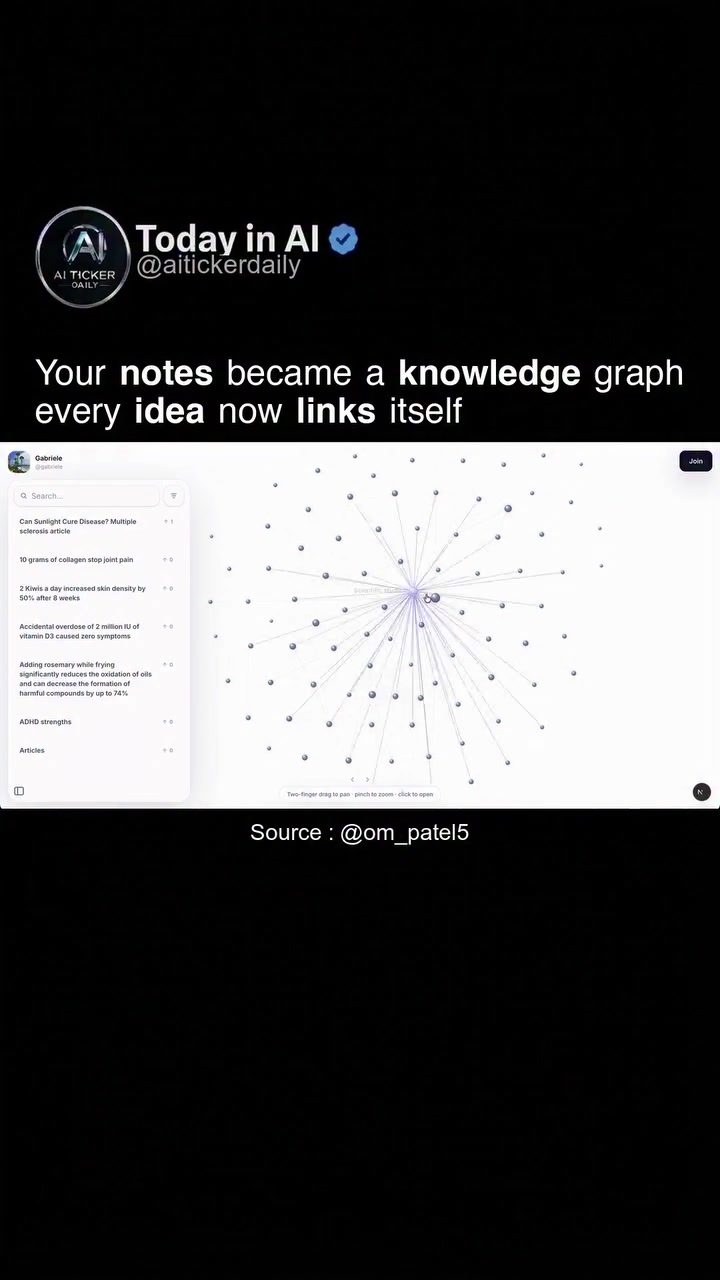
AI-driven knowledge graphs are revolutionizing how we organize and connect information. These tools transform scattered notes into interconnected webs of ideas, enabling users to see relationships they might otherwise miss. This interconnected approach fosters a more holistic understanding of complex topics, such as health and nutrition.
Why This Matters
The ability to link ideas seamlessly is crucial in today's information-rich environment. Traditional note-taking methods often result in fragmented information, making it challenging to see the bigger picture. Knowledge graphs address this issue by creating a structured framework where every piece of information is connected to related concepts. This interconnected approach can lead to deeper insights and more innovative problem-solving.
The Anatomy of a Knowledge Graph
Understanding the Basics
A knowledge graph is a visual representation of data that shows connections between different pieces of information. It consists of nodes (representing concepts or ideas) and edges (representing relationships or links between those concepts). This structure allows users to explore how different ideas intersect and influence each other.
Health and Nutrition: A Case Study
One of the most compelling examples of a knowledge graph in action is in the realm of health and nutrition. For instance, a graph might explore the connections between collagen, vitamin D, zinc, and testosterone. Here's a breakdown of key findings:
-
Collagen and Vitamin D: Collagen is a crucial protein for skin health, while vitamin D plays a vital role in calcium absorption. Research has shown that adequate vitamin D levels can enhance collagen synthesis, contributing to healthier skin.
-
Zinc and Testosterone: Zinc is essential for various bodily functions, including hormone regulation. Studies suggest that zinc supplementation can nearly double testosterone levels, which is beneficial for both men and women, as it supports muscle growth, energy levels, and overall well-being.
-
Zinc and Immune Function: Zinc is also known for its immune-boosting properties. Supplementation with zinc can significantly reduce the risk of infections, making it a valuable addition to one's wellness regimen.
These connections highlight the importance of a balanced approach to health and nutrition. By understanding how different nutrients interact, individuals can make more informed decisions about their diet and supplements.
Navigating the Knowledge Graph
Knowledge graphs are designed to be interactive, allowing users to explore information in a user-friendly manner. Here are some practical tips for navigating a knowledge graph:
-
Two-Finger Drag to Pan: Use this gesture to move around the graph and explore different sections.
-
Pinch to Zoom: This gesture allows you to zoom in on specific areas of the graph, providing a closer look at the connections and details.
-
Click to Open: Clicking on a node or edge often reveals more information, such as research findings, scientific studies, and related articles.
Practical Tips for Using a Knowledge Graph
Start with a Clear Objective
Before diving into a knowledge graph, it's essential to have a clear objective in mind. Whether you're researching a health-related topic or exploring connections in a different field, knowing your goal will help you navigate the graph more effectively.
Focus on Key Nodes
Identify the key nodes (concepts) that are most relevant to your objective. These nodes will often have the most connections, providing a wealth of information and insights. By focusing on these key nodes, you can gain a deeper understanding of the topic at hand.
Explore Related Edges
Edges (connections) between nodes are just as important as the nodes themselves. Exploring these connections can reveal hidden relationships and insights that you might not have considered otherwise. This approach can lead to more comprehensive and nuanced thinking.
Use the Graph as a Tool for Learning
Knowledge graphs can be a powerful tool for continuous learning. By regularly exploring different areas of a graph, you can stay updated on the latest research and insights in your field of interest. This approach can help you maintain a competitive edge in your personal and professional life.
Incorporate Feedback and Sources
Knowledge graphs often include links to scientific studies and other sources. Incorporating this information into your understanding can provide a more robust and evidence-based perspective. By verifying the information through credible sources, you can build a more reliable knowledge base.
Important Takeaways
-
Interconnected Thinking: Knowledge graphs encourage interconnected thinking, helping users see relationships between different ideas.
-
Efficient Information Management: They transform scattered notes into a structured web, making information more accessible and easy to manage.
-
Health Insights: The connections between collagen, vitamin D, zinc, and testosterone highlight the importance of a balanced approach to health and nutrition.
-
User-Friendly Navigation: Interactive features like dragging, zooming, and clicking make exploring a knowledge graph an intuitive and rewarding experience.
Conclusion
AI knowledge graphs are transforming how we organize and connect information. By creating a framework where every idea is linked to related concepts, these tools foster a more holistic understanding of complex topics. Whether you're exploring health and nutrition or delving into a different field, knowledge graphs offer a powerful way to navigate the vast landscape of information. Embrace the power of interconnected thinking and see how it can enhance your understanding and problem-solving skills.
Watch the Reel
Questions readers ask
What are AI knowledge graphs and how do they work?
AI knowledge graphs are tools that use advanced algorithms to create interconnected webs of information. They take scattered notes and transform them into a comprehensive visual map, allowing users to see relationships between different ideas that might not be apparent otherwise. This is achieved by linking related concepts and organizing information in a structured framework.
How can AI knowledge graphs benefit health and nutrition studies?
AI knowledge graphs are particularly useful in health and nutrition fields. They help users uncover hidden relationships between concepts, such as the impact of zinc on testosterone levels, by connecting scattered notes into a cohesive map. This interconnected approach provides a more holistic understanding, making it easier to analyze and interpret complex data.
Can AI knowledge graphs help in organizing scientific studies on specific topics like zinc?
Yes, AI knowledge graphs can significantly help in organizing scientific studies. For instance, if you're researching zinc, the graph can connect various studies, notes, and findings related to zinc, showing how it interacts with other nutrients or affects health outcomes. This makes it easier to draw comprehensive conclusions and identify patterns.
What makes AI knowledge graphs different from traditional note-taking methods?
Traditional note-taking methods often result in fragmented information, making it hard to see the bigger picture. In contrast, AI knowledge graphs create a structured framework where every piece of information is connected to related concepts. This interconnected approach helps users see relationships they might otherwise miss, fostering a more holistic understanding of the topic.
How do AI knowledge graphs assist in fields like nutrition?
In nutrition, AI knowledge graphs can connect various nutrients, dietary patterns, and health outcomes, providing a clear visual map of how different elements interact. For example, a nutritional knowledge graph can show how vitamins, minerals, and macronutrients relate to each other, helping users make more informed decisions about diet and health.
Can AI knowledge graphs be used to connect ideas in notes across different topics?
Absolutely, AI knowledge graphs excel at connecting ideas across different topics. Whether you're working on multiple projects or researching various subjects, these tools can link related concepts from your scattered notes, creating a comprehensive map that shows how different ideas are interconnected. This is particularly useful for complex subjects that span multiple disciplines.
What kind of insights can AI knowledge graphs provide for health-related research?
AI knowledge graphs can provide a wealth of insights for health-related research. By connecting notes on various health topics, such as the relationship between testosterone and zinc, these tools can reveal patterns and correlations that might not be immediately obvious. This can lead to a deeper understanding of health issues and more effective strategies for prevention and treatment.
Related deep dives
Similar reads based on topic and creator.




Recent articles
Fresh deep dives from the latest Reels we unpacked.




Comments
Be the first to comment.