AI Sprite Generation in Game Development
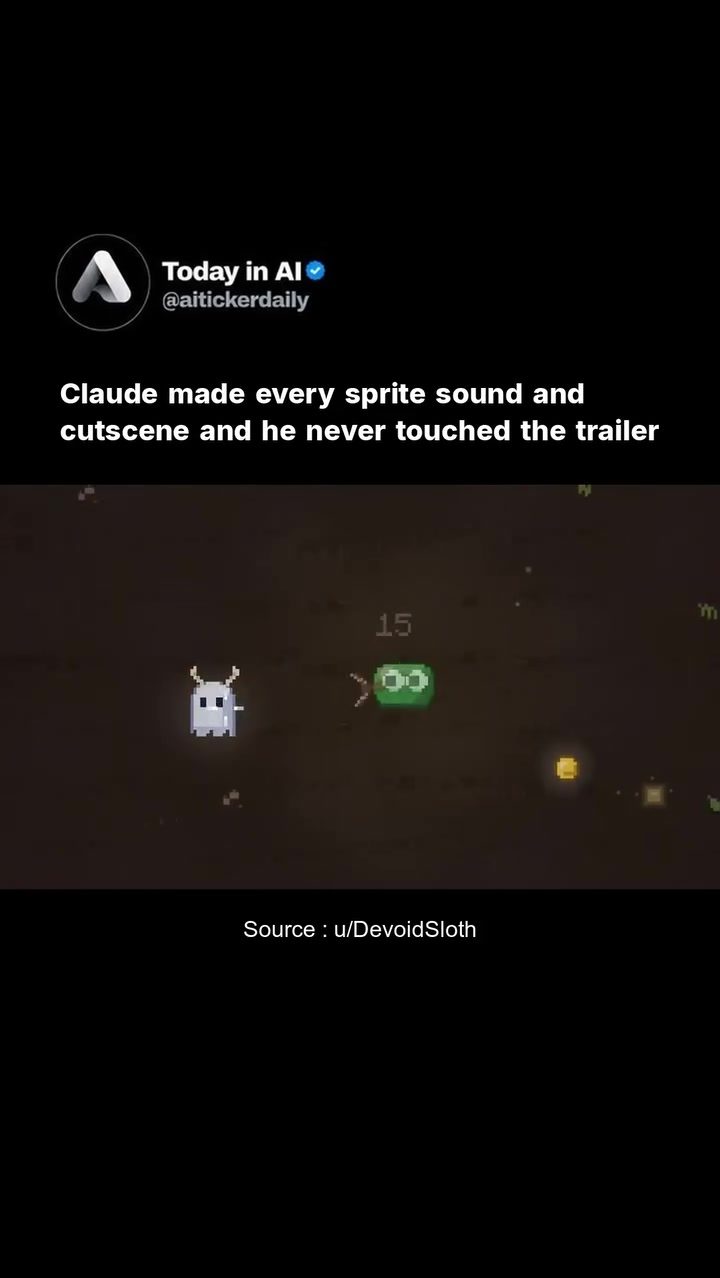
The rise of AI in video game development has opened new avenues for creativity and efficiency. One notable example is the revival of a retro-style roguelike game. The game allows you to play as a slime that slingshots knives at ghosts. The latest iteration of this game stands out because every sprite, sound, animation, and cutscene was designed entirely by AI — specifically, by Claude Code (Fable 5).
Context / Why this matters
AI's role in game development is transforming the way games are created. By handling the design of visual and auditory elements, AI allows developers to focus on other critical aspects of game development, such as gameplay mechanics and story. The ability of AI to generate these elements autonomously can significantly reduce production time and costs, making it easier for developers to bring their visions to life.
AI-generated assets offer several advantages. These assets can be produced quickly and in large quantities, allowing developers to iterate and experiment more freely. AI can also generate unique and varied content, which enhances the overall gaming experience. By managing the workload and context, AI can help developers create more complex and immersive games.
Main discussion
The Role of AI in Game Development
AI's capabilities in game development extend beyond just sprite and sound generation. AI can also design levels, create quests, and even generate entire narratives. This shift allows for more dynamic and adaptive gameplay experiences. For instance, AI-driven content generation can create ever-evolving environments, making each playthrough unique.
Claude Code (Fable 5) in Action
Claude Code (Fable 5) is at the forefront of this revolution. The AI was used to design every aspect of the game, from the sprites and sounds to the animations and cutscenes. This approach showcases the potential of AI in game development, as it can handle complex tasks without direct human intervention.
The developer ran hundreds of terminals in parallel to manage the workload and context. This strategy helped to split the tasks efficiently, ensuring that the AI could generate high-quality assets without overloading any single terminal. This method also highlights the scalability of AI in game development, as it can handle large-scale projects with ease.
The Impact on Game Design
The use of AI in game design has several implications. First, it allows for a higher degree of customization and personalization. AI can generate assets tailored to the player's preferences, creating a more immersive and engaging experience. Additionally, AI can help developers create more diverse and inclusive games, as it can generate assets that represent a wider range of characters and environments.
The ability of AI to generate content autonomously also means that developers can focus on other aspects of game design. For example, AI can handle the creation of assets, while the developers work on the game's mechanics, story, and overall design. This division of labor can lead to more efficient and effective game development processes.
The Future of AI in Game Development
The potential of AI in game development is vast. As the technology continues to evolve, we can expect to see even more sophisticated and innovative uses of AI in game creation. For instance, AI could be used to generate entire game worlds, complete with interactive elements and dynamic environments.
Additionally, AI could be used to create more sophisticated AI-driven characters. These characters could learn and adapt to the player's behavior, creating a more immersive and personalized gaming experience. The integration of AI in game development is poised to revolutionize the industry, offering new possibilities for creativity and innovation.
Practical tips
Efficient Workflow Management
If you're a developer looking to incorporate AI into your game development process, consider running multiple terminals in parallel. This approach can help manage the workload and context, ensuring that the AI can generate high-quality assets efficiently. By splitting the tasks, you can also avoid overloading any single terminal, which can lead to performance issues.
Quality Control
While AI can generate a large amount of content quickly, it's essential to implement a quality control process. This process should involve reviewing the AI-generated assets to ensure they meet your standards. By doing so, you can maintain the overall quality of your game while still taking advantage of AI's capabilities.
Collaboration with AI
To create a more efficient and effective game development process, consider collaborating with AI. By leveraging AI's strengths, you can focus on other aspects of game design, such as gameplay mechanics and storytelling. This division of labor can lead to a more streamlined and productive development process.
Important takeaways
AI is playing an increasingly important role in game development, offering new possibilities for creativity and efficiency. By leveraging AI's capabilities, developers can create more immersive and engaging games, while also reducing production time and costs.
AI can handle complex tasks, such as sprite and sound generation, without direct human intervention. This allows developers to focus on other critical aspects of game design, such as gameplay mechanics and story.
The integration of AI in game development is poised to revolutionize the industry, offering new possibilities for creativity and innovation. By adopting AI in their workflow, developers can create more diverse and inclusive games, while also enhancing the overall gaming experience.
Conclusion
As AI continues to evolve, its role in game development is likely to become even more significant. By embracing AI, developers can unlock new possibilities for creativity and efficiency. Whether you're a seasoned game developer or just starting out, incorporating AI into your workflow can help you create more immersive and engaging games. The future of game development is bright, and AI is at the forefront of this exciting evolution.
Watch the Reel
Questions readers ask
How does AI generate game assets like sprites and animations?
AI tools, such as Claude Code (Fable 5), use machine learning algorithms to create game assets. They analyze vast amounts of data to learn patterns and styles, then generate new, unique content that mimics the input style and visual language. This can include sprites, animations, and other visual elements.
What is a retro-style roguelike game, and how does AI enhance it?
A retro-style roguelike game is a genre that combines the visual aesthetics of older games with the procedural generation and challenging gameplay of roguelikes. AI enhances this genre by quickly producing assets that match the retro style, allowing for rapid development and dynamic gameplay experiences, such as the slime character that slingshots knives at ghosts.
Can AI generate sound effects and cutscenes for games?
Yes, AI can generate both sound effects and cutscenes. By analyzing and learning from extensive datasets, AI can produce unique sound effects that fit the game's theme. For cutscenes, AI can generate scripts, visuals, and even voiceovers, making it a versatile tool in game development.
How does AI impact game production times?
AI significantly reduces game production times by automating the creation of visual and auditory assets. This allows developers to focus on other crucial aspects, such as gameplay mechanics and narrative. Additionally, AI can generate multiple assets quickly, enabling faster iteration and testing.
What is the significance of AI-generated games for younger developers?
AI-generated games, like the revived retro-style roguelike, can inspire younger developers by showcasing the capabilities of AI in game design. This can motivate them to explore AI tools and techniques, potentially leading to innovative projects and a deeper understanding of game development processes.
How does AI contribute to the creation of dynamic gaming experiences?
AI contributes to dynamic gaming experiences by generating a vast array of assets that can be used to create varied and unpredictable gameplay scenarios. This includes different enemies, power-ups, and environmental elements, all of which can be combined in unique ways to keep players engaged and challenged.
What role does AI play in the development of a middle school project?
AI can be a powerful tool for middle school projects, allowing students to create games with impressive visuals and sounds, even without extensive artistic or programming skills. This can lead to an increased interest in game development and a better understanding of how AI technology can assist in creative projects.
Related deep dives
Similar reads based on topic and creator.




Recent articles
Fresh deep dives from the latest Reels we unpacked.




Comments
Be the first to comment.