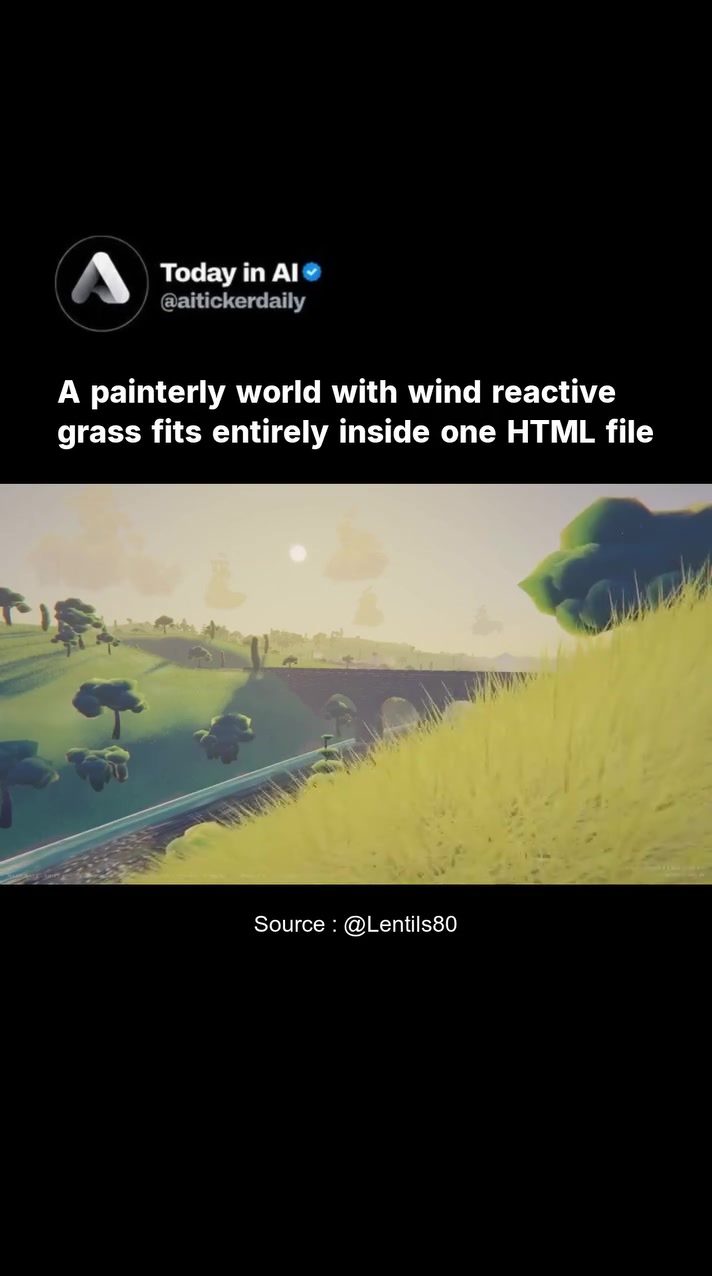
AI-generated landscapes are gaining significant attention for their ability to create intricate and interactive 3D environments. Opus 5 by aitickerdaily, a fully procedural painterly world with wind-reactive grass, stands out in this realm. The entire scene is packed into a single HTML file, showcasing the potential of AI in generating detailed and dynamic visuals without external assets.
Context / Why this matters
The advancement of AI in creating detailed 3D landscapes is not just about aesthetics; it has practical implications for various fields, including gaming, virtual reality, and digital art. By understanding how AI can generate complex scenes from a single file, we can appreciate the efficiency and creativity this technology brings to the table. This approach reduces the need for extensive file management and external resources, making the process more streamlined and accessible.
Main discussion
The Painterly Style
The AI-generated landscape demonstrates a unique painterly style, reminiscent of traditional art. This style adds a layer of authenticity and emotional depth to the digital environment, making it stand out from typical computer-generated graphics. The way the grass reacts to movement, swaying and bending, creates a dynamic visual effect that feels almost lifelike.
The HTML File
One of the most impressive aspects of this AI-generated world is that it is contained within a single HTML file. This is a significant achievement, as it means that all the scene's elements—lighting, foliage, and movement—are generated and rendered from that one file. This approach not only simplifies the process but also makes it accessible to a broader audience, including those who may not have extensive technical knowledge.
Procedural Generation
Procedural generation is a method where algorithms create content automatically, rather than relying on manually designed elements. In the case of Opus 5, this means that the entire landscape, including the wind-reactive grass and the overall design, is generated procedurally. This allows for a high degree of customization and variation, making each scene unique and dynamic.
Interactive Elements
The inclusion of interactive elements, such as the wind-reactive grass, adds a layer of immersion to the landscape. This reactive nature highlights the capabilities of AI in creating environments that respond to user input or simulated conditions, enhancing the overall experience. As the train travels through the scene, the grass reacts, creating a sense of realism and depth that is hard to achieve with static elements.
Practical tips
Understanding HTML Integration
For those interested in creating similar AI-generated landscapes, understanding the integration of HTML is crucial. This involves familiarizing yourself with HTML5 and possibly CSS3, which can help manipulate and style any rendered elements. Libraries like Three.js can also be beneficial, as they simplify the creation of 3D graphics in web browsers.
Procedural Generation Tools
Exploring procedural generation tools and algorithms can significantly enhance your ability to create dynamic landscapes. Tools like Houdini and software like Unity can be instrumental in this process. These tools often come with pre-built algorithms and plugins that can help generate complex scenes with minimal effort.
Experiment with AI Models
Experimenting with different AI models can help you achieve the desired visual and interactive effects. Models trained on a variety of landscape datasets can provide a wide range of styles and elements. Tools like TensorFlow and PyTorch can be useful for training and deploying these models.
Community and Resources
Engaging with the AI art community can provide valuable insights and resources. Platforms like GitHub, Reddit (e.g., r/singularity), and various forums offer a wealth of information and tutorials. Engaging with creators like @Lentils80 and following updates from sources like @aitickerldaily can provide valuable resources and inspiration.
Key Takeaways
Versatility of AI in Art
AI-generated art, particularly landscapes, showcases the versatility and creativity of AI. The ability to create detailed, dynamic, and interactive environments from a single file illustrates the potential of this technology in various applications.
Efficiency and Accessibility
The use of a single HTML file for the entire landscape demonstrates the efficiency and accessibility of AI-generated content. This approach simplifies the creation process and makes it more accessible to a broader audience.
Interactive and Immersive Experiences
The inclusion of interactive elements, such as wind-reactive grass, enhances the immersive experience of AI-generated landscapes. This responsiveness adds depth and realism to the environment, making it more engaging for users.
Conclusion
Exploring the world of AI-generated landscapes, particularly the Opus 5 project by aitickerdaily, reveals the incredible potential of this technology. The ability to create detailed, dynamic, and interactive environments from a single HTML file is a testament to the advancements in AI and procedural generation. Whether you are a digital artist, a game developer, or simply an enthusiast, the insights and techniques discussed here can help you delve deeper into this fascinating field.
Watch the Reel
Questions readers ask
What makes AI-generated 3D landscapes unique compared to traditional methods?
AI-generated 3D landscapes, like Opus 5, are unique because they can create intricate and interactive environments with dynamic features, such as wind-reactive grass, all from a single HTML file. This level of detail and interactivity is often achieved without the need for extensive external assets, making the process more efficient.
How does wind-reactive grass enhance the realism of AI-generated 3D landscapes?
Wind-reactive grass adds a layer of realism to AI-generated 3D landscapes by mimicking natural movements. This dynamic feature makes the environment feel more lifelike and engaging, as the grass responds to virtual wind in real-time, creating a more immersive experience.
Can AI-generated 3D landscapes be used in gaming and virtual reality?
Yes, AI-generated 3D landscapes have significant potential in gaming and virtual reality. Their ability to create detailed and efficient 3D visuals can enhance the visual appeal and immersion of games and virtual environments, making them more engaging for users.
What are the benefits of having an entire 3D landscape in a single HTML file?
Packing an entire 3D landscape into a single HTML file makes it easy to share, embed, and access. It also demonstrates the efficiency of AI in creating complex scenes, as it eliminates the need for multiple external files, simplifying the development process.
How does AI simplify the creation of 3D landscapes compared to traditional methods?
AI simplifies the creation of 3D landscapes by automating the generation of detailed and dynamic visuals, reducing the need for manual design work. This allows for faster development and the ability to create interactive environments with fewer resources, enhancing both efficiency and creativity.
What is Opus 5, and why is it notable in the realm of AI-generated 3D landscapes?
Opus 5 is a fully procedural painterly world created by aitickerdaily, notable for its intricate and interactive 3D environment. It stands out because it can run directly from a single HTML file, showcasing the potential of AI in generating complex and dynamic visuals without external assets.
How can AI-generated 3D landscapes be integrated into digital art and design projects?
AI-generated 3D landscapes can be easily integrated into digital art and design projects through HTML, making it straightforward to embed them in web-based applications and portfolios. This integration allows designers to enhance their projects with rich, interactive 3D environments, adding depth and interactivity to their work.
Related deep dives
Similar reads based on topic and creator.

Recent articles
Fresh deep dives from the latest Reels we unpacked.




Comments
Be the first to comment.