The Power of AI in Robot Arm Development
Robot arm development has traditionally been a time-consuming and complex process, involving numerous tools and skilled engineers. However, recent advancements in AI have revolutionized this field, enabling the creation of intricate robotic systems with unprecedented speed and efficiency. The context of AI-driven robot arm development highlights the transformative potential of leveraging AI tools in engineering. This process optimizes workflows, reduces error rates, and accelerates innovation, marking a significant shift in how complex robotic systems are designed and implemented.
The Emergence of AI-Driven Robot Arm Design
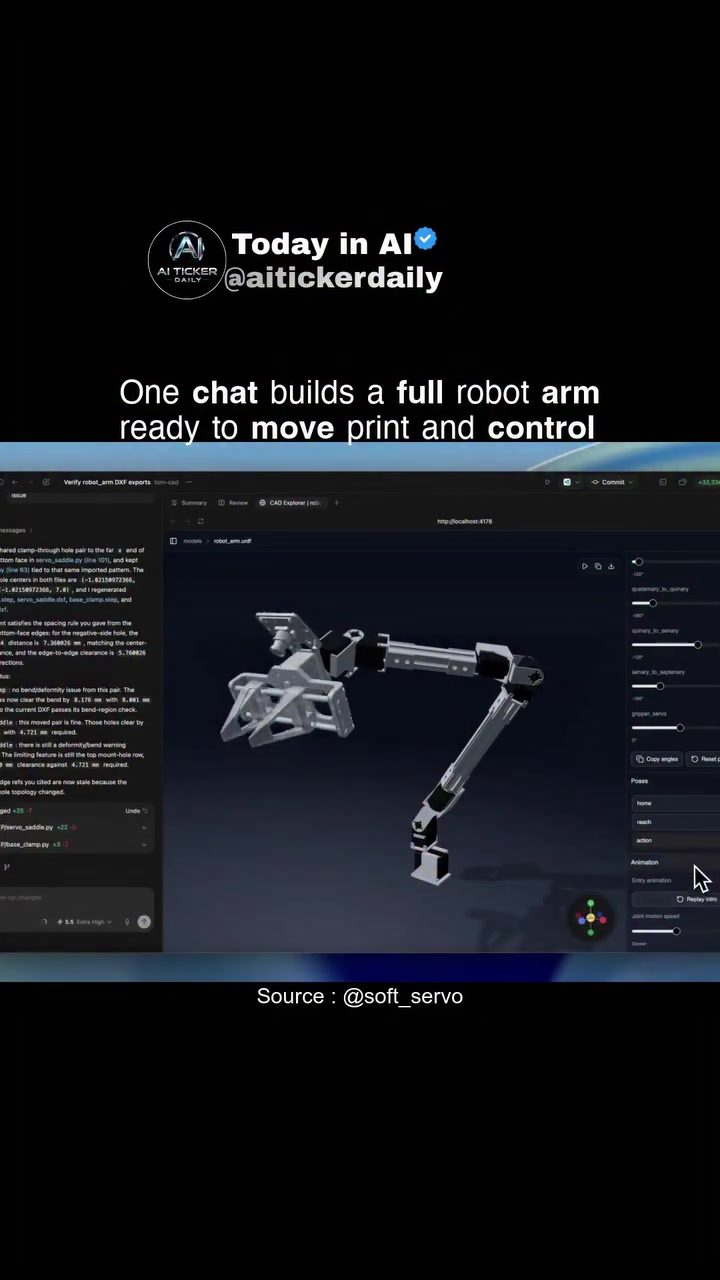
AI and robotics have been increasingly intertwined, with AI driving the development of robot arms in surprising and impactful ways. The example of a 7-DOF (degrees of freedom) robot arm demonstrates how AI can streamline the design process, making it more efficient and accessible. This robot arm boasts functional kinematics, a custom GUI, and STEP parts and assembly, all generated in Codex. Including custom programming scripts and simulation models, these armaments have been designed to precise specifications.
A Breakdown of the AI-Driven Robot Arm
DOF and Kinematics The 7-DOF robot arm showcases the versatility and precision of AI-driven design. This degree of freedom allows the arm to move in multiple directions, enabling a wide range of functionalities. Kinematics, the study of motion, is essential in robotics as it dictates how the robot arm moves and interacts with its environment. AI has enabled the development of functional kinematics, ensuring that the robot arm performs as intended.
Custom GUI and STEP Parts/Assembly
In addition to the physical design, the robot arm features a custom graphical user interface (GUI) that simplifies interaction and control. This GUI allows users to operate the robot arm with ease, making complex tasks more manageable. The STEP parts and assembly refer to the standardized format for 3D models, ensuring compatibility and ease of integration with other systems. By generating these elements in Codex, the design process is streamlined, reducing the need for manual intervention.
Practical Applications and Implications
The capabilities of this robot arm extend beyond simple demonstrations, offering practical applications in various industries.
Manufacturing and Automation
In manufacturing, AI-driven robot arms can enhance precision and automate repetitive tasks, leading to increased efficiency and productivity. These arms can handle complex assembly processes, perform quality control checks, and even assist in maintenance tasks, making manufacturing processes more reliable and cost-effective.
Healthcare and Medical Robotics
The AI-driven robot arm's precision and functionality make it a valuable tool in healthcare. From surgical assistance to rehabilitation, these arms can perform delicate tasks with high accuracy, reducing the risk of human error. In surgical applications, for example, the 7-DOF arm can assist in minimally invasive surgeries, enabling surgeons to perform complex procedures with greater precision and control. For rehabilitation, the robot arm can be used in therapeutic exercises, helping patients regain mobility and strength.
An Efficient Design Process
The creation of the 7-DOF robot arm involved utilizing advanced AI tools, specifically GPT 5.5 and Codex. The integration of these tools significantly reduced the time and complexity traditionally associated with robot arm design. By generating the URDF (Unified Robot Description Format), functional kinematics, and custom GUI in Codex, the process was streamlined, eliminating the need for manual intervention and reducing the potential for errors. This demonstrates the potential of AI in optimizing workflows and accelerating innovation in robotics.
Practical Tips for Leveraging AI in Robot Arm Development
To maximize the benefits of AI in robot arm development, consider the following tips:
- Utilize Advanced AI Tools: Incorporate AI tools like GPT and Codex in the design process to streamline workflows and enhance precision.
- Integrate Functional Kinematics: Ensure that the robot arm's design includes functional kinematics to optimize movement and interaction with the environment.
- Consider Custom GUIs: Develop a custom GUI to simplify interaction and control, making the robot arm more user-friendly.
- Standardize Parts and Assembly: Use standardized formats like STEP for 3D models to ensure compatibility and ease of integration with other systems.
Important Takeaways
When integrating AI into robot arm development, key takeaways include:
- Time Efficiency: Using tools such as GPT and Codex significantly reduces the design time, making the process more efficient.
- Precision and Functionality: AI-driven design ensures that robot arms perform with high precision and functionality, enhancing their applicability in various industries.
- User-Friendly Designs: Custom GUIs and standardized parts make robot arms more accessible and easier to use, broadening their potential applications.
Conclusion
The future of robot arm development lies in the integration of AI, streamlining the design process, and enhancing functionality. By leveraging AI tools, engineers can create intricate and efficient robot arms, optimizing workflows and accelerating innovation. Whether in manufacturing, healthcare, or other industries, AI-driven robot arms offer a world of possibilities, transforming how we interact with and benefit from robotic systems.
Watch the Reel
Questions readers ask
How does AI enhance the precision of robot arm design in 3D printing?
AI enhances the precision of robot arm design by analyzing vast amounts of data to optimize the 3D printing process. This includes fine-tuning the printing parameters, ensuring the structural integrity of the printed components, and simulating the kinematics of the robot arm to improve its functionality.
What role does AI play in optimizing the workflow of 3D printed robot arm creation?
AI optimizes the workflow by automating repetitive tasks, such as generating design iterations and performing simulations. It also helps in identifying and reducing potential errors, streamlining the design and assembly process, and ensuring that the final product meets the required specifications.
Can AI be used to customize robot arm designs for specific tasks?
Yes, AI can be leveraged to create custom robot arm designs tailored to specific tasks. By analyzing task requirements and environmental constraints, AI can generate optimized designs that enhance the robot's capabilities and efficiency. This customization ensures that the robot arm is perfectly suited for its intended application.
How does AI improve the assembly process of 3D printed robot arms?
AI improves the assembly process by providing detailed guidelines and simulations that help in assembling the 3D printed components accurately. It can also predict and mitigate potential assembly issues, reducing the time and resources required for the assembly process. AI ensures that the final assembly is robust and functional.
What are the benefits of using AI in robot arm kinematics?
AI improves robot arm kinematics by simulating and optimizing the movement of the robotic arm. This includes ensuring smooth and precise motion, reducing the risk of collisions, and enhancing the overall performance of the robot in executing complex tasks. AI-driven kinematics analysis helps in creating more efficient and reliable robotic systems.
How does the integration of AI in 3D printing affect the capabilities of robot arms?
The integration of AI in 3D printing enhances the capabilities of robot arms by enabling the creation of more complex and functional designs. AI-driven 3D printing allows for the production of intricate components, optimal structural designs, and custom-tailored solutions that significantly improve the performance and adaptability of robot arms.
What are some of the key tasks that AI can automate in the 3D printing of robot arms?
AI can automate several key tasks in the 3D printing of robot arms, including design optimization, simulation of mechanical properties, and generation of print path. Additionally, AI can handle quality control by inspecting the printed components for defects and ensuring that the final product meets the desired specifications.
Related deep dives
Similar reads based on topic and creator.




Recent articles
Fresh deep dives from the latest Reels we unpacked.




Comments
Be the first to comment.