Are Creative Industries Under Threat from AI?
The rise of artificial intelligence (AI) has sparked intense debate about its impact on creative industries. From SEO agencies to designers and content writers, professionals across the creative spectrum are questioning whether AI will render their skills obsolete. The perception that human creators are incapable of competing with AI has gained traction, but is it accurate? Let's delve into the nuances of this complex issue.
Context: AI and Human Creativity
People in creative industries are increasingly confronting the reality that AI can perform many of the tasks they once handled exclusively. AI can generate content, design graphics, and even optimize search engine rankings. This has led to a widespread belief that creative professionals are expendable. However, it's essential to understand that AI is a tool, not a replacement for human creativity.
The Perception: AI vs. Human Creators
The notion that human creativity is dying in favor to AI is fueled by several factors. On the surface, it's clear that AI can produce content at a rapid pace and with remarkable consistency. It can also generate data-driven insights and break stories, tasks that traditionally require human effort and intuition. This has led to the misconception that AI is superior to human creators.
SEO Agencies
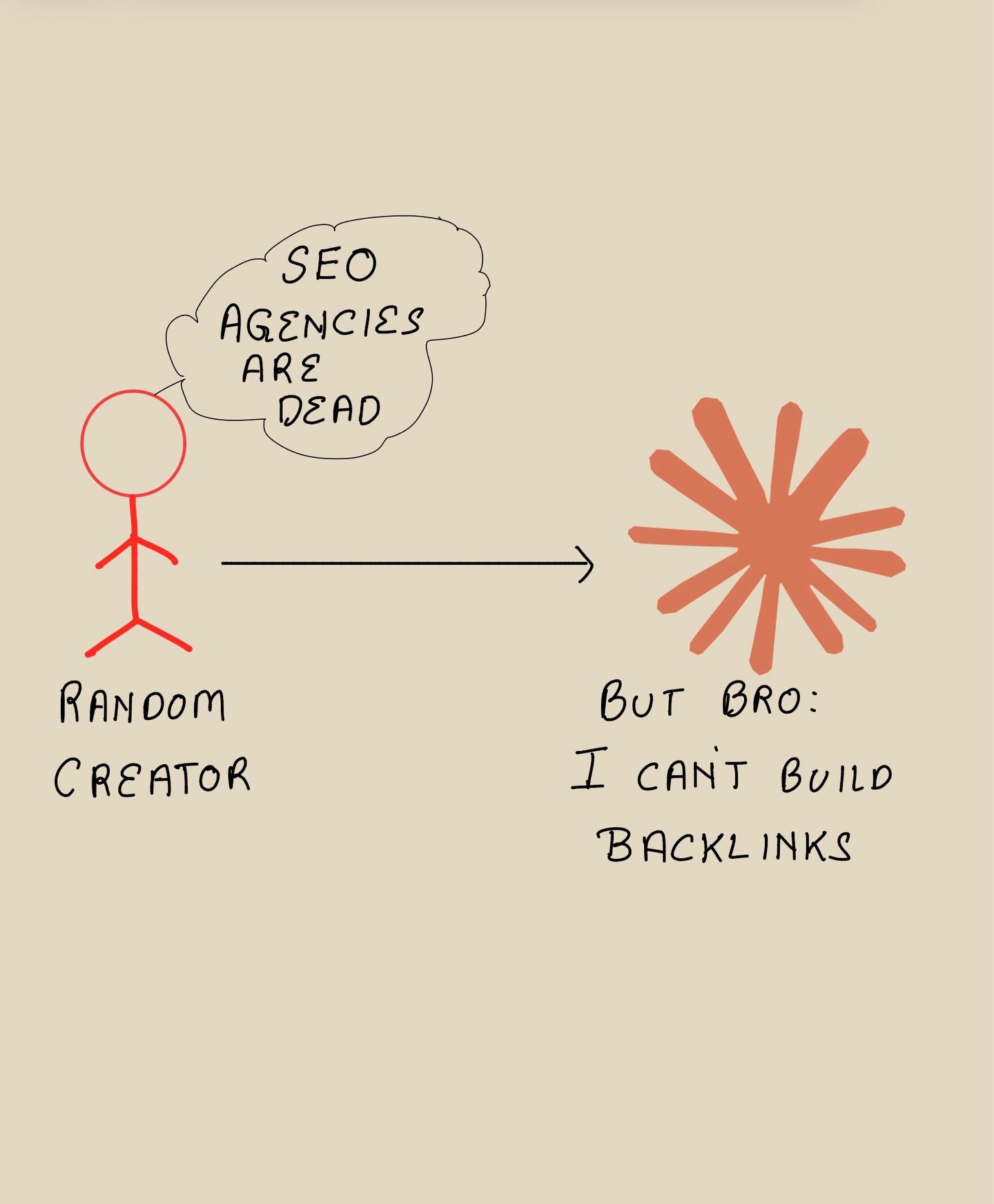
SEO agencies, for instance, are grappling with the idea that AI can build backlinks and optimize websites more efficiently than human experts. While this is true to an extent, the creativity and strategic thinking that human professionals bring to the table are irreplaceable. AI can generate backlinks, but it can't craft a compelling content strategy or adapt to unexpected market shifts with the same finesse as a seasoned SEO professional.
Designers
Designers are similarly concerned about their future in a world dominated by AI. The fear is that AI can create designs on demand, making human designers redundant. While AI can generate visually appealing content, it lacks the emotional intelligence and cultural understanding that human designers possess. Originality and the ability to go beyond predefined templates are traits that AI struggles to replicate.
Content Writers
Content writers, too, face the challenge of AI-generated content. AI can produce articles, social media posts, and other content types quickly and efficiently. It can even break stories and produce original data-driven content. However, the depth of analysis and the personal touch that human writers bring are invaluable. AI can't capture the nuances of human experience or the subtleties of language that make content engaging and relatable.
The Reality: AI as a Tool
AI is a powerful tool that can augment the capabilities of creative professionals. It can handle repetitive tasks, generate data-driven insights, and even come up with novel ideas. However, it lacks the capacity for genuine creativity, emotional depth, and strategic thinking.
AI's Limitations
AI operates on predefined algorithms and patterns, making it limited in its ability to innovate. It can produce content based on existing data, but it can't truly understand the context or the emotional resonance of that content. Human creators, on the other hand, can bring a unique perspective and a deep understanding of the audience to their work.
The Human Touch
Human creators have the ability to engage with their audience on a personal level, something that AI can't replicate. They can craft stories that resonate, designs that inspire, and strategies that captivate. This human touch is what truly sets creative professionals apart from AI.
Practical Tips for Navigating AI in Creative Industries
Creative professionals can utilize AI to enhance their capabilities rather than view it as a threat. Here are some practical tips for leveraging AI in creative industries:
- Utilize AI for Repetitive Tasks: Use AI to handle repetitive and time-consuming tasks, such as data analysis and content generation, freeing up time for more creative pursuits.
- Enhance Creativity with AI: Leverage AI-generated insights and ideas to fuel your own creativity. Use AI to explore new concepts and angles, then refine them with your unique perspective.
- Maintain the Human Touch: Ensure that your work retains the emotional depth and personal touch that only human creators can provide. Use AI to enhance, not replace, your creativity.
Important Takeaways
AI is a powerful tool that can transform creative industries, but it's not a replacement for human creativity. Here are the key takeaways:
- AI can handle repetitive tasks and generate data-driven insights, but it lacks emotional intelligence and strategic thinking.
- Creative professionals bring a unique perspective and a deep understanding of the audience to their work, something AI can't replicate.
- Utilize AI to enhance your capabilities, not replace them. Use it to handle repetitive tasks and generate ideas, but always maintain the human touch.
Conclusion
AI's impact on creative industries is multifaceted. While it presents challenges, it also offers opportunities for growth and innovation. By viewing AI as a tool rather than a threat, creative professionals can leverage its strengths while maintaining their unique human touch. The future of creative industries lies in the harmonious integration of AI and human creativity, not in the replacement of one by the other.
Watch the Reel
Questions readers ask
How is AI currently being used in creative industries?
AI is being used to automate repetitive tasks, generate content ideas, create drafts, design graphics, and optimize search engine rankings. It helps streamline workflows, allowing creatives to focus on higher-level tasks that require strategic thinking and original ideas.
Will AI replace human creators in the design industry?
AI is unlikely to replace human designers entirely. While AI can generate design drafts and optimize layouts, it lacks the human touch for understanding cultural nuances, emotive design, and client-specific needs. Instead, AI serves as a powerful tool for designers, augmenting their capabilities and efficiency.
Can AI generate high-quality content like a human writer?
AI can generate content quickly and efficiently, but it often lacks the depth, originality, and context-understanding that human writers possess. AI-generated content typically requires human oversight and editing to ensure accuracy, coherence, and relevance, making human writers indispensable in the content creation process.
How can AI tools benefit creative professions?
AI tools can benefit creative professions by automating mundane tasks, providing new creative inputs, and offering data-driven insights. This allows professionals to focus on strategic thinking, innovation, and building meaningful connections with their audience, ultimately enhancing their creative output and productivity.
What role does human creativity play in an AI-driven creative landscape?
Human creativity remains crucial in an AI-driven landscape. While AI can execute tasks and provide suggestions, it is the human touch that brings authenticity, emotional intelligence, and innovative ideas to creative projects. Human creators can leverage AI as a tool to augment their capabilities, not replace them.
How can human creators collaborate effectively with AI?
Human creators can collaborate effectively with AI by integrating AI tools into their workflows to handle repetitive tasks and generate ideas. By focusing on strategic thinking, unique perspectives, and client interactions, creators can enhance their productivity and output, using AI as a complement to their skills rather than a threat.
What are the benefits of using AI in content creation?
Using AI in content creation can speed up the process, provide a variety of content ideas, and optimize content for search engines. However, it is essential for human creators to review and refine AI-generated content to ensure it aligns with brand voice, maintains accuracy, and resonates with the target audience.
Related deep dives
Similar reads based on topic and creator.




Recent articles
Fresh deep dives from the latest Reels we unpacked.




Comments
Be the first to comment.