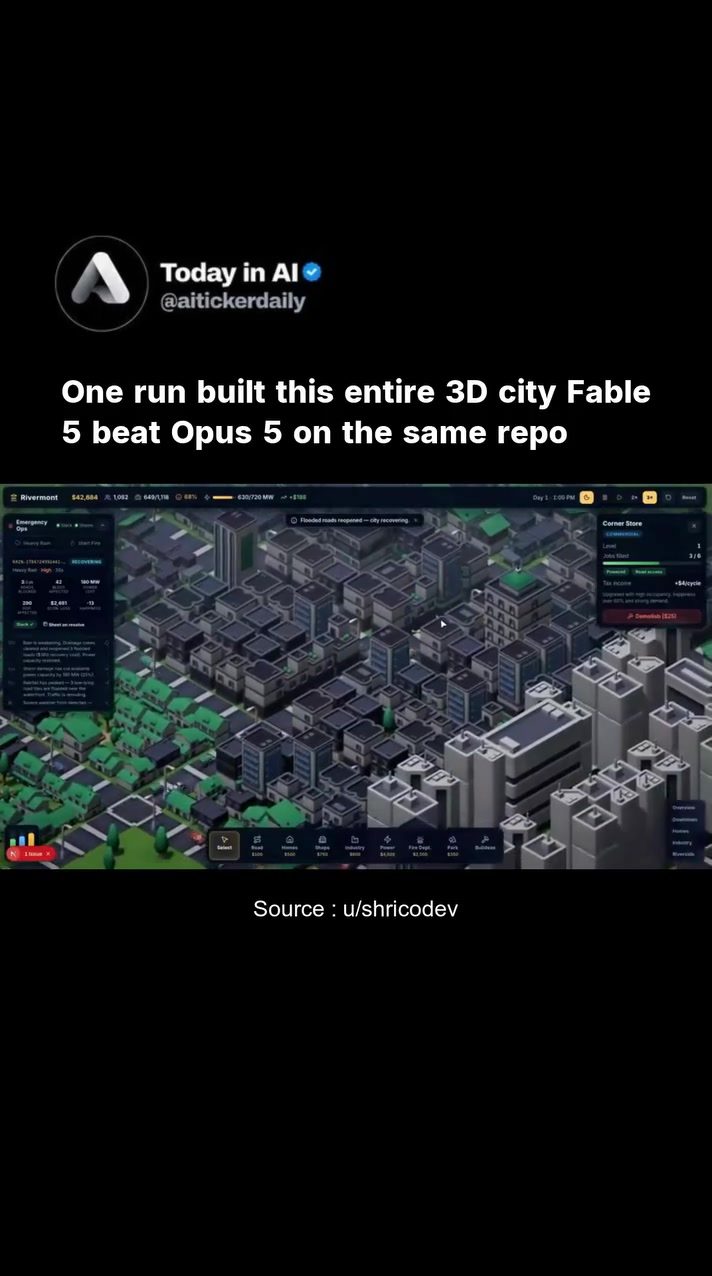
AI-Powered City Simulation: A Game-Changing 3D City in One Run
City simulation games have long captivated players with their ability to create and manage sprawling urban landscapes. Among the most impressive recent developments in this genre is the creation of an entire 3D city in a single run, using AI-driven tools. This feat not only showcases the advancements in AI but also highlights the potential for automating complex tasks within these simulations.
Context / Why This Matters
City simulation games are a significant part of the video game landscape. They offer players the chance to design and manage cities, from planning infrastructure to managing resources. The ability to build a complete 3D city in a single run is a testament to the evolving capabilities of AI in gaming. This kind of automation can significantly reduce the time and effort required to create intricate city simulations, making the process more accessible and efficient for developers and players alike.
Main Discussion
The Benchmark Challenge
A recent demonstration involved two AI tools: Fable and Opus 5. Both were given the same starter repository and assets, and were tasked with building a browser-based SimCity-style game. The game required features like traffic management, zoning, power distribution, money management, and day-night cycles.
Fable's Achievement
Fable achieved the remarkable feat of building an entire 3D city in just one hour and three minutes. The city featured realistic 3D buildings, roads, and trees, all arranged into well-defined zoned neighborhoods, a bustling downtown, and a scenic waterfront. This accomplishment not only met the specified criteria but also showcased the AI's ability to handle intricate details and planning.
Cost Efficiency
One of the most impressive aspects of Fable's performance was its cost efficiency. Across both benchmark tasks, Fable cost only about $11 more than Opus while delivering a dramatically better result. This efficiency highlights the potential for cost-effective development in city simulation games, making it possible to achieve high-quality outcomes without excessive resource allocation.
The Role of AI in City Simulation
The use of AI in city simulation games is revolutionizing the way developers approach urban planning and management. AI can automate various aspects of city-building, from designing infrastructure to managing resources. This automation not only speeds up the development process but also allows for more complex and realistic simulations.
Comparative Analysis
The performance of Fable and Opus 5 can be analyzed based on the following criteria:
- Completion Time: Fable completed the task in under an hour, while Opus 5 took significantly longer.
- Quality of Output: Fable's output was more detailed and visually appealing, with realistic 3D elements and well-planned zoning.
- Cost Efficiency: Fable's cost was slightly higher but offered a much superior result, making it a cost-effective choice for high-quality simulations.
Practical Tips
When exploring AI-driven city simulation games, consider the following tips:
- Start with Clear Objectives: Define the specific goals and features you want in your city simulation. This will help guide the AI tools in creating a more tailored experience.
- Choose the Right AI Tool: Different AI tools have varying strengths. Research and select a tool that best fits your requirements, whether it's Fable, Opus 5, or another option.
- Monitor Progress: Keep an eye on the AI's progress to ensure it aligns with your vision. Regular check-ins can help you make necessary adjustments and improve the final outcome.
- Experiment and Iterate: Don't be afraid to try different approaches and iterate on your design. AI tools offer flexibility, allowing you to experiment with various city elements and layouts.
Important Takeaways
- AI can significantly enhance the development of city simulation games, making the process faster and more efficient.
- Fable's ability to build a complete 3D city in a single run showcases the potential for high-quality, cost-effective simulations.
- The performance of AI tools like Fable and Opus 5 highlights the importance of choosing the right tool for your specific needs.
- Experimentation and iteration are key to achieving the best results in AI-driven city simulations.
Conclusion
The ability to build an entire 3D city in a single run using AI is a game-changer in the world of city simulation games. Tools like Fable and Opus 5 are pushing the boundaries of what's possible, offering developers and players new ways to create and manage urban landscapes. By leveraging AI, we can look forward to more immersive, realistic, and efficient city simulation experiences in the future.
Watch the Reel
Questions readers ask
What does '3D city in one run' mean in the context of AI city builder games?
This term refers to the ability of AI-driven tools to generate a complete 3D city in a single automated process. Instead of manually creating and placing each building, road, and resource, the AI can handle these complex tasks instantaneously, saving both time and effort.
How does AI improve the efficiency of game development for city simulation games?
AI streamlines game development by automating intricate tasks such as city layout design, infrastructure planning, and resource management. This allows developers to focus on other aspects of the game, such as storytelling and user interface, while the AI handles the creation of the cityscape.
What are the benefits of using AI-driven tools in city simulation games for players?
For players, AI-driven tools offer a more immersive and convenient gaming experience. They can dive straight into managing their city without the need for extensive setup, and they can enjoy more complex and realistic urban environments that the AI tools create.
Can AI tools help in creating unique and diverse city landscapes?
Yes, AI tools can generate a wide variety of city landscapes, from modern metropolises to historical towns, by learning from vast datasets of real-world and fictional city designs. This variability ensures that each game session offers a fresh and unique experience.
What kinds of tasks can be automated in AI-driven city simulations?
AI can automate a range of tasks, including urban planning, zoning, road construction, public transportation networks, and even the placement of amenities like parks and schools. This automation ensures that the city functions realistically and efficiently from the start.
Do AI tools require specific skills from developers to implement?
While some understanding of AI concepts can be beneficial, many AI-driven tools for city simulation are designed to be user-friendly. Developers can often integrate these tools with minimal coding, allowing them to leverage AI capabilities even if they are not AI experts.
Related deep dives
Similar reads based on topic and creator.

Recent articles
Fresh deep dives from the latest Reels we unpacked.




Comments
Be the first to comment.