AI Bubble: The $660 Billion Question
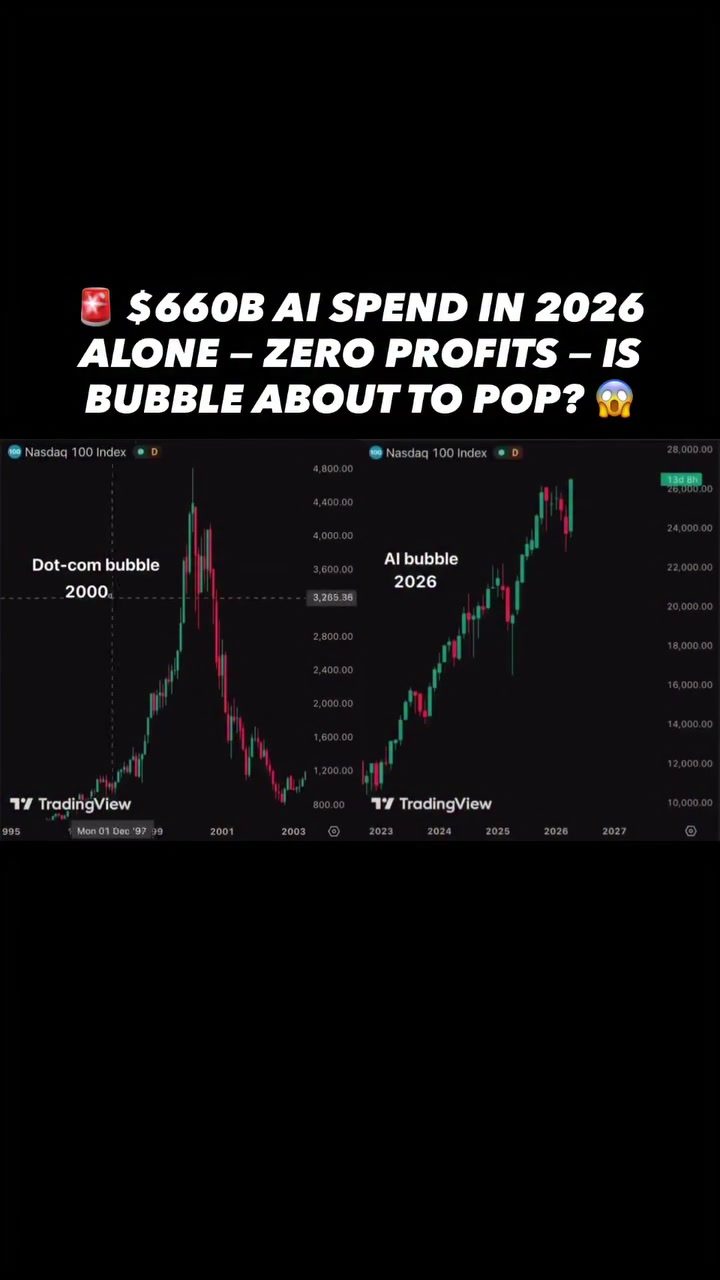
AI spending is projected to reach $660 billion in 2026. This staggering figure has sparked debate about whether the current AI market is on the brink of a bubble, reminiscent of the dot-com bubble of the late 1990s and early 2000s. The Nasdaq 100 Index, a key indicator of tech stock performance, is frequently cited in discussions comparing the two eras. The index's dramatic rise and fall during the dot-com bubble provides a historical context for understanding the potential implications of a similar pattern in the AI market.
Why This Matters
The potential AI bubble is a significant concern for several reasons. The concentration of wealth and control in the hands of a few companies, coupled with the lack of substantial profits, raises red flags. The dot-com bubble burst dramatically, wiping out billions in market value. The similarities between the dot-com era and the current AI frenzy, including the speculative investment and lack of real profits, suggest that the AI market could be heading for a similar crash.
Main Discussion
The Dot-Com Bubble: A Historical Perspective
The dot-com bubble of the late 1990s and early 2000s serves as a cautionary tale. During this period, tech stocks soared to unprecedented heights, driven by investor enthusiasm for the potential of the internet. Companies with little to no revenue saw their stock prices skyrocket. The bubble burst in 2000, leading to a sharp decline in tech stocks and significant market losses.
AI Market in 2026: A Parallel Universe
The current AI market shares several parallels with the dot-com bubble. A small percentage of companies control a significant portion of the Nasdaq, generating minimal actual profits. Companies are pouring billions into AI, but the returns are not yet visible. Major tech giants like Microsoft, Amazon, and Alphabet have seen significant drops in market value, indicating potential financial strain.
The $660 Billion Question
The projected $660 billion in AI spending by 2026 is a monumental figure. It raises a crucial question: Is this investment driven by real market needs or speculative hype? The lack of substantial profits despite massive spending suggests the latter. This speculative behavior can create a feedback loop where companies feel compelled to invest heavily to avoid falling behind, further inflating the bubble.
The Role of Tech Giants
Tech giants like Microsoft, Amazon, and Alphabet have been at the forefront of AI investment. Amazon's stock has seen a 15% decrease, while Microsoft and Alphabet have dropped by 20% and 12%, respectively. These declines are substantial, totaling over $1.3 trillion in market value wiped out. This financial bloodletting indicates a potential overvaluation of AI investments by these corporations.
The New Bird AI Phenomenon
The case of a random shoe company renaming itself “New Bird AI” and seeing a 630% stock surge in days highlights the irrational exuberance driving the market. Without any AI products, the company's stock price skyrocketed on the back of the AI hype. This episode underscores the detached-from-reality nature of current investments in AI, where even minor associations with the sector can lead to significant market movements.
Concentration and Profits
The current concentration of market control and profits is alarming. Less than 1% of companies control 50% of the Nasdaq, generating just 9% of actual profits. This concentration is worse than during the peak of the dot-com bubble. The disparity between market control and actual profitability is a clear indicator of a potential bubble.
Practical Tips
Monitor Market Indicators
Keeping an eye on key market indicators, such as the Nasdaq 100 Index and individual company performance, can provide insights into the health of the AI market. Look for signs of stabilization or further decline in stock prices, which can signal a potential bubble burst.
Diversify Investments
Avoid putting all your eggs in one basket. Diversify your investment portfolio to include a mix of sectors and asset classes. This can help mitigate risks associated with a potential market downturn.
Stay Informed
Stay updated on the latest developments in the AI sector. Follow reliable sources of information and engage in discussions with industry experts to gain a comprehensive understanding of the market trends.
Important Takeaways
The AI market's current trajectory, characterized by massive spending, lack of substantial profits, and extreme market concentration, bears a striking resemblance to the dot-com bubble. The projected $660 billion in AI spending by 2026 is a critical figure that highlights the potential for a bubble. The historical lessons from the dot-com era, along with the current market dynamics, suggest that the AI bubble could be on the verge of popping, leading to significant market corrections.
Conclusion
The AI market is at a critical juncture, with parallels to the dot-com bubble raising serious concerns. The projected spending of $660 billion in 2026, coupled with the lack of profits and extreme market concentration, suggests that a bubble could be forming. The financial strains on major tech companies and the irrational exuberance around AI-related investments further underscore this potential bubble. Staying informed and diversifying investments can help navigate the uncertain waters of the AI market.
Watch the Reel
Questions readers ask
What are the key similarities between the current AI market and the dot-com bubble of the late 1990s and early 2000s?
Both the AI market and the dot-com bubble share several key similarities, including a rapid increase in investment and market hype, concentration of wealth among a few dominant companies, and uncertainty about future profitability. Notably, the Nasdaq 100 Index, a key indicator of tech stock performance, serves as a historical benchmark to evaluate these trends in the AI market.
What is the projected AI spending by 2026 and what does this imply about the market?
AI spending is projected to hit $660 billion by 2026, which indicates a high level of interest and investment in the industry. However, the rapid growth in spending has sparked debate about whether the market is overvalued and on the verge of a correction, similar to the dot-com bust.
What does the concentration of wealth among a few AI companies mean for the market?
The concentration of wealth and market control among a few AI companies raises concerns about market stability and competition. This situation, similar to that of the dot-com era, could lead to a situation where the failure or decline of a few major players significantly impacts the entire industry.
How does the Nasdaq 100 Index help in understanding the current AI market trends?
The Nasdaq 100 Index serves as a benchmark for tech stock performance, providing historical context for understanding the AI market. The index's dramatic rise and fall during the dot-com bubble can offer insights into the potential volatility and risks associated with the current AI market trends.
Why are real returns in the AI market uncertain despite heavy investment?
Real returns in the AI market are uncertain due to a lack of tangible profits from many AI companies. Investors are speculating heavily, but the absence of substantial earnings raises questions about the sustainability of current valuations and the potential for a market correction.
What risks are associated with AI investing given the current market trends?
Investing in the AI sector carries significant risks, including the potential for a market crash similar to the dot-com bust. Investors should be aware of the volatility and uncertainty in the market, as well as the concentration of wealth and control among a few dominant companies, which could impact overall stability.
What are the potential implications of an AI market crash on the tech industry?
An AI market crash could have significant implications for the broader tech industry, including job losses, reduced investment in innovation, and a shift in investor sentiment. It could also lead to a period of consolidation, where smaller companies are acquired or go out of business, and larger companies emerge as dominant players.
Related deep dives
Similar reads based on topic and creator.




Recent articles
Fresh deep dives from the latest Reels we unpacked.




Comments
Be the first to comment.