AI Agents: Understanding the Building Blocks and Their Impact
Artificial Intelligence (AI) agents are a hot topic, as evidenced by the proliferation of AI chatbots and AI content creation tools. But what exactly is an AI agent, and how does it differ from a chatbot, or even other AI tools? The vague definitions surrounding AI agents are not only confusing but also hinder their adoption. Let's break down the key components of an AI agent and why understanding these elements is crucial.
Context / Why this matters
Understanding AI agents is essential because they are poised to revolutionize various industries by automating complex tasks, improving decision-making, and enhancing user experiences. However, the lack of precise definitions leads to confusion, which slows down their development and adoption. By gaining a clearer understanding of AI agents, their components, and their differences from other AI tools, we can foster more effective development and more meaningful dialogue about how they can be integrated into our daily lives.
Main discussion
Components of an AI Agent
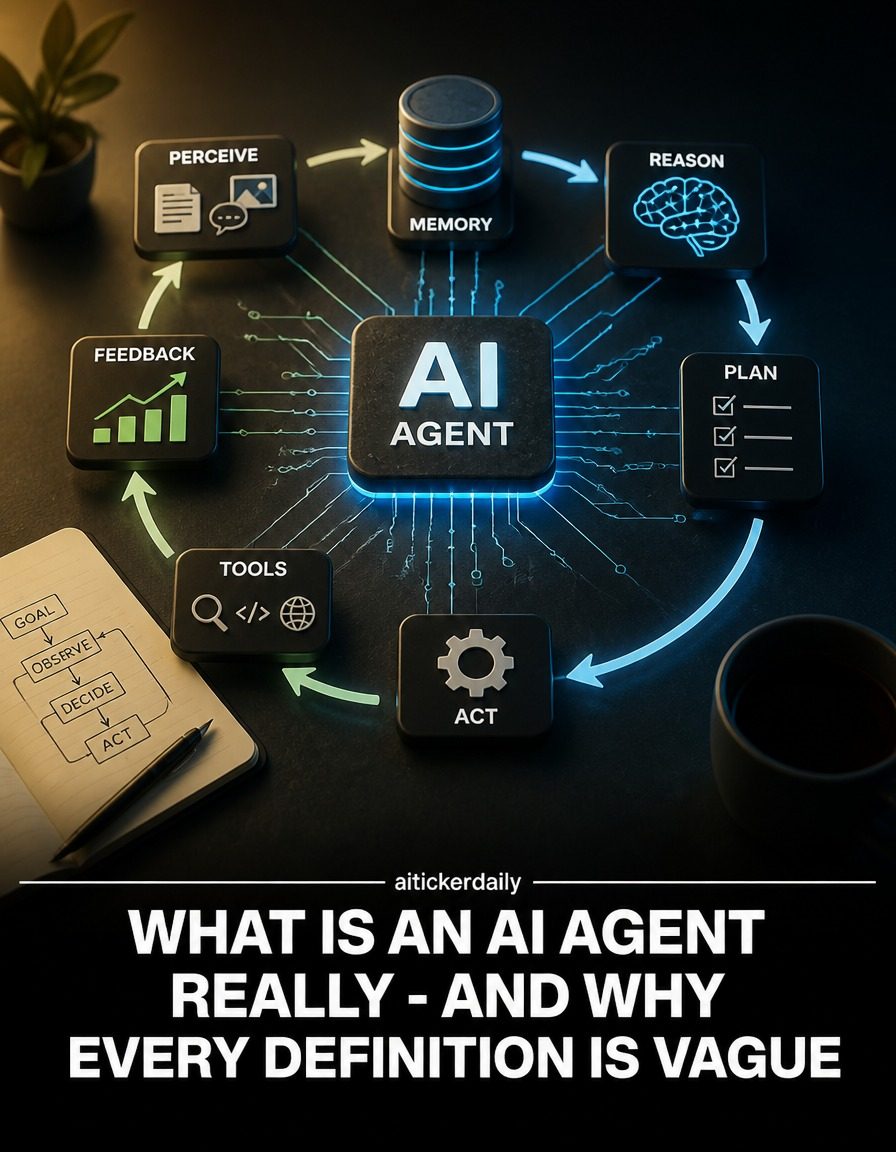
A typical AI agent consists of several key components, including perception, reasoning, memory, planning, action, tools, feedback, and goals. Each of these components plays a crucial role in how an AI agent functions. Understanding these components allows us to design and build AI agents that can perform specific tasks more efficiently.
-
Perception: This is the ability of an AI agent to gather information from its environment. It involves sensing and interpreting data from various sources, such as sensors, cameras, and databases.
-
Reasoning: Once the data is perceived, the AI agent needs to make sense of it. Reasoning involves processing the perceived information to derive meaningful insights and decisions. This component is crucial for tasks that require complex decision-making.
-
Memory: Memory allows the AI agent to store past experiences and use them to inform future actions. This component is essential for learning and adapting to new situations.
-
Planning: Planning involves creating a sequence of actions to achieve a specific goal. This component is crucial for tasks that require multiple steps to complete, such as navigating a maze or solving a complex problem.
-
Action: After planning, the AI agent executes the planned actions. This component involves interacting with the environment to achieve the desired outcome.
-
Tools: Tools are external resources that an AI agent uses to interact with the world. These can include databases, APIs, and other software tools. Tools give the AI agent the reach it needs to perform a wide range of tasks.
-
Feedback: Feedback is the information the AI agent receives after executing an action. This component is crucial for learning and improving the agent's performance over time.
-
Goals: Goals define the objectives the AI agent aims to achieve. They provide a clear direction for the agent's actions and decisions.
The Role of Autonomy
Autonomy in AI agents exists on a spectrum. Some AI agents are highly autonomous, capable of making decisions and taking actions with minimal human intervention. Others may require more oversight and guidance. The level of autonomy depends on the specific use case and the capabilities of the AI agent. Understanding the spectrum of autonomy is crucial for designing AI agents that can operate effectively in different environments.
The Difference Between an AI Agent and a Chatbot
While AI agents and chatbots share some similarities, they are fundamentally different. Chatbots are designed to simulate human conversation, providing responses to user queries based on predefined rules or machine learning algorithms. AI agents, on the other hand, are more versatile and capable of performing a wide range of tasks, from data analysis to task automation.
AI agents can operate independently, make decisions, and interact with their environment using tools. They are designed to achieve specific goals and can adapt to new situations based on their perception, reasoning, and learning capabilities. In contrast, chatbots are primarily focused on communication and may not have the same level of autonomy or versatility.
Practical Tips
Defining Clear Goals
When developing an AI agent, it's essential to define clear goals from the outset. Goals provide a roadmap for the agent's actions and decisions, ensuring that it can achieve the desired outcomes.
Selecting the Right Tools
Choosing the right tools is crucial for the effectiveness of an AI agent. Tools give the agent the reach it needs to perform a wide range of tasks, from data analysis to task automation. Understanding the capabilities and limitations of different tools is essential for selecting the ones that best meet the agent's needs.
Designing for Autonomy
Autonomy in AI agents exists on a spectrum, and the appropriate level of autonomy depends on the specific use case. Designing for autonomy involves understanding the agent's capabilities and limitations and creating a system that balances human oversight with autonomous decision-making.
Continuous Learning and Improvement
AI agents are capable of learning and improving over time through feedback and adaptation. Regularly updating the agent's algorithms and models ensures that it can adapt to new situations and improve its performance.
Integrating with Existing Systems
For AI agents to be effective, they need to be integrated with existing systems and tools. Understanding the capabilities and limitations of these systems is essential for creating a seamless and efficient workflow.
Important Takeaways
- AI agents consist of several key components, including perception, reasoning, memory, planning, action, tools, feedback, and goals. Understanding these components is crucial for designing and building effective AI agents.
- Autonomy in AI agents exists on a spectrum, and the appropriate level of autonomy depends on the specific use case.
- AI agents are more versatile and capable than chatbots, which are primarily focused on communication.
- Defining clear goals, selecting the right tools, and designing for autonomy are essential for developing effective AI agents.
- Continuous learning and improvement, as well as integration with existing systems, are crucial for the long-term success of AI agents.
Conclusion
AI agents are a powerful and versatile technology with the potential to revolutionize various industries. However, the lack of precise definitions and understanding of their components and capabilities is slowing down their adoption. By gaining a clearer understanding of AI agents, their components, and their differences from other AI tools, we can foster more effective development and more meaningful integration into our daily lives. Whether you're a developer, a business owner, or simply curious about the future of AI, understanding AI agents is a crucial step in harnessing the potential of this exciting technology.
Watch the Reel
Questions readers ask
What distinguishes AI agents from basic chatbots?
AI agents are advanced AI systems capable of performing complex tasks and automating workflows, whereas chatbots typically handle simple, rule-based interactions. Chatbots often follow predefined scripts, while AI agents can make decisions, learn from data, and improve over time.
Why do AI agents need tools to function effectively?
AI agents need tools to perform specific tasks, access data, and interact with external systems. These tools enable AI agents to automate complex processes, analyze information, and make informed decisions, enhancing their overall functionality and efficiency.
In what ways can AI agents improve decision-making processes?
AI agents can improve decision-making by analyzing vast amounts of data, identifying patterns, and providing insights that humans might miss. They can also simulate various scenarios, predict outcomes, and offer data-driven recommendations, leading to more informed and accurate decisions.
How do AI agents enhance user experiences across different industries?
AI agents enhance user experiences by providing personalized interactions, 24/7 availability, and efficient problem-solving. In industries like healthcare, finance, and customer service, AI agents can offer tailored advice, automate routine tasks, and ensure consistent service quality, making interactions more seamless and satisfying for users.
What are some industry applications where AI agents are making a significant impact?
AI agents are making a significant impact in industries such as healthcare, where they assist in diagnostics and patient care; finance, where they automate trading and fraud detection; and customer service, where they handle inquiries and support requests. Additionally, AI agents are used in manufacturing for predictive maintenance and in retail for personalized marketing strategies.
Can AI agents operate autonomously, and if so, what does that mean?
Yes, AI agents can operate autonomously, meaning they can perform tasks and make decisions without constant human intervention. This autonomy is achieved through advanced algorithms and integration with various tools and data sources, allowing AI agents to act independently and adapt to changing circumstances.
What benefits do AI agents offer in terms of innovation and task performance?
AI agents offer numerous benefits, including the ability to automate repetitive tasks, freeing up human resources for more creative and strategic work. They also drive innovation by continuously learning and improving, enabling industries to stay competitive and adapt to new challenges.
Related deep dives
Similar reads based on topic and creator.




Recent articles
Fresh deep dives from the latest Reels we unpacked.




Comments
Be the first to comment.