AI is Teaching, So Is That Okay?
Academic integrity is under threat when AI agents are completing college courses for students — and professors report they can't stop the trend. AI's capacity to mimic human intelligence has made it so advanced that it can effectively complete entire college courses. This limits the professors' ability to control and monitor students' assignments and projects. Little information is available on how students are leveraging AI agents in this manner, but the implications are vast.
The Rise of AI in Academia
Artificial Intelligence (AI), a branch of computer science that makes machines 'smart' in the tasks they complete, is increasingly making a name for itself in higher education. AI is impacting academia fundamentally with its offerings. Professors are unable to halt the AI trend because of this. AI agents, or software that mimics human behavior, can now complete entire college courses and assignments. These AI agents could hypothetically finish coursework and exams independently from students.
What it means for student learning
This implies educational transformation. Some see AI agents as "ghost writers" for students' essays and projects, raising questions about originality and honest academic effort. Further, we must consider the potential implications of AI in the classroom, where traditional methods of assessment like essays and presentations are being disrupted. Students are also at risk of losing opportunities to learn essential skills required at the workplace, such as problem-solving, critical thinking, and decision-making, which are fundamental to compete in the job market.
How AI is Becoming the Invisible Professor
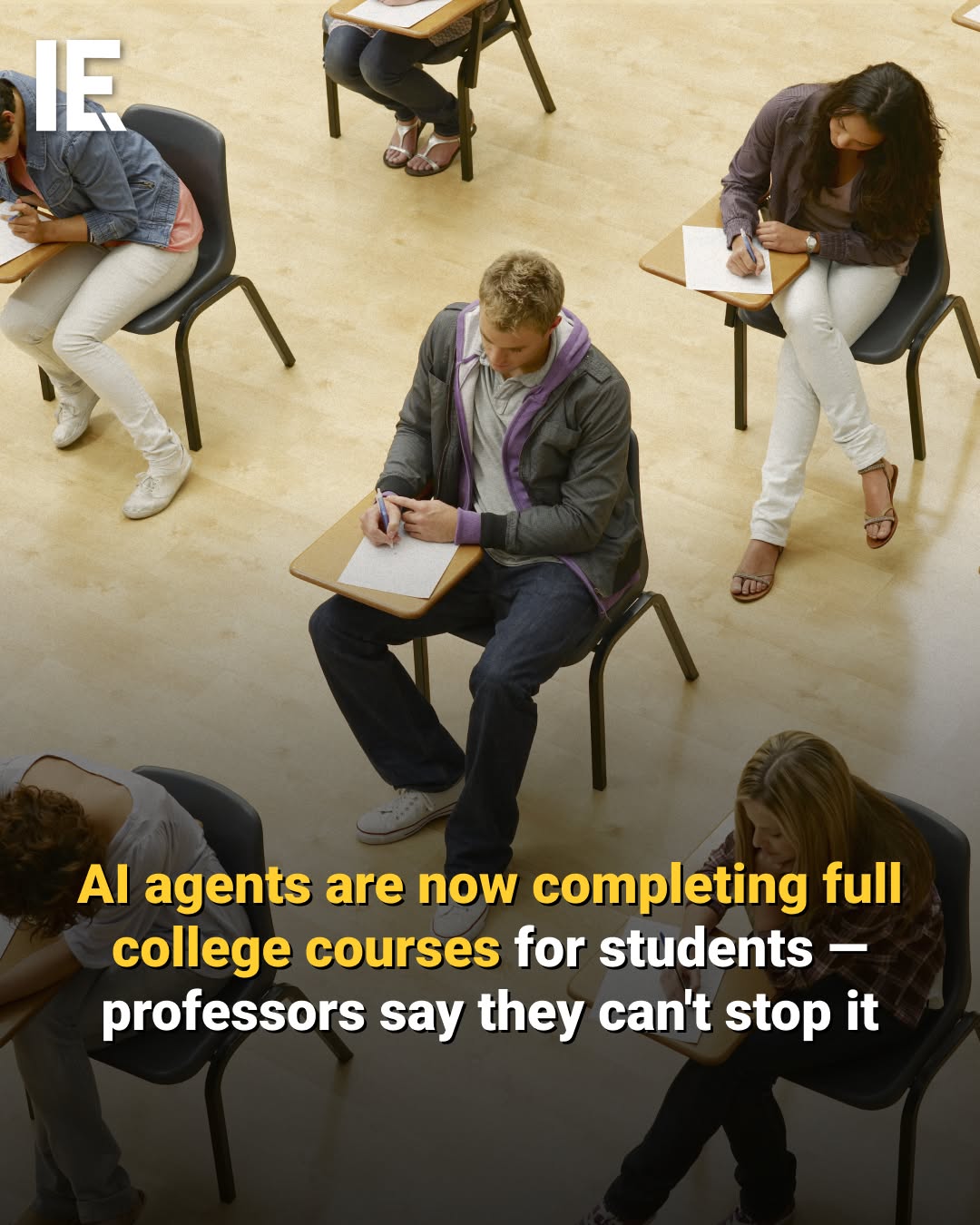
In a classroom classroom setting with students seated at desks, AI agents may be completing full college courses. The invisible professor phenomenon is happening — it’s where AI software can now write a student’s entire paper, from research to citation. Indeed, AI agents are capable of producing high-quality and sometimes unique content. This includes technically sound academic papers and high-quality assignments throughout multiple semesters. Though these are impressive, they can also be considered alarming. According to professor, “One student, worried about his professor discovering that his grade came from an AI agent, was capable of expressing relief that he didn’t need to do any of his homework.” Overall, the overall impact the technology has on students is unclear, but there are some fears.
The Implications For Educational Resources
There are also potential implications to consider. AI agents could potentially be used to complete assignments at the expense of the students whose assignments are being completed. This could mean that students are filling out questionnaires, or completing assignments without actually learning the material. Instead of focusing on the subject matter, professors may be wasting their time on verifying the authenticity of assignments.
The unseen Consequences
The unseen consequences are something to consider; students may lack the opportunity to learn essential skills. This could result in a workforce that is less capable of problem-solving, critical thinking, and decision-making.
Can Academic Integrity Be Saved?
Professor of computer science feels that students should not use AI to complete assignments and professors should take remedial action. Professors are already in the position of gatekeepers of education, and they are now faced with the challenge of ensuring that their students are learning valuable skills. AI leads to an over-reliance on it instead of doing the coursework. If students become reliant on AI, they may not develop the skills required for success in their careers. Therefore, it is essential for students to understand the implications of relying on AI.
If Students Complete Their Assignments With AI, Then What?
If students are completing their assignments with the help of AI, it would be inaccurate to describe the assignments as wholly student-made. In the academic world, there are already multiple instances where students have been caught cheating on their assignments using AI. In reality, professors are not given the tools or knowledge to detect when a student has used AI to complete an assignment. Therefore, it is possible that the professor would not be aware that a student used AI to complete the assignment.
How can professors ensure that students are learning?
If professors are not aware of how this technology could be used, it is unlikely that they would know whether or not a student's assignment was completed independently. Therefore, it is crucial to ensure that students are learning valuable skills without relying on AI.
Practical Tips For Professors
Professors need to be aware of the risks and implications of AI in the classroom. Professors can also take a proactive approach towards ensuring that students are learning the fundamental skills they need to succeed. Professors should take proactive steps to ensure that students develop the skills they need in their careers. This could include:
- Learning the technology: Professors should be knowledgeable in how the AI agents work. This means trying out the AI agents themselves, understanding their capabilities and their limitations.
- Using it for low-stakes assignments: Professors can assign a minimal amount of assignments to students to complete using AI. This allows professors to understand the potential capabilities and limitations of AI agents and helps students understand this too.
- Setting high standards for academic integrity: Establishing guidelines and reassessing assignments to ensure that students are learning the necessary skills and not relying on AI for their assignments. There are tools available to help identify AI-generated text, and professors can use these tools with their students for consequences and reporting.
Watch For The Signs
The first sign to watch for is when students use AI to complete simple assignments. This is an indication that the students may have relied on AI to complete the assignment. Moreover, professors should look out for when students claim they did not know the material; this could indicate that the student relied on AI to complete the assignment.
Ensuring Students Are Learning The Skills
Professors need to focus on ensuring students are learning the skills necessary to succeed in their careers. Skills like problem-solving, critical thinking, and decision-making are essential for success in the job market. Therefore, professors should consider making assignments where students can demonstrate these skills and not relying solely on AI.
Demonstrating The Skills
What is at stake? How valuable is the learning experience? Professors should be able to help students demonstrate their understanding of the material and ensure that they are learning the skills they will need for their careers. Educators should be working towards helping students learn these skills and not just completing assignments.
Watch the Reel
Questions readers ask
What exactly are AI agents and how are they completing college courses?
AI agents are software programs designed to mimic human behavior and intelligence. They can complete college courses by generating high-quality content, including essays, research papers, and assignments, often from start to finish. This includes conducting research, writing the content, and even citing sources correctly. They can do this for multiple semesters and across various subjects, making it seem like a student has done the work themselves.
How do professors know if an assignment is written by an AI agent?
Professors may suspect AI involvement when the quality of work is unusually high or consistent across multiple assignments, or when students express unusual relief about not having to do their own work. However, detecting AI-generated content can be challenging because AI agents can produce unique and technically sound content. There aren't many tools available to professors to verify the authenticity of assignments, making it difficult to stop the trend.
Can AI agents really replace the need for students to learn and develop crucial skills?
Yes, there's a concern that if students rely on AI agents to complete their coursework, they may miss out on developing essential skills like problem-solving, critical thinking, and decision-making. These skills are crucial for the job market and are often honed through the process of completing assignments and projects independently.
How are students accessing these AI agents to complete their coursework?
The article does not specify how students are accessing these AI agents. However, it's likely that students are using publicly available AI tools or services that can generate content based on given prompts. These tools might be accessed through websites, apps, or even integrated into learning management systems. The lack of information on this topic highlights the need for further investigation into the mechanisms behind this trend.
What can professors do to combat the use of AI agents in their classrooms?
Professors are currently struggling to stop the use of AI agents in academia. One approach could be to redesign assessments to focus more on in-class participation, projects, and presentations that require real-time interaction and critical thinking, which AI agents might struggle to replicate. Another approach could be to educate students on the importance of academic integrity and the consequences of using AI agents to complete their coursework.
Do AI agents pose a threat to academic integrity?
Yes, AI agents pose a significant threat to academic integrity. They can complete assignments and coursework independently, which means students might not be learning the material and could be passing off AI-generated work as their own. This undermines the principles of honesty, trust, and originality that are fundamental to academia.
Is the use of AI agents in academia a growing trend?
Yes, the use of AI agents in academia is a growing trend, according to reports from professors. As AI technology advances, it becomes more capable of mimicking human intelligence and completing complex tasks, including college-level coursework. This trend is likely to continue as AI tools become more accessible and sophisticated, making it increasingly difficult for professors to monitor and control.
Related deep dives
Similar reads based on topic and creator.


Recent articles
Fresh deep dives from the latest Reels we unpacked.


Comments
Be the first to comment.