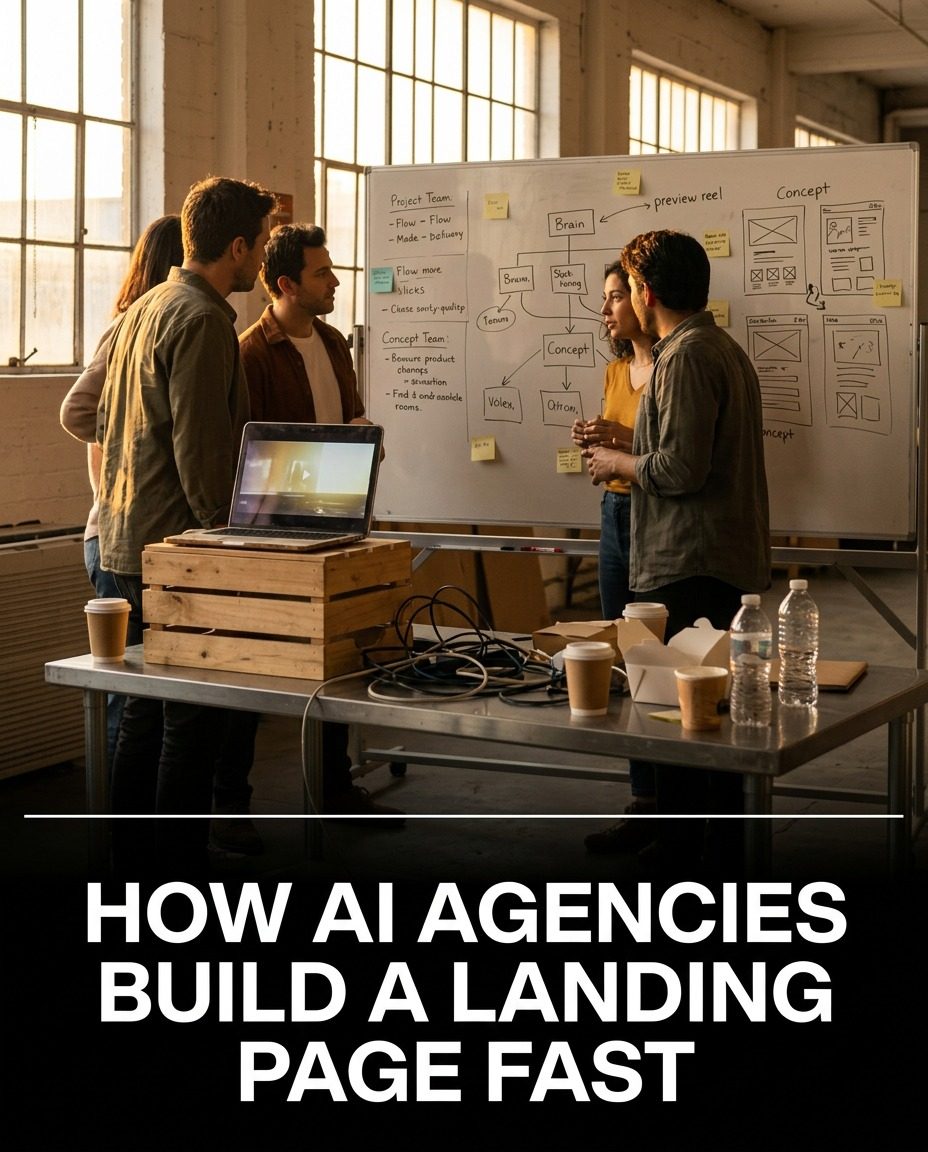
AI Agency Landing Page Build
Building a landing page for an AI agency under tight deadlines requires a strategic approach that prioritizes speed, efficiency, and decisive action. This process involves a well-defined ten-slide deck that outlines key stages, from the initial ask to the final measurement of success. This approach ensures that the landing page is a clear decision, not a subject of debate.
Why This Matters
In the rapidly evolving world of AI, creating a compelling landing page is crucial for converting visitors into customers. Agencies that can build these pages quickly and effectively have a significant competitive advantage. By focusing on constraint, speed, and shipping, AI agencies can meet tight deadlines while maintaining high-quality output.
Main Discussion
The Brief: The Foundation of Success
The brief is the cornerstone of any successful landing page project. It serves as a north star, guiding the entire process. Here’s how to handle the brief effectively:
1. Evidence, Not Spec
Don’t treat the brief as a finished specification. Instead, use it as evidence of intent. Read between the lines to understand the client’s true needs. The real ask is often found a few lines up from what the client explicitly states. This step ensures that the team is aligned with the client's actual objectives, not just what they think they want.
2. The One-Liner
Rewrite the brief into a sharp, concise creative prompt. This one-liner should be a clear, agreed-upon statement that the entire team can rally around. If the team can’t agree on this single line, the project is likely to face downstream issues. This step ensures that everyone is on the same page from the start.
3. The 1-1-1 Rule
Distill the brief to one sentence, one emotion, and one action. Everything else is decoration. If you can’t state these three elements clearly, the brief is still foggy. This rule helps to focus the project on its core objectives, making it easier to execute.
Asset Strategy: Efficient and Effective
Asset strategy is crucial for streamlining the build process and ensuring that all elements serve a clear purpose. Here are the key points to consider:
1. North Star
Use the brief as the north star. Pull headlines, visual beats, motion notes, and tone from it. Avoid inventing new brand logic mid-build. This approach ensures consistency and alignment with the client's objectives.
2. One Asset, One Purpose
Lock assets by slide: one hero visual, one motion element, and one proof point. If an asset doesn’t serve a specific slide, cut it. This strategy ensures that every element has a purpose and contributes to the overall effectiveness of the landing page.
3. File Naming
Name files by slide number and intent, not by version. For example, name a file '03_hero.png' to indicate its purpose and location in the build. This simple workflow fix helps keep the project organized and ensures that all team members can easily find and use the necessary assets.
Weekday AI Briefing: Keeping It Tight
The weekday AI briefing is a regular check-in to keep the project moving smoothly. It focuses on delivering value without noise.
Five Drops, Zero Noise
The briefing aims to deliver five key points with minimal extraneous information. This approach ensures that the team stays focused on the most important aspects of the project and avoids distractions.
The Ten-Slide Deck
The ten-slide deck is a comprehensive guide to building a landing page efficiently. Here’s a breakdown of the key slides:
- The Ask: Clearly state the client’s request and the project’s objectives.
- Constraints: Identify any limitations or restrictions that need to be considered.
- The Brief: Summarize the brief using the 1-1-1 rule.
- Landing Page Structure: Outline the structure of the landing page, including key sections and their purposes.
- Proof and Storytelling: Determine how to prove the value proposition and tell a compelling story.
- Visual System: Define the visual elements, including color schemes, typography, and imagery.
- Build and Review: Break down the build process into manageable tasks and set review gates.
- Ship and Measure: Plan for the launch and establish metrics for measuring success.
Practical Tips
For AI Agencies:
- Tight Briefs and Loops: Ensure that your briefs are concise and clear. Use small, iterative loops to keep the project moving.
- Brutal Review Gates: Establish clear review points to catch issues early and keep the project on track.
- Clean Hand-offs: Make sure that handoffs between team members are smooth and well-organized.
For Clients:
- Clear Communication: Be as specific as possible in your brief. Provide clear examples and avoid ambiguity.
- Timely Feedback: Respond to review requests promptly to keep the project moving.
- Trust the Process: Understand that the team is working with your best interests in mind and that their process is designed to deliver the best results.
Important Takeaways
Speed and Efficiency
Building a landing page quickly and efficiently requires a streamlined process and a clear understanding of the objectives. By following the ten-slide deck and focusing on key elements, AI agencies can deliver high-quality landing pages under tight deadlines.
Focus on Outcomes
The goal of a landing page is to drive action, not to impress with complexity. A clear, concise, and effective landing page is more likely to convert visitors into customers. Focus on delivering a decision, not a debate.
Collaborative Effort
A successful landing page build is a collaborative effort. Clear communication, timely feedback, and a shared understanding of the project’s objectives are essential for success.
Conclusion
Building a landing page for an AI agency under deadline pressure requires a well-defined process, clear communication, and a focus on outcomes. By following the ten-slide deck and focusing on key elements, AI agencies can deliver high-quality landing pages quickly and effectively. This approach ensures that the landing page is a clear decision, not a subject of debate, and drives action from visitors.
Watch the Reel
Questions readers ask
How do AI agencies ensure quick turnaround times for landing page creation?
AI agencies streamline the process by prioritizing the client's needs and creating a concise, actionable brief. This approach, paired with a clear and precise 10-slide deck, ensures that the landing page is built swiftly without compromising on quality.
What is the significance of a well-defined process in fast landing page design for AI agencies?
A well-defined process ensures that AI agencies can meet tight deadlines while maintaining a high level of quality. By following a strategic approach that outlines key stages from the initial ask to the final measurement of success, agencies can deliver effective landing pages that convert visitors into customers.
How can AI agencies maintain quality while building landing pages swiftly?
AI agencies maintain quality by focusing on the client’s true needs and creating a clear, actionable prompt. This ensures that the landing page is relevant and effective, even when built under tight deadlines.
What role does a concise, actionable prompt play in the creation of AI landing pages?
A concise, actionable prompt helps AI agencies distill the client’s brief, ensuring they build the landing page to exactly what the client needs. This clarity allows for faster decision-making and efficient execution, leading to high-quality landing pages.
Why is a clear decision-making process crucial in building AI-powered landing pages?
A clear decision-making process is crucial because it ensures the landing page is not a subject of debate, which can slow down the process. Instead, it allows for swift, efficient creation and ensures the project stays on track to meet deadlines.
What are the key stages in the AI agency's approach to building deadline-driven landing pages?
The key stages include the initial ask, distillation of the brief into an actionable prompt, creation of the landing page, review, proofing, and finally, measuring the success of the landing page. This structured approach helps in maintaining focus and speed.
How does the review and proofing process work in the fast creation of AI agency landing pages?
The review and proofing process in AI agencies is streamlined to ensure quick turnaround times. It involves a clear asset review process, ensuring that the landing page meets the client's needs and is ready for deployment without unnecessary delays.
Related deep dives
Similar reads based on topic and creator.




Recent articles
Fresh deep dives from the latest Reels we unpacked.




Comments
Be the first to comment.