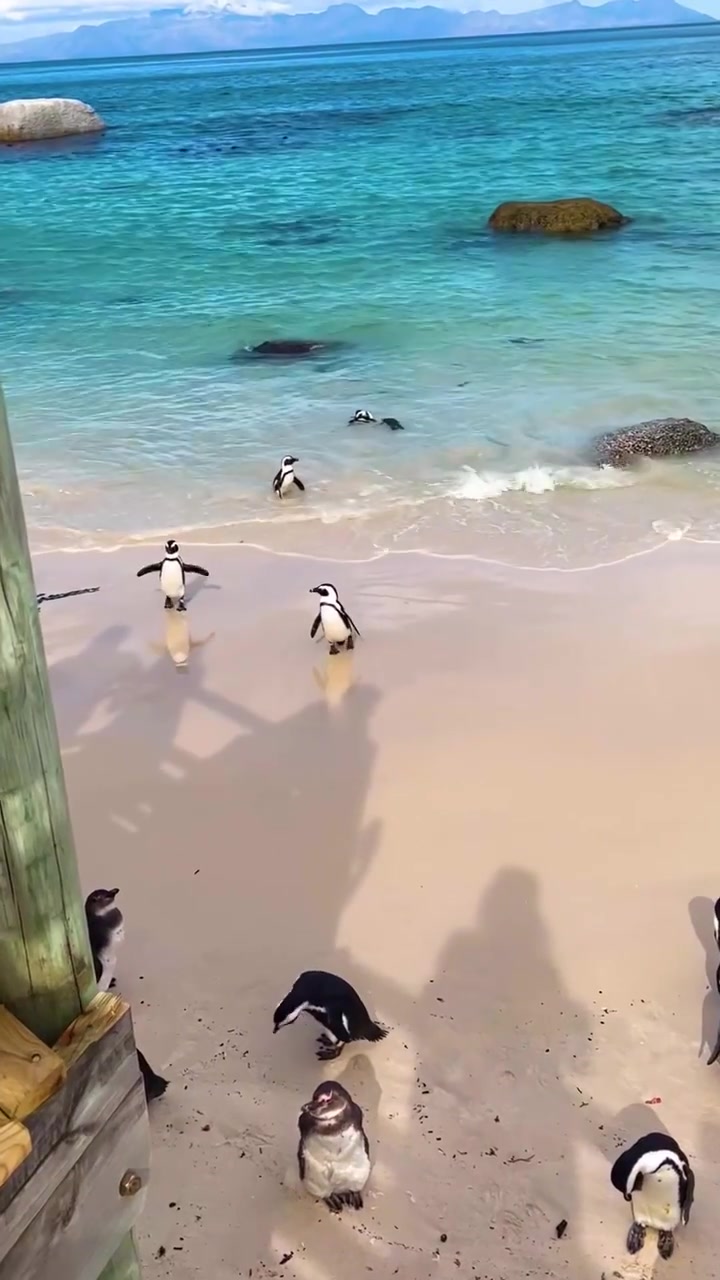
There are nearly 2 million African penguins worldwide, and they gather in colonies like the one seen on a recent video, spread across a beach. Blurring ocean borders, the penguins sprawl out on sand —adults standing tall and chicks scattered. In some cases, the colony stretches across hundreds of meters both toward the sea and inland. Here, the penguins socialise, rest, and walk. Breeding colonies can exceed 100,000 birds. The scene is entirely typical for African penguins, which live in vast colonies scattered along the southern African coast and Namibia.
The Beaches of the African Penguin
A colony of African penguins is a bustling, smelly, noisy place. When it’s not breeding season, a colony can move around the beach, wandering to find food and shelter. Throughout a colony’s year on the beach, adults shift rapidly among tasks such as fishing or resting. African penguins get to enjoy a relatively mild winter — despite their need to swim in very cold waters. Food sources are abundant. A busy colony’s area on the beach is called a nest. An African penguin mother lays eggs within a nest, and she then stays close to them as the father goes out to hunt for food. Parent birds keep their eggs safe. The beach ecology upon which the penguins depend is quite delicate. Sadly, there’s danger from many sources, both natural and human-provoked. For a penguin colony, every year brings its own risks
Life for the World’s penguins
African penguins are considered endangered, alongside other species, as their numbers continue to decline. Lack of food is the biggest threat, making it difficult for African penguins to survive and reproduce successfully. Penguins dive into the ocean to catch fish, and these food sources are changing. The disappearance of fish, brought about by humans and other predators, can lead to malnutrition and starvation. The biggest threat to the penguins is habitat destruction, alongside a reduction in available food. African penguins are small and highly dependant on their habitats. The African penguins are an endangered species, and the number of penguins is declining. There are fewer than 2 million African penguins in the world.
What lives on the beach?
Mud and sand make up the entire African penguin colony. Adult penguins build nests in burrows or holes, or they occasionally dig under rocks. The sand is important for the penguins of not just for resting on, but for their living quarters. For the fitter penguins, the beachfront area affords a place to rest and socialize on land. The families stay in burrows and dungy areas. Within the colonies, the penguins dig nests for themselves. These nests are called burrows. Nesting on the beach is a necessary step for African penguins to reproduce. The parent birds stay with the eggs.
What is in the nest?
The nest is a busy place for an African penguin. Photo attached shows when the eggs are laid, the mother African penguin stays close to them as the father goes out to hunt. The mother African penguin then stays with the eggs until they hatch. When the chicks are born, the mother African penguin takes them to a safe place. There are a few parent birds that stay with the eggs in the colonies. Many nests just have a few birds.
The colony
African penguins are social creatures and live in large colonies. The exact size of a colony can vary depending on the location and the time of year. During the breeding season, colonies can be quite crowded, with many penguins living in close proximity to one another. The colonies in which they live are vital for ensuring the survival of the species. Each colony provides a safe habitat for breeding and raising chicks. The African Penguin colonies, on average, host between 100 and 10,000 individuals.
Preparing for the Activity
If one wants to observe a colony of African penguins, I would not recommend just walking up to one. It’s vital to maintain a respectful distance and observe from afar. Binoculars or a telescope can provide a closer look without disturbing the penguins. Guided tours or conservation programs offer educational experiences while promoting the welfare of the birds.
- Binoculars: Bring a good pair of binoculars for a closer look at the penguins without disturbing them. Choose a pair with at least 8x magnification and a wide field of view for better observation.
- Camera: Bring a camera with a good zoom lens to capture memorable moments. Opt for a camera with at least 20x optical zoom and image stabilization for clear, steady shots.
- Comfortable Footwear: Wear comfortable, waterproof shoes suitable for walking on sandy beaches and rocky terrain. Consider bringing waders or waterproof boots if you plan to enter the water. The beach environment is ideal for African penguins.
Watch the Reel
Questions readers ask
What makes African penguin colonies so unique in their appearance and behavior?
African penguin colonies are unique due to their vast size, with some exceeding 100,000 birds. They are characterized by a noisy, smelly environment where adults and chicks mingle freely. These colonies can stretch hundreds of meters along the beach, creating a dynamic and bustling scene as the penguins socialize, rest, and walk around.
How do African penguins adapt to the changing seasons on the beach?
African penguins enjoy a relatively mild winter, which helps them conserve energy. However, they must still swim in very cold waters to find food. Throughout the year, these penguins move around the beach, searching for food and shelter, and their activities shift rapidly between tasks like fishing and resting.
What are the primary threats facing African penguin colonies today?
The biggest threats to African penguin colonies are habitat destruction and a reduction in available food. Human activities and other predators are depleting the fish populations that penguins rely on, leading to malnutrition and starvation. Additionally, the delicate beach ecology is under threat from both natural and human-provoked dangers.
How do African penguins build and use their nests on the beach?
African penguins build their nests, called burrows, in the sand or under rocks. These nests are crucial for breeding, as the mother penguin lays her eggs within the nest and stays close to protect them while the father goes out to hunt. The nests provide a safe and sheltered environment for the eggs and chicks.
What role do both parents play in caring for the eggs and chicks?
Both parents play a crucial role in caring for the eggs and chicks. The mother African penguin stays close to the eggs after they are laid, while the father goes out to hunt for food. Once the chicks are born, the mother takes them to a safe place, and both parents continue to care for them until they are ready to fend for themselves.
What kind of ecological impact do African penguin colonies have on their beach environments?
African penguin colonies have a significant ecological impact on their beach environments. The colonies can alter the landscape through their nesting behaviors and the accumulation of guano. However, the delicate beach ecology is also under threat from various natural and human-provoked dangers, which can disrupt the penguins' habitat and food sources.
Related deep dives
Similar reads based on topic and creator.



Recent articles
Fresh deep dives from the latest Reels we unpacked.



Comments
Be the first to comment.