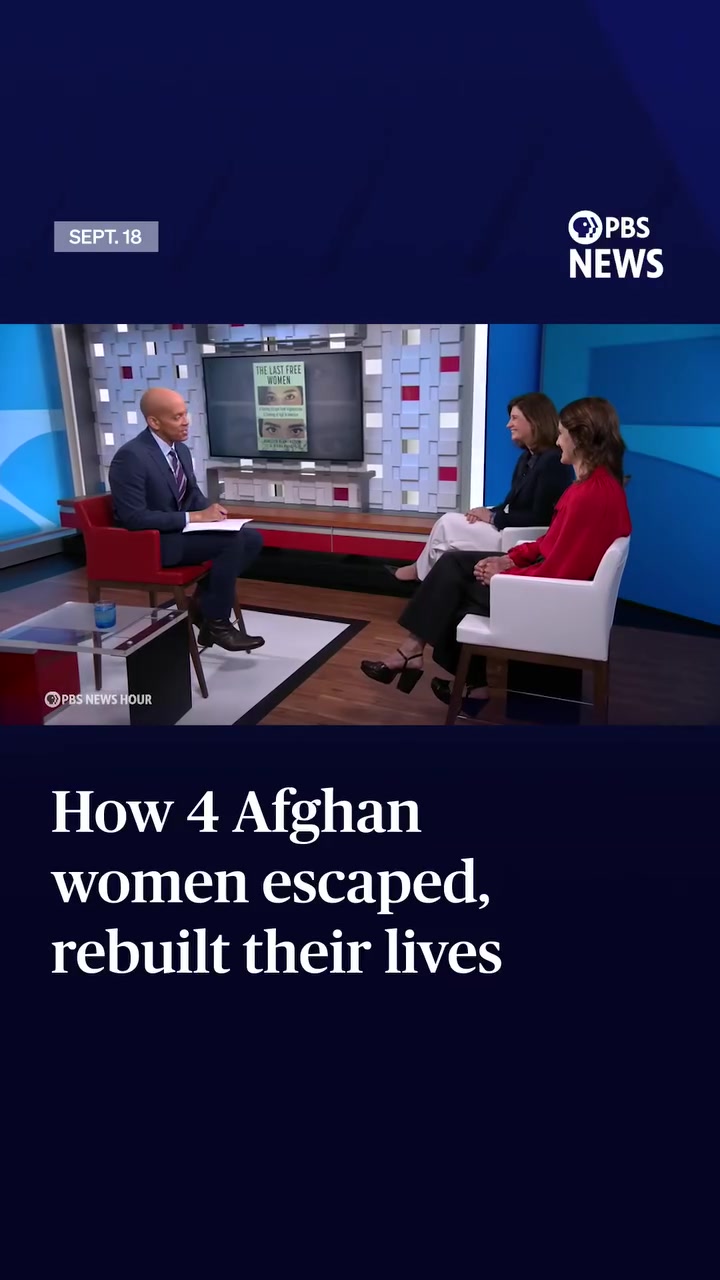
The Daring Escape and Resilience of Four Afghan Women
On August 15, 2021, the New York Times Afghan bureau was scrambling to evacuate its employees as Kabul fell to the Taliban. Rebecca Blumenstein, the Assistant Managing Editor, was in the car with her son when she received the news that her colleagues were stranded. The evacuation became a life or death mission. The U.S. evacuation efforts were swift but chaotic, and it became apparent to Blumenstein that little aid was forthcoming from the U.S. government. She then spearheaded efforts to secure safe passage for 124 of the bureau's staff and their families. This was a life-changing experience, and for Blumenstein, this was just the beginning of a deeper narrative about the women she coached out of Kabul.
A Generation's Aspirations Shattered
Four women—Marwa, Mursal, Mariam, and Samira—stand as the centerpiece of Diana Kapp's book "The Last Free Women: A Daring Escape from Afghanistan and Coming of Age in America." These women, each on the cusp of launching their careers, had dreams shattered in an instant. Mariam, a high school senior, was poised to enter medical school. Mursal, who had just completed law school, was eager to begin her career. The sudden fall of Kabul forced these women to abandon their education and escape to an uncertain future. "The school doors flung open. Girls rushed in. There was classrooms with as 70 girls in them. And we walked into a few classrooms and we asked the little girls, How many of your mothers can read or write? And not a single hand would go up. And then we would ask them, how many of you imagine going to university? And they would all shoot their hand up" Kapp remembered during her 2012 interview. For these young women, the U.S. evacuation was their only hope. Kapp—who had a deep interest in Afghanistan and had met some of the women before—sought to capture their story, one that embodied the aspirations of a generation. The women's journey was fraught with peril. "We had to get a manifest with a list, which is a list of all the names of the employees we wanted to evacuate, their family members, their birthdates, and their documents...they just, it was so chaotic. We finally got Qatar to say they would take them out on a plane. They couldn't land the plane. Our group was there for two days" Blumenstein recounted the chaotic effort. The group was forced to flee Kabul under the cover of darkness, landing in the last few hours before the city was fully taken over by the Taliban.
The Power of Community and Chance
The women of "The Last Free Women" faced insurmountable odds, but their resilience and the support of the New York Times community played a crucial role in their survival. Qatar and Mexico were pivotal in securing visas for their group, which became a race against time. (Blumenstein noted, "It was clear that it was not going to happen for the U.S."). The sudden fall of Kabul left little room for error. As Blumenstein recounted, the evacuation efforts hinged on the intervention of foreign governments, proving that international cooperation was essential in the face of such a crisis. As the women began to build new lives in America, they encountered a different set of challenges. Learning English, adapting to a new culture, and pursuing education took a toll on their mental health. Yet, their tenacity shone through. Their experiences echo the broader narrative of Afghan refugees, who often face a lifetime of poverty and uncertainty. Marwa, Mariam, Mursal, and Samira exemplify the spirit of resilience and adaptability that many Afghan refugees bring to their new homes. Kapp’s narrative emphasizes the importance of education and community support in their journey.
The Fragile Freedom of Refugees
The evacuation of the 124 Afghan employees and their families highlighted a grim truth: the U.S. government's efforts fell short, leaving millions of Afghans without a lifeline. "I was rather startled to hear that the typical expectations of refugees [in this country] are a lifetime of poverty," Kapp noted. The successful evacuation of these individuals, however, underscored the critical role that powerful institutions can play in providing aid and advocacy. The women’s newfound freedom in the United States stands in stark contrast to the oppressive conditions they left behind. The title "The Last Free Women" underscores this paradox, highlighting the precarious nature of their new lives.
Forging New Paths in America
Life in the United States presented new challenges, but the women embraced them with unwavering determination. Learning to use a computer, speak English, and adapt to college life were daunting tasks, especially for those who had never lived away from home. However, their resilience and determination to succeed were evident. "They have jumped into their lives here with just incredible force. They don't just work hard and do the schoolwork. They also find the joy in life. So they want to learn how to do stuff. From scuba diving to yoga, they are embracing life in so many different ways," Kapp observed.
Forging a New Future
The women's stories are a testament to their unwavering spirit and the power of community support. For anyone interested in understanding the broader implications of the U.S. withdrawal from Afghanistan and the lives of those left behind, "The Last Free Women" offers a profound perspective.
- Read the Book: To deeply understand the experiences of Marwa, Mursal, Mariam, and Samira, pick up "The Last Free Women."
- Support Refugee Organizations: Contribute to organizations that aid refugees in their transition to new lives.
- Engage with Afghan Culture: Learn about Afghan history, culture, and the ongoing refugee crisis to better support those in need.
Watch the Reel
Questions readers ask
Who were the four Afghan women featured in the story, and what were their aspirations before the Taliban takeover?
The four women featured are Marwa, Mursal, Mariam, and Samira. Mariam was a high school senior about to enter medical school, and Mursal had just completed law school and was eager to start her career. Their dreams were abruptly shattered and forced them to flee.
How did Rebecca Blumenstein get involved in the evacuation efforts, and what role did she play?
Rebecca Blumenstein, the Assistant Managing Editor of the New York Times Afghan bureau, was in the car with her son when she received the news that her colleagues were stranded. She then spearheaded efforts to secure safe passage for 124 of the bureau's staff and their families, including the four women.
What challenges did the women face during their escape, and how did they overcome them?
The women faced numerous challenges, including the chaos of the evacuation, the need to secure visas, and the constant threat of the Taliban. They overcame these obstacles with the help of the New York Times community, Qatar, and Mexico, which provided essential support and resources.
What impact did the evacuation have on the women's lives, and what kind of support did they receive?
The evacuation was a harrowing journey that forced the women to abandon their education and careers. They received support from the New York Times community, Qatar, and Mexico, which were pivotal in securing visas and ensuring their safety.
What was the significance of international cooperation in the evacuation efforts?
International cooperation was essential in the face of such a crisis. Qatar and Mexico played a crucial role in securing visas for the group, which became a race against time as the U.S. government provided little aid. The intervention of foreign governments proved to be pivotal in the evacuation efforts.
Related deep dives
Similar reads based on topic and creator.

Recent articles
Fresh deep dives from the latest Reels we unpacked.




Comments
Be the first to comment.