Vistas from above
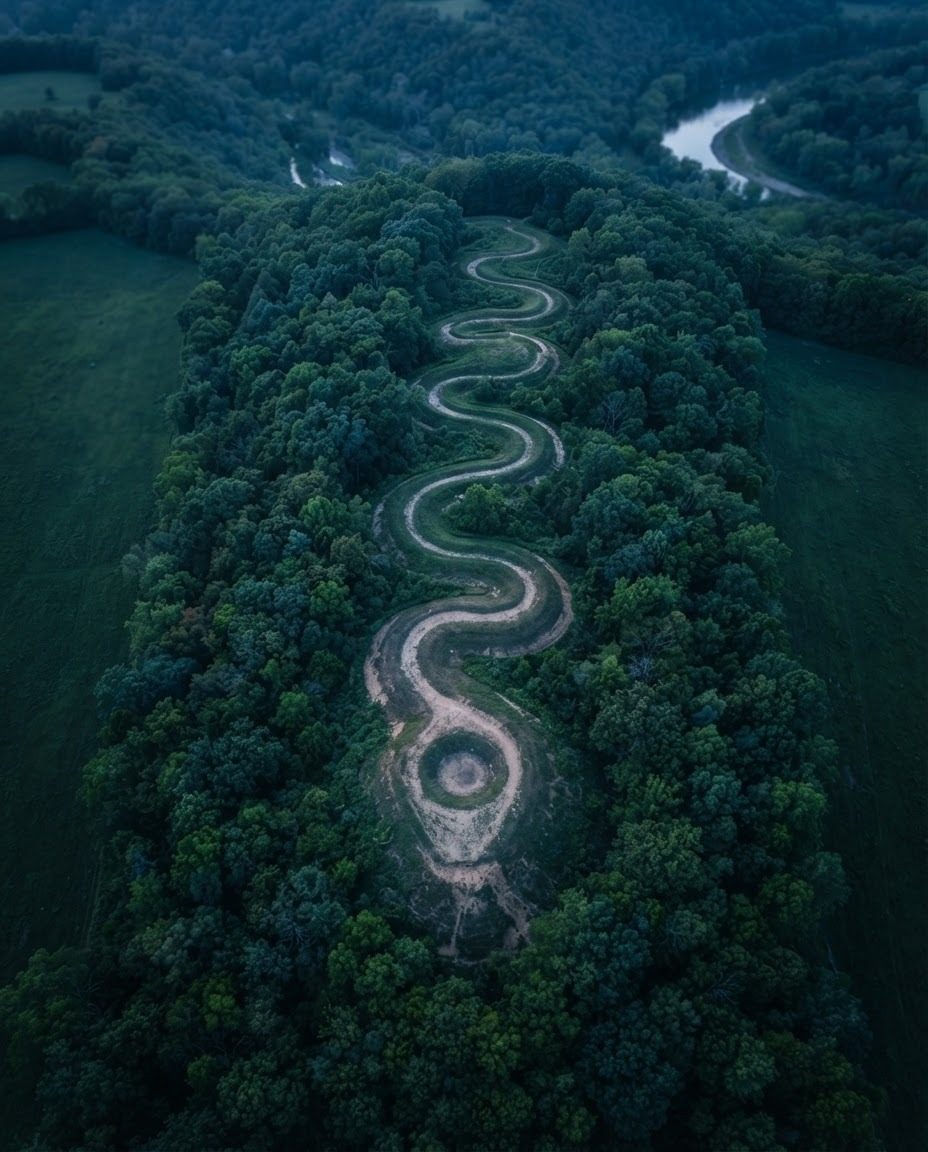
When you view driving from above, the mundane journey becomes a novel experience. The way a road carves through the terrain reveals a kind of beauty—it isn't there when you're navigating manually on the ground. This aerial imagery showcases how a road can look more like a natural formation than a man-made route. There is a sense that these paths are at one with the landscape; they were always meant to be there. It's tempting to believe that the roads were constructed to serve their purpose—convenient and efficient travel. Yet, the aerial view points to an alternative: that the journey itself should be the priority, not the destination. This perspective can make one consider how important the moments between start and end points can be. You'll miss the winding paths if you're stuck focusing on the end. Like the hills and trees on either side of the road, this sort of beauty isn't so much at odds with pragmatism as a counterpoint to it. As elements of human development, roads can coexist with nature to create something more than a route to somewhere. The visual symmetry of a country road through a forested area makes us contemplate how well-governed the intersection of human influence and natural beauty can be. Instead of railing against development, we can find solace in the way it wends through dense foliage. This kind of view might suggest that humans and nature aren't at odds. They complement each other. The road provides access, and the forest adds to its natural charm.
Roads as organic paths
Roads are often seen as merely conduits for transportation. Aerial photography gives us another view. Rather than straight lines on a map of our world, these paths are organic routes. To stand at ground level, the road seems manmade. But the aerial view of the winding road through the forest makes it look as if the path has been molded by natural forces. The twists and turns of the road complement the flow of the environment. The natural appearance of these routes can be compared to the branching patterns of rivers. Rivers cut through the land, carving streams and tributaries through centuries of erosion. Roads, viewed from above, can mimic this organic process, suggesting they can be an extension of the landscape. There is a sense of harmony between the human-made structure and the natural world. The road and the forest coexist in a kind of natural balance, proving their connection to nature. The more you see the road from this view, the more it appears to be an extension of the landscape. Not just an interruption of the foliage, but an expansion of its natural design. The visual symmetry between the road and its surroundings creates a sense of harmony. The path and the forest merge into a seamless whole, with the road enhancing the natural beauty of the forest.
Watch the Reel
Related deep dives
Similar reads based on topic and creator.
Recent articles
Fresh deep dives from the latest Reels we unpacked.


Comments
Be the first to comment.