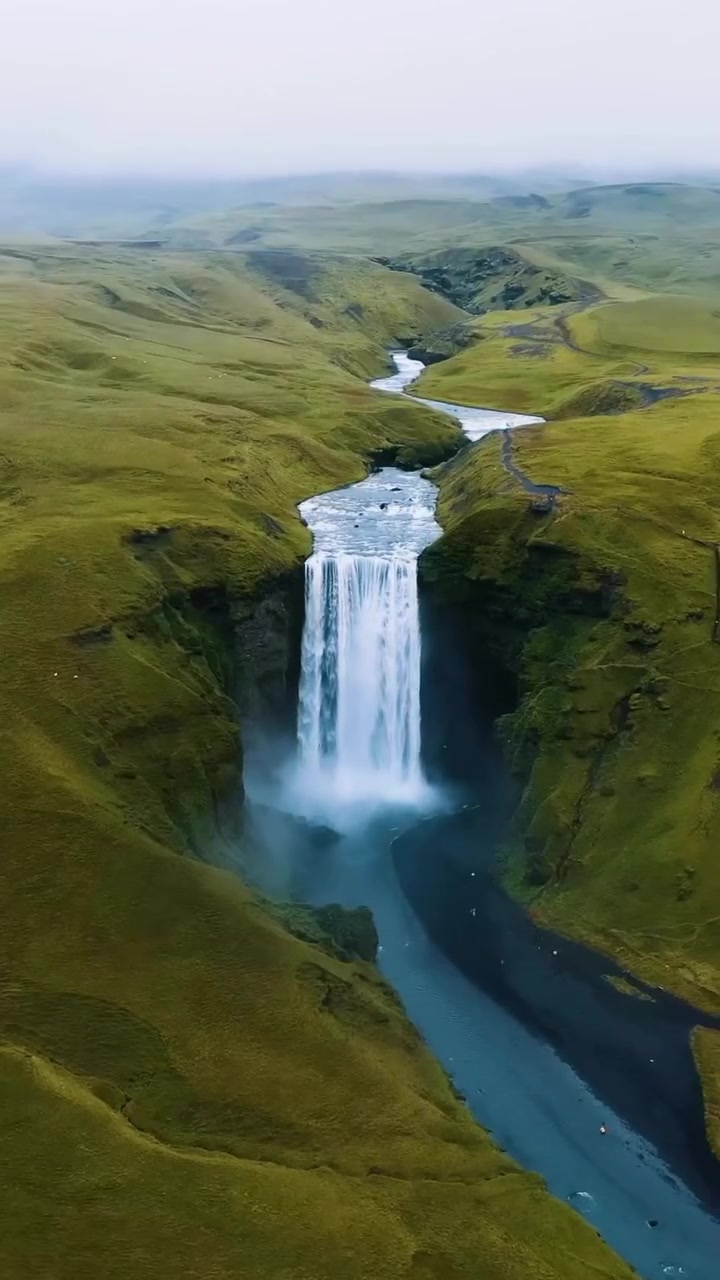
You start to scroll and are met with a spectacular view of a waterfall from directly above. You’ve seen mountains and beaches, but this aerial footage of a waterfall below a cliff deepens the simplicity of nature with scale.
The Aerial Vantage
The aerial view of this waterfall is the essence of a bird's eye perspective. The footage captures a vertical descent from the top of the cliff, where the waterfall’s different streams merge together, to where it all converges, and finally, the river below. The slow-moving camera captures the expanse of the scene. The hills and fields around the waterfall present a natural texture to the landscape. The camera shot is slow, but you get the different angles and shifts of the environment below the waterfall. This is what an aerial shot offers — a fresh view of what is at eye level. Aerial footage like this showcases nature’s grandiosity. A standard waterfall shot shows the cascading water and the base. But an aerial shot gives the viewer an experience where they can relate to the depth of the landscape. A spectacular feat of technology and a remarkable view of nature across vertical dimensions. The waterfall’s base, the cliff, and the surrounding landscape can all be seen as a whole. It offers a comprehensive understanding of the natural landscape during the aerial experience. From the top of the cliff, the waterfall merges together, and it takes time to see what happens at the bottom. But, in a slow-panning aerial view, you can see the waterfall cascading into the river. The surrounding landscape is also visible. It is composed of green fields and hills that complete the aura of the natural landscape. Aerial shots are one of the most breathtaking visuals in film. A slow camera pan adds a touch of detail to the scene and brings out the beauty of nature.
The Zen of drone videography
Drone videography has firmly established itself as the tool of choice for capturing sweeping landscapes. Videos like this are part of the wider trend of drone technology in photography and videography; they offer an enhanced, more immersive experience of natural landscapes. It provides viewers with a sense of awe. The camera slowly pans across the scene, highlighting the scale of the landscape. The details of the aerial view, such as the cascading streams and the surrounding hills and fields, combine to create a sense of the vast expanse of nature. People feel an intrinsic connection to the outdoors through this aerial footage. It also provides an opportunity for introspection and infuses a sense of curiosity, both of which are valuable in a narrative setting. Given the increasing popularity of capturing views from aerial footage, the quality of these techniques has increased. This footage is a testament to the capacity of drone technology.
The Drone Dance
How drone footage like this is captured
Drone footage like this is captured with the help of a camera attached to a drone. The camera panning is a key factor in the imagery. The pilot controls the camera manually to capture the essence of the landscape. Operating such a camera is an art form. It provides a smooth experience while capturing the curvature of the landscape. Drone filming techniques focus on the camera. The drone’s movement is fully controlled, while the camera angle is gradually adjusted to capture the scene. This type of aerial filming is also a good way to view diverse landscapes.
Riding the sky highways
Drone videographers have to be aware of airspace regulations. Rules for aerial photography vary by region and can include height restrictions, no-fly zones, and registration requirements for drones. Regulations protect public safety and privacy. With drones, videographers also need to be concerned about whether their drone is registered in their region and where they are allowed to fly.
How the scene unfolds
Aerial footage highlights the immense surrounding beauty of the landscape. The cascading waterfall, the green fields, and the hills are all visible in the video. This is a clear example of how the slow-panning camera captures the beauty of the landscape. This footage showcases the beauty of the landscape and captures the essence of the landscape through the camera. Drone footage like this typically involves capturing a panoramic still or video. The entire landscape that is covered in the aerial footage is presented to viewers in a slow-panning manner. The drone camera also showcases the beauty of the waterfall at different angles, enhancing the overall visual appeal.
The Gear: Drone Cameras
Drone videographers have to choose equipment wisely. This footage showcases how the camera captures the beauty of the waterfall and the landscape. The angles from which the camera captures the landscape to highlight its beauty is a remarkable experience. The aerial view also captures the landscape from different angles and perspectives, highlighting the area’s natural beauty. Aerial footage shot with drones is a unique experience for viewers who want a comprehensive view of the landscape and the waterfall. The choice of equipment is crucial in capturing the landscape’s beauty. Drone cameras need to capture the vertical drop of the waterfall, as well as the details of the rivers and hills.
What equipment is involved
Drone cameras with gimbal stabilizers are crucial for filming from above. The drone must have a high degree of stability to avoid shaking and ensure a clear image. Gimbal stabilizers compensate for any movements to ensure the video is smooth. A high-quality drone camera also needs to have a high-quality lens. The drone needs to be equipped with a 10x digital zoom lens to capture the waterfall from above and highlight the details of the waterfall. High-definition video resolution is critical. The ability to record in 4K resolution makes all the difference. This makes the video clear, sharp, and detailed, capturing the beauty of the landscape and the waterfall.
How to Capture the Right Shot
One does not need to be a professional. If you are interested in capturing aerial footage like this, you will need a drone. You can buy a drone and start learning the techniques. Drone manufacturers have made drones easier to use, with various settings that even beginners can use. Drone cameras have high-quality lenses and are stable, so you can capture the beauty of the landscape. There are also apps that you can use to plan your drone flight routes. These apps make it easy to create a flight path and capture the best shots.
- Check the weather before you fly: Even if you are a beginner, you can still capture a beautiful aerial video. But you need to check the weather to ensure optimal conditions. If the weather is bad, you cannot fly, and you will have a failed attempt. If it is cloudy or windy, the wind could destabilize your drone and create unclear footage.
- Pick the right settings: Choose the right drone settings. Beginner settings usually have a more steady flight path, making it easier for beginners to capture the beauty of the landscape, such as waterfalls and hills. The camera settings on your drone, such as aperture, shutter speed, and ISO, determine the quality of your footage.
- Review footage regularly: This will help you appreciate your progress as you learn. The aerial footage will also provide you with an opportunity to improve your technique.
- Look into filters: Filters can enhance your video quality and improve the experience. If you have 4K resolution, you might also want to consider other effects, such as a time-lapse filter. This is a great way to show the sequence of how the waterfall merges into the river below. Aerial footage of nature becomes a meaningful and immersive experience that feels like a journey. It provides viewers the opportunity to see an overwhelming natural landscape from above. This footage showcases the beauty of a waterfall's depth from the top of the cliff, the rivers below, and the surrounding landscape.
Watch the Reel
Questions readers ask
How does drone videography capture the full grandeur of a waterfall?
Drone videography captures the full grandeur of a waterfall by providing an aerial view that reveals the merging streams from above and the river below. The slow, controlled descent of the drone allows viewers to see the waterfall and its surrounding landscape in a comprehensive, immersive way.
What makes aerial footage of a waterfall different from a standard shot?
Aerial footage of a waterfall offers a bird's-eye view, showcasing the entire landscape, including the waterfall's base, the cliff, and the surrounding hills and fields. This perspective provides a deeper understanding of the natural landscape's scale and beauty, unlike a standard shot that only shows the cascading water and the base.
How does the slow-moving camera in drone videography enhance the viewing experience?
The slow-moving camera in drone videography enhances the viewing experience by allowing viewers to appreciate the different angles and shifts of the environment. This pacing creates a sense of awe and introspection, making the landscape feel more immersive and detailed.
What technology is used to capture aerial footage of a waterfall?
Aerial footage of a waterfall is captured using a drone equipped with a camera. The drone's pilot controls the camera manually to capture the landscape's essence, providing a smooth and detailed experience.
Can I capture similar footage with my own drone?
Yes, you can capture similar footage with your own drone, but it requires skill and practice. The key is to control the camera manually to achieve a smooth, slow descent and panning effect that highlights the landscape's details. It's an art form that enhances the natural beauty of the scene.
Related deep dives
Similar reads based on topic and creator.
Recent articles
Fresh deep dives from the latest Reels we unpacked.



Comments
Be the first to comment.