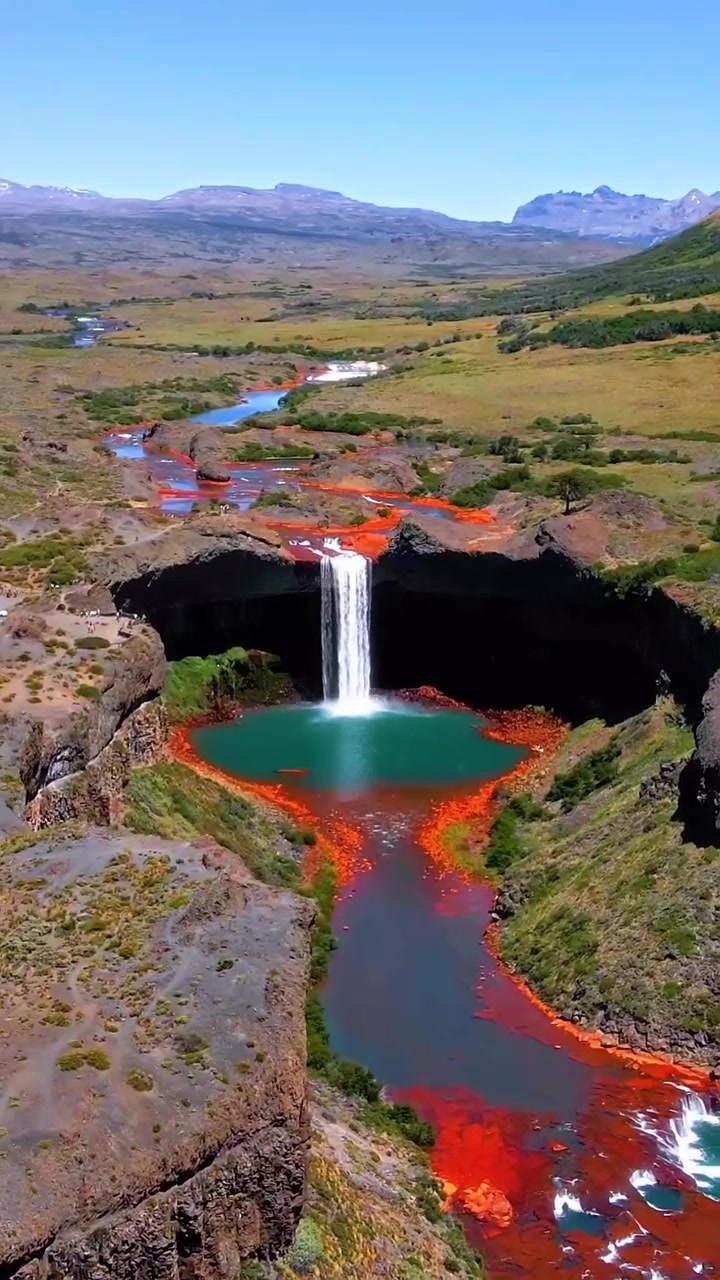
The startling turquoise of a pool beneath a plunging waterfall contrasts sharply with the fiery hues of the rocks surrounding it. The strange beauty on display here is a geological enigma found on a few of our own planet's continents. The waterfall is a natural spectacle, where striking rock formations and turquoise water pools come together. Waterfalls like this are unique, mesmerizing, and often form through a process of erosion. As the water flows, it carves the landscape over time.
The waterfall's vibrant color and the surrounding unique geological features are part of the draw of this natural site and landmarks. How can such strange beauty exist in the wild?
Ancient Metamorphosis
The waterfall flows into a vibrant, turquoise-toned pool surrounded by red and orange rock formations. The landscape features a geographical hallmark. Rock formations around the waterfall originate from the Supai Group. This formation hosts an assortment of minerals that produce the landscape’s colors. The water flowing through the landscape catalyzes a unique geochemistry of colors. This region's geological history is rich and complex. The red and orange hues come from iron oxide. “This vibrant coloration is a result of the ancient mineral composition of the surrounding rock formations”. Waterfalls in this Supai landscape are located along the 277-mile-long Colorado River. The regions around the falls are well-known for their geology’s geological beauty. The rock formations in the region are volcanic in origin. The vibrant colors of the rock formations also are a result of an oxidation process.
The Supai Group’s Waterfalls
The unique mineral components of the Supai Group are responsible for the area’s vibrant, radiating color. The formations were formed 275 million years ago. The stark contrast between the vivid blue-green of the water in the pools and the warm, fiery hues of the rocks make the waterfall one of the most picturesque natural wonders on the continent. It is a rare sight to see a waterfall with contrasting colors. The difference between the muted reds and oranges with the vibrant turquoise is stunning. There is growth from the formations when the volcanic activity is high in the region.
The Rippling Pool
The waterfall cascading into the vibrant turquoise pool creates a mesmerizing spectacle. The placid pool is mesmerizing. The rocks themselves suggest little motion, but the water is active and dynamic. Waterfalls are a testament to the power of moving water and erosion. The different water and mineral colors make the geological formations unique. The waterfalls’ compositions vary in color and strength. The water of the pool is not stagnant. The flow of the waterfall can be observed, which suggests this may be high water flow, possible due to the region’s volcanic processes.
The Breathtaking Landscape
Geological features influence the beauty of the area. The vivid colors of the waterfall—turquoise water surrounded by red and orange rocks—are striking. The landscape is geologically unique. The surrounding area is picturesque. Mountains in the area, as well as a tight-knit river — the Colorado River — characterize the region. The mountains are often formed from volcanic materials and then reduced to a sedimentary nature. The region is volcanic and has a history of tectonic activity. Geotourism encourages the appreciation of these landscapes. Breathtaking natural wonders like this waterfall are often luring and inviting, providing an immersive place to explore.
Practical Perspective
Exploring the waterfall’s surrounding geology can be quite an adventure. The unique landscape and the mesmerizing geology of the area are draws, while they are not yet on all maps, the rising tide of geotourism is putting the location on the map.
- Preparation: Reach out to local guides for how to prepare the journey. Be sure to bring all the necessary supplies for a safe and enjoyable trip.
- Travel: The Colorado River will likely be part of the journey to reaching the waterfall. Small boats can be used for reaching the nearby natural wonders.
- Respect: The unique geological formations should be respected and not disturb even if possible.
- Consideration: Be mindful of the impact of the journey on the waterfall’s location. With new tourism to the region, there should be a delicate balance of respect for the area.
Natural Harmony
Geotourism encourages the appreciation of these landscapes without disturbing them. The waterfall serves as a natural reminder of the geological processes shaping our planet.
Watch the Reel
Questions readers ask
What causes the turquoise color of the pool beneath the waterfall?
The turquoise color of the pool is due to a unique mineral composition in the surrounding rock formations. The water flowing through the landscape interacts with these minerals, creating a vibrant blue-green hue. The specific minerals involved and the geochemical processes at play give the water its distinctive color.
How old are the rock formations around the waterfall?
The rock formations around the waterfall are part of the Supai Group, which was formed approximately 275 million years ago. These formations are volcanic in origin and have undergone significant geological processes over time, contributing to their unique colors and textures.
Why are the rocks surrounding the waterfall red and orange?
The red and orange hues of the rocks are primarily due to iron oxide, which is a result of an oxidation process. This process has occurred over millions of years, giving the rocks their striking, fiery colors. The contrast between these warm hues and the cool turquoise of the water creates a visually stunning landscape.
What is the significance of the Supai Group in this region?
The Supai Group is significant because it hosts an assortment of minerals that produce the landscape’s vibrant colors. It is also the origin of the unique geological features and formations that make this area a geological wonder. The Supai Group's mineral composition and geological history contribute to the area's striking beauty and geological significance.
How does the waterfall form and change over time?
The waterfall forms through a process of erosion, where the flowing water carves the landscape over time. The Supai Group's minerals and volcanic origins contribute to the waterfall’s unique features. The waterfall's vibrant color and the surrounding unique geological features are part of the draw of this natural site.
Related deep dives
Similar reads based on topic and creator.
Recent articles
Fresh deep dives from the latest Reels we unpacked.

Comments
Be the first to comment.