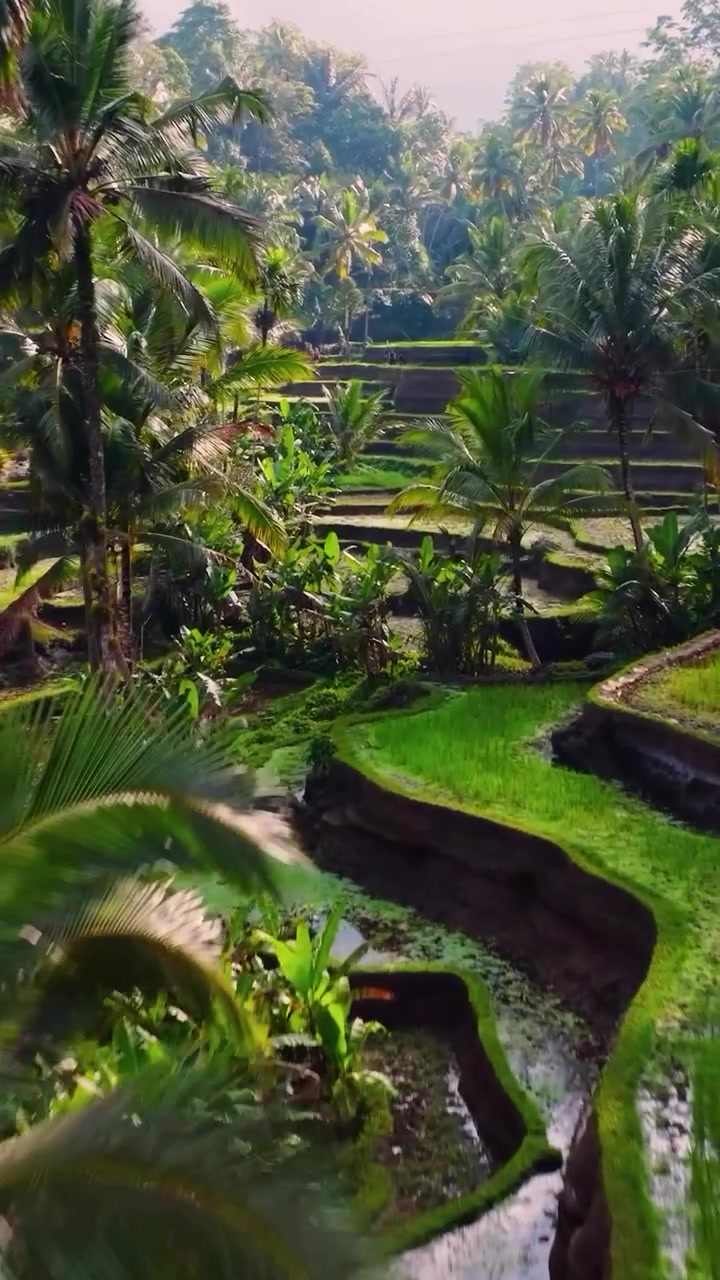
The Lush Appeal of Terraced Rice Fields
Terraced rice fields are a hallmark of agricultural ingenuity, especially in Asia, where they transform hillsides into vivid green staircases. These fields, carved into the landscape over centuries, are a testament to human adaptability and traditional farming techniques. The fields' distinctive terraces prevent soil erosion and maximize water use, making them both practical and picturesque. Cultivating rice on terraces requires intricate irrigation systems and meticulous labor. Farmers maintain these systems, creating a mesmerizing patchwork of water and greenery. Viewed from above, terraced rice fields offer a striking visual spectacle. The vibrant green fields, often interspersed with sparkling waters, create a mesmerizing display of natural beauty punctuated by the cultural heritage of agriculture.
The Allure and Importance of Rice Paddies
While terraced rice fields are primarily an agricultural feat, their significance extends far beyond sustenance. They represent a delicate balance between human industry and natural environment. The fields provide critical eco habitats while nurturing communities. Furthermore, they are a powerful cultural symbol in many Asian societies, where rice is more than just a staple food; it’s deeply intertwined with traditions, rituals, and daily life. Terraced rice fields embody a harmonious blend of agriculture and natural beauty, making them a coveted subject for photographers and travelers alike. They exemplify a sustainable coexistence between human activity and nature. Unfortunately in recent decades, urbanization and changing agricultural practices have led to a decline in these landscapes. This presents a challenge for conservationists aiming to preserve these crucial habitats and cultural landmarks.
The Making of a Terraced Field
Carving the Landscape
Terraced rice fields are not merely dug into the earth — they are sculpted. Farmers build retaining walls on hillsides to create level platforms. This labor-intensive process ensures that water is evenly distributed, preventing both overflow and shortage.
Irrigation Systems
A sophisticated irrigation network keeps the fields hydrated. Water is channeled through a series of canals and ditches, ensuring that each terrace receives the necessary moisture. This network is a marvel of traditional engineering, adapted to local geographies and climates.
Terraced Rice Fields: A Resort’s Vista
Palm Trees and Resorts
The combination of terraced rice fields and luxurious resorts is quite striking. The vista of rice paddies complements the tropical ambiance of a resort, adding a serene backdrop to a luxurious retreat.
Unique Pool Designs
Resort pools overlook expansive rice paddies and dense greenery, providing guests with a tranquil yet visually stimulating experience. These pools often feature unique designs, such as winding shapes and intricate tile work, further enhancing the resort’s aesthetic.
Balconies and Lounge Chairs
The private balconies at these resorts overlook the tropical landscape. Featuring wooden decks and comfortable lounge chairs, these spaces offer a secluded retreat to enjoy the beauty of the terraced fields and palms.
How to Visit and Experience Terraced Rice Fields
- Choose the Right Season: Visit during the rice-planting or harvest seasons to experience the fields in full bloom and see farmers at work.
- Hire a Local Guide: Local guides can offer an immersive experience, unveiling the history, culture, and agricultural practices of the area.
- Reserve a Room with a View: If luxury is your goal, book a room at a resort that overlooks the rice fields. The serenity paired with opulence will create an unforgettable stay. Enjoy activities like yoga classes or spa treatments while taking in the surroundings.
The Enduring Legacy
Terraced rice fields serve as a timeless reminder of human resilience and ingenuity. They are more than just agricultural marvels. They are cultural treasures and ecological sanctuaries, offering a glimpse into a harmonious coexistence between people and nature. Against the backdrop of a rapidly modernizing world, the enduring presence of these fields underscores the importance of preserving such cultural and ecological heritage. A visit is not just a vacation; it’s a journey through time, offering a slice of the past in the heart of the present.
Watch the Reel
Questions readers ask
What makes terraced rice fields so visually striking, especially from an aerial view?
Terraced rice fields are visually stunning from above due to their vibrant green colors and the intricate patterns created by the terraces and water channels. The way they transform hillsides into a mesmerizing patchwork of greenery and water makes them a favorite subject for photographers and travelers.
How do terraced rice fields benefit the environment and local communities?
These fields provide critical habitats for various species and help in preventing soil erosion, thereby maintaining the ecological balance. They also support local communities by providing a source of sustenance and preserving cultural traditions. However they are under threat from urbanization and changing agricultural practices, making conservation efforts crucial.
Can I visit a resort that offers views of terraced rice fields?
Yes, many resorts, particularly in tropical regions of Asia, offer stunning views of terraced rice fields. These resorts often feature unique pool designs, private balconies, and lounge chairs that provide a luxurious yet serene experience, with the terraced landscapes serving as a tranquil backdrop.
How do farmers maintain the intricate irrigation systems in terraced rice fields?
Farmers use a sophisticated network of canals and ditches to channel water through the terraces, ensuring each level receives the necessary moisture. This system is a marvel of traditional engineering, adapted to local geographies and climates, and requires meticulous labor to maintain.
What challenges do conservationists face in preserving terraced rice fields?
Conservationists face significant challenges due to urbanization and changing agricultural practices, which have led to a decline in these landscapes. Preserving these cultural landmarks and habitats requires efforts to balance modern development with the need to maintain these vital ecosystems.
Related deep dives
Similar reads based on topic and creator.




Recent articles
Fresh deep dives from the latest Reels we unpacked.




Comments
Be the first to comment.