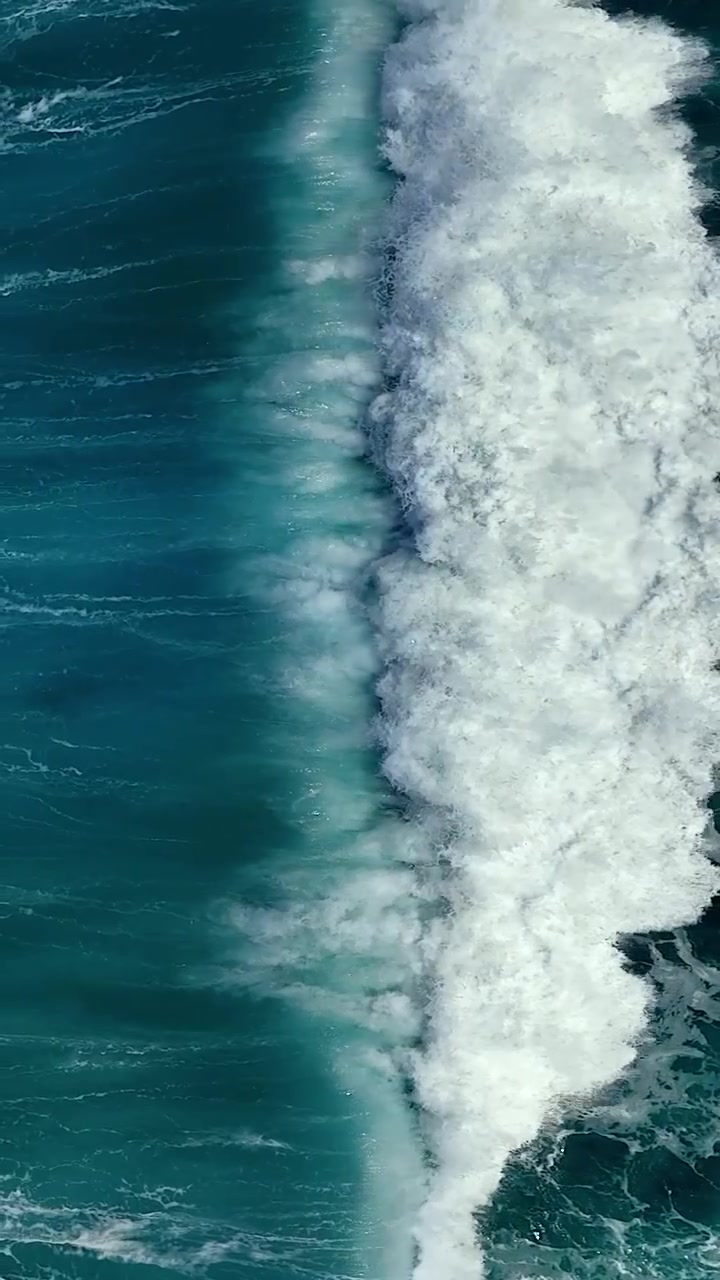
The ocean's power unfurls vividly in a single wave. A surge of turquoise blue water, punctuated by a crest of foamy white, smashes onto the shore. The contrast of colors creates a compelling moment meant to evoke a sense of emotion. There’s more than just the physical force of the ocean here; the wave is part of a spiritual journey, a guide leading us to embark on a journey where trust knows no boundaries.
The Crashing Wave
An ocean wave is a mesmerizing sight. It is a phenomenon that occurs when winds, tides, and currents interact with the ocean's surface, creating a rhythmic movement of water that can span great distances and reach heights unimaginable. This particular wave showcased here is not just any wave; it is a large ocean wave with a unique turquoise blue hue, topped off by a foamy white crest at its peak, as it crashes onto the shore. Each wave is distinct, of course, but this one’s aerial perspective makes its movement, shape, and texture all the more vivid. As it approaches the shore, the turquoise blue body of the wave stretches out, a powerful mass of water that conveys energy and momentum, all before it reaches its dramatic climax. In its cascading crash, the water completely releases its movement. This kind of ocean spectacle isn't always available in close proximity to viewers, making the experience of seeing this wave all the more immersive. It’s as if one can sense the ocean’s greatness even from a distance. The essence of this wave lies in its ability to capture a moment of nature at its most dynamic. There's emphasis on the visuals to connect with viewers on a more spiritual level. It's both soothing by showing the ocean's calming hues of blue and powerful in showing the ocean's relentless force. As the wave is filmed from an aerial perspective. In our fast-paced world, this type of video serves as a subtle reminder of nature's beauty and the peace it can offer.
The Power of Aerial Perspectives
"Spirit, lead me where my trust is without borders." Frames of nature scenes have been popular recently, with many creators showcasing their own experiences. With most of these videos, the aerial view has become a significant trend. Aerial views of landscapes and natural wonders are gaining popularity. They provide a unique perspective on the natural landscape, making the viewer feel as though they are part of the scene. The aerial perspective is not only visually stunning, but also serves as a metaphor for looking down on the world, and recognizing that human borders are only mental constructs. This wave, viewed from above, transcends the usual human perspective, allowing viewers to see the ocean in a new light. This perspective is both humbling and awe-inspiring, as it illustrates that there are larger forces in the world, like the ocean, which we are only a part of. Beyond the visual impact of this unique angle, the wider frame reveals its deeper emotional connotation.
The Wave’s Anatomy
What Makes the Turquoise-Tinged Water
The ocean wave is also known for its stunning turquoise color, a striking contrast to the white foam. This color is a result of the way light interacts with the water, revealing unique shades of blue and green beneath the powerful waves. These turquoise waters are created when the sun's light penetrates the water's surface and interacts with the mineral particles, giving off a greenish-blue appearance. This distinct color is a common characteristic of tropical waters, where the water is clearer and less murky than in other oceans. The white foam on the wave's crest results from the interaction between the water and the air as it crashes onto the shore. The churning motion of the wave causes air to be trapped and mixed with the water, forming bubbles that give the foam its white color. This process, known as aeration, is responsible for the distinctive appearance of the wave.
Breaking Waves
There are three types of breaking waves, each with its distinct characteristics. In one type, the wave appears as a frothy roll, as though the wave doesn't stop rolling forward. In another, it comes to a crashing stop, moving in a forceful, yet graceful manner. It's this kind of wave that is known as a plunging breaker, two of which are seen in the video, providing a clear view of the wave's movement and the resulting foam as it breaks.
The Wave’s Motion
Each wave is made up of a crest and a trough, with the crest being the highest point and the trough being the lowest point. When the crest is higher than the surrounding water, it creates a powerful force that moves forward, smashing into the shore. This collision between the wave and the shore releases a large amount of energy, causing the wave to break and the water to foam. The wave's movement is a force to be reckoned with. There are distinct parts to it, including the swell and the surf. The swell is the part of the wave that is still in deep water, while the surf is the part that is breaking on the shore. This reef break is especially unique, showing a unique movement and shape, all while the wave crashes onto the shore. The reef break also shows its distinct shape, in which it crashes in a backward motion, while the wave spreads through the reef.
The Spiritual Journey
The spirituality of the ocean is a common theme in many cultures, with many people seeing the ocean as a symbol of freedom, adventure, and spiritual growth. The ocean's vastness and power have the ability to instill a sense of awe and wonder. The ocean is seen as a place to reflect on life, to find peace and to connect with nature. In this case, the ocean wave becomes more than just a physical force. It is also a spiritual journey, leading one to trust without borders and boundaries. The ocean has also been recognized for its therapeutic effects. Many people find that going to the ocean helps them to feel calm and relaxed, which is achieved through various pathways. The sound of the ocean, the smell of the sea, and the sensation of the ocean’s cool breeze are all tangible experiences that can have a soothing effect on the body and mind. In addition, the ocean is a source of life, providing sustenance to millions of people and animals. The ocean is also a powerful symbol of life, with the ocean representing the cycle of life and death. The ocean has long been seen as a place to journey to the afterlife, with the ocean being a place to travel and return. It is for this reason that many people find that the ocean represents a place of both growth and decay. There is a reason why in cultures all over the world, people are drawn to the ocean, a place where the imagination allows us to believe that our trust is without borders, and the ocean can make the seemingly impossible, possible.
How to Find the Spiritual Wave
While not everyone lives near an ocean, or has access to these types of stunning waves, there are ways in which one can find a sense of awe and wonder in their own surroundings. Here are a few ideas:
- Seek Out Natural Wonders: Locate natural wonders, like beaches, cliffs, and waterfalls. These types of places can be just as awe-inspiring, and many even offer the same benefits that observing an ocean wave provides.
- Join Local Beach Cleanups: Get involved with your local community to keep the seas clean and pristine. Cleaning up the beach and making the water cleaner can restore the beauty of nature, and it may even provide an opportunity to witness the wave in all of its beauty.
- Surfing Lessons: If you are already familiar with the ocean, it may be a good idea to take up surfing. Surfing is a fun and exciting way to interact with the ocean, and can provide a sense of accomplishment, and confidence, while being an exciting sport.
- Photography and Sketching: Photography and sketching are some of the best ways to explore nature, and document the ocean wave and its beauty. These activities provide a way to connect with nature and express one's creativity. The ocean's natural beauty is one that cannot be stopped. Even when there are borders, and boundaries, the ocean will always remind us that to trust without borders is to find a sense of peace, and wonder, in any aspect of life. In the end, the ocean and its many wonders are a reminder of the natural order, of life and death, and a way in which we can strive to connect with ourselves and the world around us.
Watch the Reel
Questions readers ask
What causes the unique turquoise color of the wave in the aerial view?
The turquoise color of the wave is due to how light interacts with the water. When sunlight penetrates the ocean, it is absorbed and scattered by the water molecules, and the blue light is scattered more than other colors, giving the water its distinctive turquoise hue. The white foam at the crest is created by the wave's turbulence, which mixes air and water, creating a frothy, light-reflecting surface.
How does the aerial perspective enhance the viewing experience of the crashing wave?
The aerial perspective provides a unique vantage point that allows viewers to see the wave's entire structure and movement. It highlights the wave's dynamic shape, texture, and the contrast between the turquoise water and the white foam. This perspective also creates a sense of immersion, making viewers feel as if they are part of the scene and offering a broader emotional connection to the ocean's power and beauty.
Are aerial views of ocean waves commonly available for viewing?
While aerial views of ocean waves are becoming more popular, especially with the rise of drone technology and aerial photography, they are not always commonly available. Many such views are captured by professionals or enthusiasts who have the right equipment and skills to film from above, making them more of a special or curated experience rather than a readily accessible one.
Can I experience an aerial view of a crashing wave from a drone?
Yes, you can experience an aerial view of a crashing wave using a drone, provided you have the necessary equipment and skills. Many drone operators and photographers capture stunning footage of ocean waves from above. However, it’s important to be mindful of local regulations and safety guidelines when flying drones, especially near bodies of water.
What makes this particular wave different from other ocean waves?
This particular wave is unique due to its turquoise blue color and the dramatic contrast with its foamy white crest. The aerial perspective also enhances its visual appeal, making the wave's movement, shape, and texture more vivid. Additionally, the wave is part of a larger spiritual and emotional journey, inviting viewers to reflect on the power and beauty of nature.
Related deep dives
Similar reads based on topic and creator.




Recent articles
Fresh deep dives from the latest Reels we unpacked.
Comments
Be the first to comment.