Baobabs: Nature's Skyscrapers
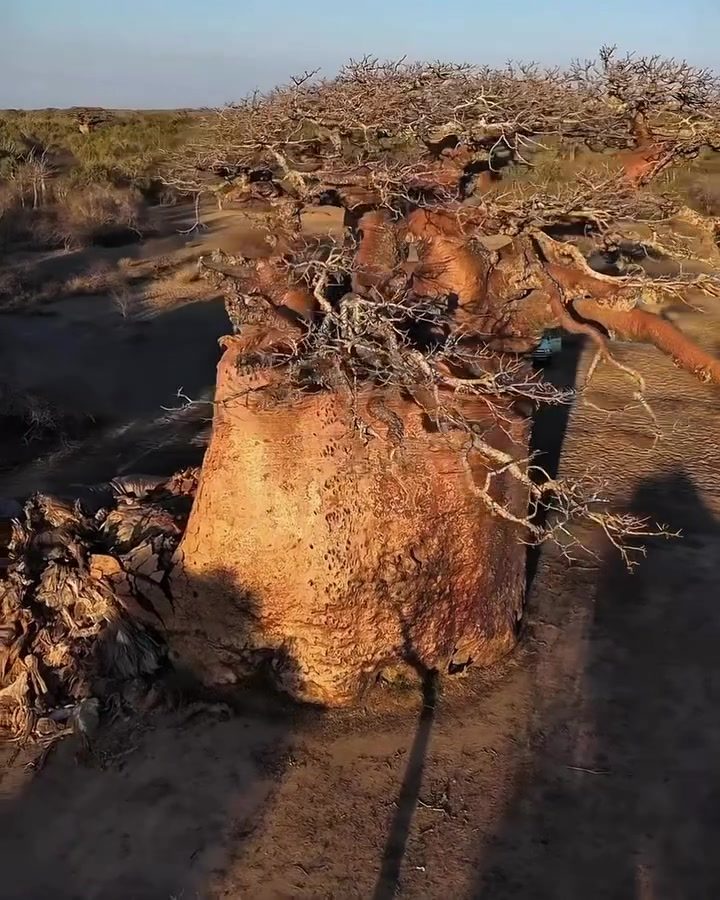
Baobabs are one of nature's most striking phenomena. Unlike almost every other tree species, their massive trunk is why they command the landscape. The aerial snapshot already gives an idea of the size. What becomes evident is the sheer expanse of this baobab — remarkably wider than any other tree. It's always stunning when wind isn't a factor. This one appears to stand like a monolith. Baobabs grow extremely slowly, as such, the otherwise unnatural shape of its trunk can be explained. Known as the upside-down tree (some would even call it a tree turned into a column), it grows extraordinarily large and slow over centuries. It's a testament to perseverance. While an exact age isn't known from the data, the trunk appears to dwarf the proportions set by a standard roadway. A vehicle less than half the size of the trunk itself weaves its way around the colossal trunk. This tree is an results from a long process of slow, unhurried growth.
An Equator's Geographical Oddity
Baobabs are not just remarkable for their size; they also thrive in harsh environments. The dry, arid landscape suggested by the video provides some clues as to how these giants are able to survive. This particular species has a fascinating evolutionary history that has allowed it to withstand the elements. They are often in the very dry regions of the equator. Baobabs store water. Even in the harshest regions they can be found far into the desert. These trees need very little water to survive. This is why they are seen most often in Africa, Madagascar, and Australia, where the dry, harsh drought zones are frequent. Thus, when watching the video, the environment is reminiscent of an equatorial climate. The tree's large trunk and branches act as a reservoir, storing water during the rainy season and releasing it slowly during the dry months. There are several thousand species of trees, but the baobab is one of the few that change the ecosystems in which they live. When dry, their seasonal growth helps sustain the natural ecology and surrounding species. This unique adaptation allows them to thrive in regions where other trees would struggle to survive.
The Magic of Arid Landscapes
The arid environment emphasized by the video portrait makes the arboreal behemoth appear as if it is all that remains. These trees are often mistaken for the ground itself. Their sheer size is a testament. They are often more geological structure than flora. It's as if the tree, the surrounding landscape, and the sky have reduced to a single point. Under the African sky, it seems as though these trees are not quite of this world. They are as much a part of the soil as a dusty road is a pathway. Baobabs are a keystone species in the ecosystems they inhabit. They provide food and shelter for a variety of animals, and their trunks can hold up to 120,000 liters of water. Some can even grow large enough that entire villages can take refuge within their hollow trunks during times of war or drought.
Watch the Reel
Related deep dives
Similar reads based on topic and creator.



Recent articles
Fresh deep dives from the latest Reels we unpacked.




Comments
Be the first to comment.