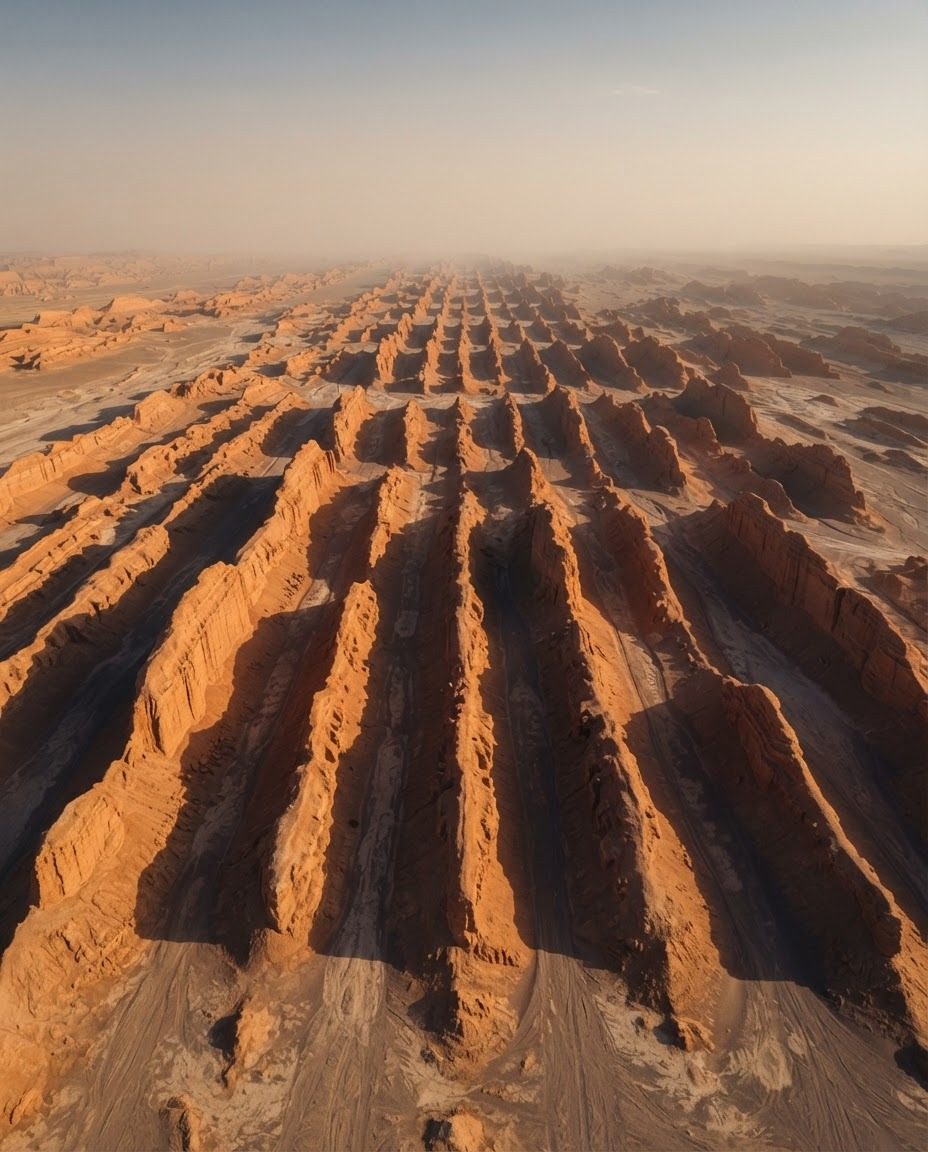
Expanses of Isolated Beauty
Deserts, vast and uninhabited, reveal a grandeur that is often overlooked. This aerial tour over sand and stone showcases several geological features. They are geological scars left by forces that shaped the planet. The formations featured here are not merely obstacles in a desolate wilderness. They are evidence of epic movements in earth history. A unique experience awaits spectators who glimpse the uninterrupted expanse. Other landscapes seem familiar or repetitive. The desert appears distant and remote. The geology here is a puzzle with few pieces missing. The scale of these geological features in the image is striking. This is a humble reminder of our dimensions. The desert is under a blue sky that seems endless. The sole inhabitant of this world is the sun. Its rays illuminate the wind-sculpted land. The sun's warmth and ubiquity are the daily cycles of the desert. In addition, it explains why such scenes are bathed in light.
Sand Sculpted by Wind
The treasure of the desert is the sand. Despite its uniformity and monotony, it is a diverse material. Driving sand forms the dunes. For example, sweeping lines and ripples are seen here, in the landscape. The delicate features and minute structures of the sand show the wind's power. This phenomenon is caused by the wind’s ability to lift and move sand, over the course of years. In a barren place, wind moves sand over hills and valleys. Wind is the force that sculpts sand formations. It shapes the dunes, forming unique patterns and ripples. Wind direction determines the path of sand and the dunes' shape. The wind's force on the desert leads to complex sand patterns. The structure of the dunes dictates their stability. Dunes can be steady or mobile, depending on their structure. The sand changes as it flows from one side to the other. Dunes shift, while changes in the course of wind and time. These dunes are not stagnant. They are dynamic. Driving by sand also means erosion is steady. The desert will change slowly. It is the dunes' existence that indicates a process in the desert.
Watch the Reel
Related deep dives
Similar reads based on topic and creator.




Recent articles
Fresh deep dives from the latest Reels we unpacked.


Comments
Be the first to comment.