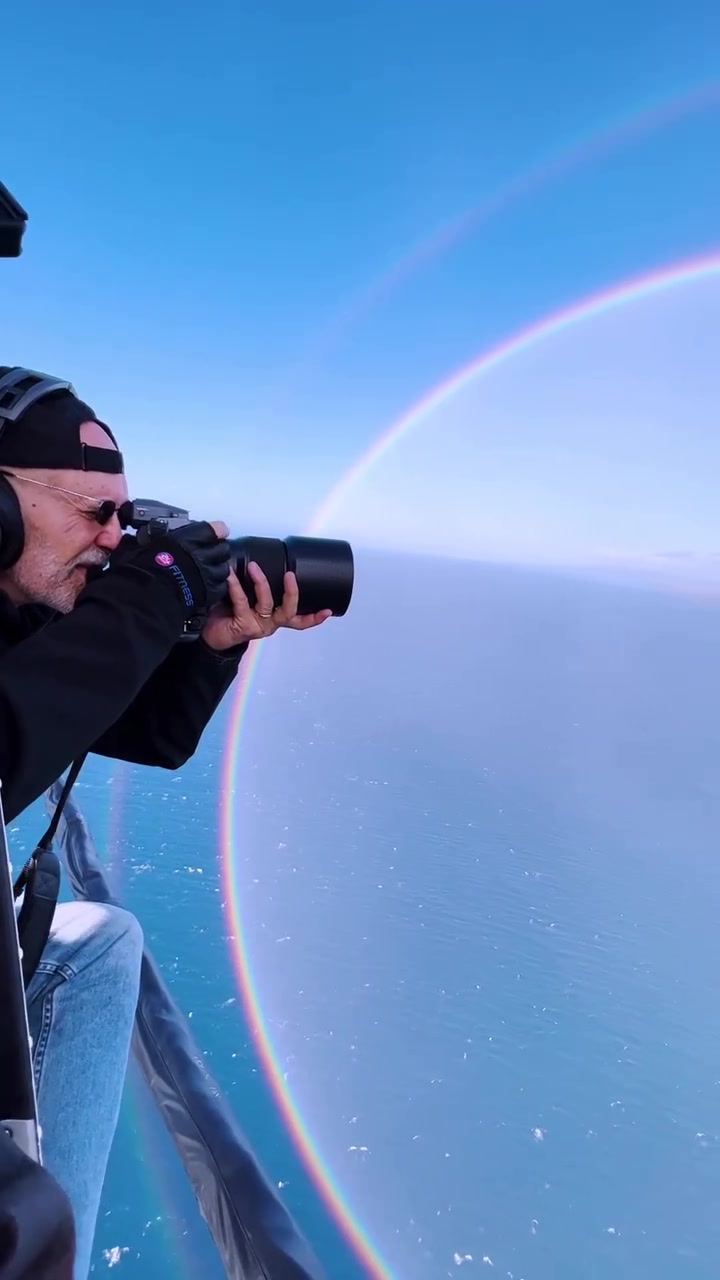
From the relative safety of a helicopter, a photographer trained a lens on an unusual sight: a double rainbow arcing over the ocean. The sight was no mirage; the rainbow's vibrant bands stood out against the blue sky and water, a visual effect known as Alexander's Band — the darker area between the primary and secondary rainbows. This aerial rainbow photo op offers a glimpse into the world of high-altitude photography, a niche that is as thrilling as it is challenging. In the shallow, high air and ever-shifting light, every shot is a gamble, and most attempts fail. Usually, to capture the right scene most photographers go for a helicopter ride.
What makes a high-altitude rainbow photograph?
High-altitude rainbow photography is neither travel nor wildlife photography. It's relentless focus and gear. The photographer's job is to harness the chaos of a weather event while keeping equipment steady. Though the helicopter provides a stable platform, the photographer has to factor in wind gusts, altitude, and the helicopter’s movement. Any mistake could mean blurring the shot, missing a detail, or risking the camera itself. But the technical challenges have to be overcome to capture the unpredictable beauty of nature. The payoff is a rare, intricate scene with colors that leap from the sky — primary and secondary rainbows forming a breathtaking visual with the dark band between them.
The wing of a higher view
Aerial photography is as demanding as it is rare. Rainbow photographs introduce an entirely new set of problems. It's not easy. It's common for these photos to break the viewer's expectations. The double rainbow, for example, makes its appearance without the usual backdrop of a stormy sky. Instead, it's framed by a near-perfect blue sky. The helicopter plays a functional role, but it can be a problem. The photographer must deal with both the skies and the pilot. Creative decisions have to be made on the fly.
The perfect camera for the impossible
There are no compromises in high-altitude photography. The camera makes the shot — or doesn't. The visuals betray the inherent risk, as the photographer holds a large camera. This is no smartphone; aerial photography demands a high-grade device. The safety harness for this shot is physical for the photographer. It's connected to the helicopter to keep the camera steady. The background is water, and the photographer has to focus on getting the perfect shot with their life literally in the balance. As photographer demonstrates getting the perfect shot their life might depend on it. The “large camera” is crucial in capturing the rare sight of a double rainbow. Dedicated high-altitude cameras are engineered for stability to capture crystal-clear images with the precision of a surgeon. Extensive battery life is essential, since the mission often lasts for hours. In addition, the camera must be resistant to potential impacts on the ground and withstand harsh environmental conditions.
A world of light and movement
Aerial photography operates on sharp focus. High above the ground, the photographer must set the best shot angle. The camera will be measuring the distance between the primary and secondary rainbows to fine-tune the composition, waiting for the ideal moment. The helicopter’s constant motion adds another critical element into the picture — the photographer must track these changes and adjust their focus to keep all elements in the frame. In high-altitude photography, capturing the perfect shot requires precision, timing, and the right framing — the photographer would need to focus on the foreground which in this case is the water while also keeping an eye on the distance between the primary and secondary rainbow.
A predator's eye: experience and equipment
The photographer must be prepared to change angles, shutter speed, and aperture on the go. Aerial photography is a primal predator-hunting approach. It's seeking rare moments in the landscape — the intersection of geometry, color, and shadow. The photographer means to continuously revise and refine their shots, frequently working with post-production tools like Adobe Lightroom and Photoshop to heighten and enhance the image's intricacy.
Avoid the vertical runoff
Aerial photography has two fundamental risks. The first is the equipment. If the photographer is careless or is shaken in turbulence, the camera could fall from where it’s positioned, and all the data and calculations would be lost. The photographer has a harness to prevent accidental drops, but if they are outright thrown from the helicopter during intense turbulence, the photographer may not survive to recover their equipment. The second risk is the weather. The helicopter cannot fly in heavy rain, lightning, or turbulence, so a seemingly perfect opportunity can be impossible. The pilot must keep an eye on weather forecasts, but conditions can change unexpectedly. Rainbows are an outward indication of heavy rainfall, so the photographer could be flying towards a looming storm. The photographer has a sophisticated camera with lots of expensive equipment. If the weather turns bad, the helicopter is forced to land. Helicopter engines can be sensitive to changes in weather, winding down if they draw in too much water.
Riding the rainbow
Eager to capture a perfect moment? First, find a photographer specializing in aerial photography. Find reliable weather conditions that feature rainbows, and get yourself into the air. Have your camera ready and harnessed tightly with a knowledgeable pilot on the controls. Approach the landscape from as many angles as possible, and be prepared for the next moment to bring a perfect shot.
Clear skies ahead
The challenge in high-altitude photography isn't the height. It's the fleeting beauty and the risk. This balance between capturing a rare moment and the risks makes aerial photography thrilling. The moments can be epic, but the challenges make the victories all the sweeter.
Watch the Reel
Questions readers ask
What exactly is Alexander's Band, and why is it significant in high-altitude rainbow photography?
Alexander's Band is the darker area between the primary and secondary rainbows. It's significant because it adds depth and contrast to the photograph, making the vibrant colors of the rainbows stand out even more. Capturing this effect from a high altitude adds an extra layer of complexity and beauty to the image.
How do photographers manage to keep their equipment steady while capturing these shots from a helicopter?
Photographers use specialized equipment and techniques to keep their cameras steady. They often use high-grade cameras with harnesses that connect to the helicopter, ensuring stability despite the movement and wind. Additionally, they must factor in the helicopter's movement, wind gusts, and altitude to get the perfect shot.
What kind of camera is typically used for high-altitude photography, and why is it so important?
High-altitude photography requires high-grade, specialized cameras. These cameras are engineered for stability, have extensive battery life, and can withstand harsh environmental conditions. They are crucial for capturing crystal-clear images with the precision needed to showcase the intricate details of a double rainbow.
How do pilots and photographers collaborate during these aerial shoots?
The collaboration between pilots and photographers is crucial. The pilot must navigate the helicopter to provide the best vantage points while the photographer focuses on capturing the shot. This requires clear communication and a shared understanding of the photographer's needs and the pilot's capabilities. The pilot must also be aware of the safety concerns, such as wind gusts and altitude, to ensure a successful and safe shoot.
What makes aerial rainbow photography different from other forms of high-altitude photography?
Aerial rainbow photography is unique because it involves capturing a fleeting, natural phenomenon that is highly dependent on weather conditions. Unlike other forms of high-altitude photography, such as wildlife or landscape, rainbows require precise timing and positioning to capture the right moment, making it both thrilling and challenging.
Can amateur photographers attempt high-altitude rainbow photography, or is it strictly for professionals?
High-altitude rainbow photography is generally best left to professionals due to the technical challenges and safety risks involved. Amateur photographers would need extensive training, specialized equipment, and experience working with pilots to even attempt such a feat. However, with the right preparation and guidance, it might be possible for enthusiasts to explore this niche.
Related deep dives
Similar reads based on topic and creator.

Recent articles
Fresh deep dives from the latest Reels we unpacked.

Comments
Be the first to comment.