Skydiving Reforestation
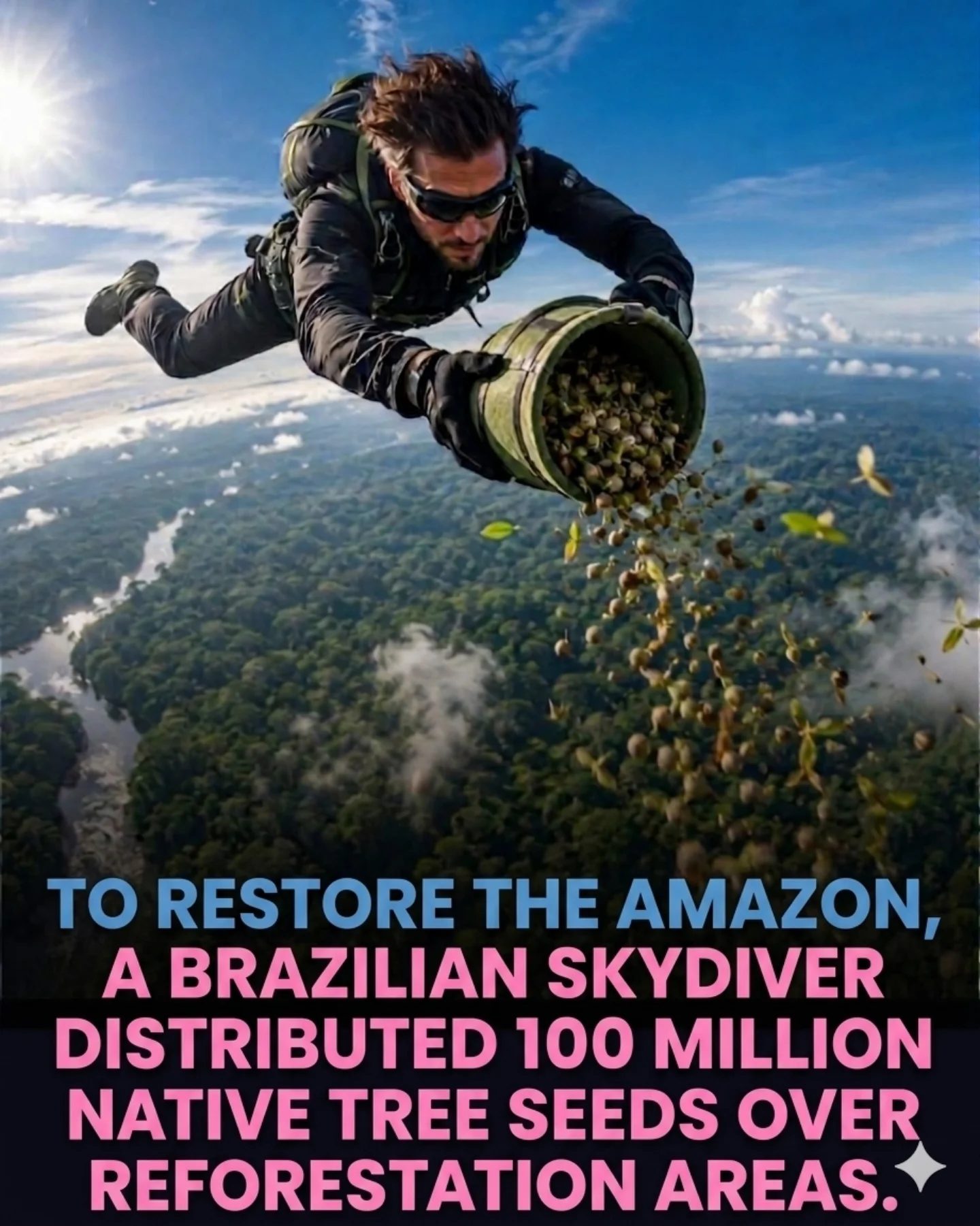
Skydiving reforestation is an innovative approach to restoring depleted ecosystems, combining extreme sports with environmental conservation. World-renowned Brazilian skydiver and stuntman Luigi Cani spearheaded a high-profile ecological initiative, the "100 Million Seeds Amazon Project." This ambitious endeavor aimed to combat accelerating deforestation and raise global environmental awareness by distributing 100 million native tree seeds over a severely deforested region in the Amazon rainforest.
Context / Why this matters
The Amazon rainforest, often referred to as the "lungs of the Earth," plays a crucial role in regulating the planet's climate and biodiversity. However, it faces significant threats from deforestation, driven by agricultural expansion, logging, and mining. Traditional reforestation methods, such as planting seedlings, are labor-intensive and often ineffective in large, remote areas. Skydiving reforestation offers a unique solution to these challenges by enabling the rapid and widespread distribution of seeds in hard-to-reach locations.
Main discussion
The 100 Million Seeds Amazon Project
The "100 Million Seeds Amazon Project" was the brainchild of Luigi Cani, who teamed up with botanists and engineers to develop an innovative aerial seeding method. The project spanned over five years, involving meticulous logistical planning, scientific coordination, and the acquisition of 12 separate government permits. The ultimate goal was to rejuvenate a 100-square-kilometer deforested region near Novo Aripuanã, Brazil, by dispersing seeds from 27 native tree species.
The Seedbox and the Skydiving Process
Central to the project was a custom-engineered, biodegradable wooden seedbox designed to drop simultaneously with the skydivers from an altitude of 14,000 feet. This seedbox held the 100 million seeds, which were carefully selected for their high germination rate and suitability to the local ecosystem. Cani and his team plummeted at speeds exceeding 300 km/h, intercepting and stabilizing the half-ton cargo container in mid-air. At approximately 6,500 feet, Cani manually engaged the release mechanism, ensuring targeted and uniform distribution of the seeds over the reforestation area.
The Science Behind Aerial Seeding
Aerial seeding involves dispersing seeds from aircraft to accelerate reforestation. This method leverages the wind and air currents to carry the seeds to distant areas, ensuring broader coverage. The seeds used in Cani's project had an anticipated 95% germination rate, which is significantly higher than traditional planting methods. The high success rate can be attributed to the use of indigenous seeds that are well-adapted to the local environment and the precise targeting of reforestation areas.
Challenges and Criticisms
While the project demonstrated the feasibility of aerial seeding, it also faced criticism from some environmentalists. Critics argue that aerial seeding is not a comprehensive solution to deforestation. They point out that reforestation must address the root causes of deforestation, such as illegal logging and land-use changes. Moreover, aerial seeding is not a substitute for community-led reforestation efforts, which involve local stakeholders in the restoration process.
Monitoring and Impact
The seeds distributed during the "100 Million Seeds Amazon Project" were monitored using satellite technology. This allowed researchers to track the germination and growth of the trees over time. The project's success highlighted the potential of aerial seeding as a tool for modern ecological activism and remote reforestation efforts.
Practical tips
Engaging in Reforestation
For those interested in contributing to reforestation efforts, aerial seeding is just one of many methods available. Here are some practical tips for anyone looking to get involved:
- Join Local Reforestation Initiatives: Participate in local tree-planting events or community-led reforestation projects. These initiatives often provide hands-on experience and a sense of community involvement.
- Support Environmental Organizations: Contribute to organizations that focus on reforestation and environmental conservation. Financial support can help fund large-scale projects and research initiatives.
- Advocate for Policy Changes: Advocate for policies that protect forested areas and promote sustainable land-use practices. This can involve lobbying government officials, signing petitions, and raising awareness through social media.
Starting a Reforestation Project
If you are considering starting a reforestation project, consider the following steps:
- Research the Local Ecosystem: Understand the native tree species and their ecological needs. Ensure that the seeds or seedlings you choose are well-suited to the local environment.
- Obtain Permits and Approvals: Work with local authorities and environmental agencies to obtain any necessary permits. This ensures that your project complies with regulations and minimizes potential legal issues.
- Engage the Community: Involve local communities in the planning and implementation of your project. Community support is crucial for the long-term success of any reforestation initiative.
Important takeaways
The Potential of Aerial Seeding
The "100 Million Seeds Amazon Project" demonstrated the potential of aerial seeding as a tool for large-scale reforestation. By leveraging the skills of elite skydivers and the expertise of botanists, the project successfully distributed 100 million native tree seeds over a deforested region. The high germination rate and innovative approach to seed distribution offer a promising blueprint for future reforestation efforts.
The Need for Comprehensive Solutions
While aerial seeding is a valuable tool, it is not a standalone solution to deforestation. Comprehensive reforestation strategies must address the root causes of deforestation and involve local communities in the restoration process. Community-led initiatives and policy advocacy are essential for achieving long-term environmental sustainability.
Conclusion
The "100 Million Seeds Amazon Project" showcased the potential of skydiving reforestation as an innovative and effective method for restoring deforested areas. By combining extreme sports with environmental conservation, the project raised global awareness and provided a blueprint for future ecological initiatives. As the world continues to face environmental challenges, creative and collaborative efforts like this will be crucial in preserving biodiversity and mitigating climate change.
Watch the Reel
Questions readers ask
What is aerial reforestation and how does it work?
Aerial reforestation involves dropping tree seeds from an aircraft to grow new plants in hard-to-reach areas. In Luigi Cani's project, he skydives and airdrops seeds to target specific regions, allowing for efficient planting over vast and remote landscapes.
Why is aerial reforestation important for the Amazon rainforest?
The Amazon rainforest is vast and remote. Aerial reforestation enables reforestation in inaccessible areas and accelerates regrowth in regions affected by deforestation. Luigi Cani's 100 Million Seeds Amazon Project aims to restore approximately 100 square kilometers of the forest.
What makes Luigi Cani's approach unique?
Luigi Cani combines his expertise in skydiving with his passion for environmental conservation. By skydiving and releasing seeds from the sky, Cani can precisely target areas that need reforestation. He also raises global awareness about the importance of restoring the Amazon rainforest.
What are the main benefits of planting native trees in the Amazon?
Planting native trees helps to restore the Amazon's biodiversity, supports local ecosystems, and combats deforestation. Native trees are better suited to the local climate and soil, increasing the success rate of reforestation efforts.
How does aerial seeding help combat deforestation in remote areas?
Aerial seeding enables the distribution of trees across large, inaccessible areas, making it an efficient method for combating deforestation. By planting millions of seeds quickly, Luigi Cani's project accelerates the reforestation process in remote regions of the Amazon.
What challenges does Luigi Cani face in his aerial reforestation project?
Luigi Cani faces logistical challenges, such as ensuring the accuracy of aerial plantings, sourcing enough seeds, and navigating the vast and remote areas of the Amazon. Additionally, he must contend with weather conditions and the complex ecosystems of the rainforest.
What can individuals do to support aerial reforestation efforts in the Amazon?
Individuals can support aerial reforestation projects by raising awareness, donating to initiatives like the 100 Million Seeds Amazon Project, and advocating for policies that protect the Amazon rainforest. These efforts can help amplify the impact of aerial reforestation and promote sustainable reforestation practices.
Related deep dives
Similar reads based on topic and creator.



Recent articles
Fresh deep dives from the latest Reels we unpacked.




Comments
Be the first to comment.