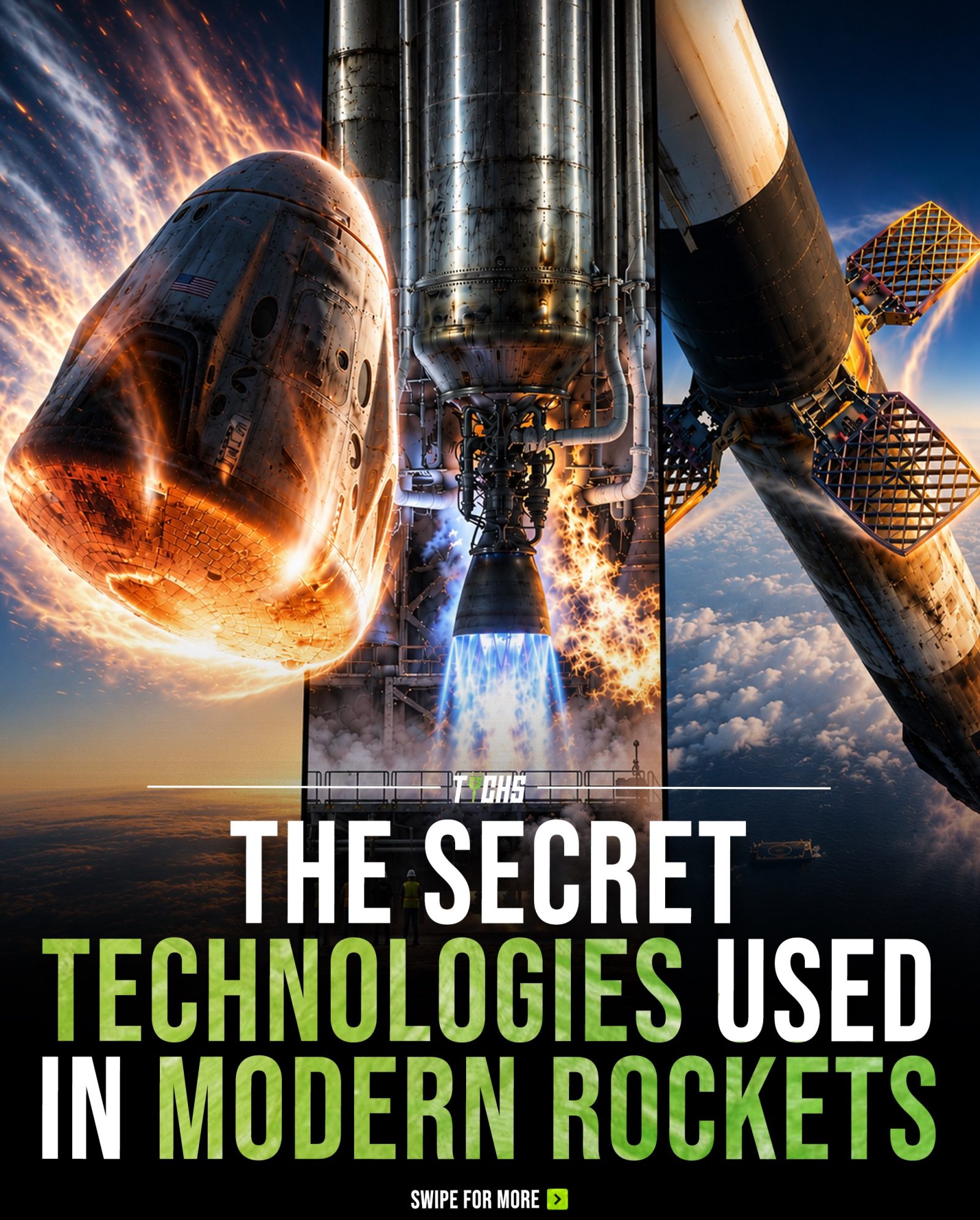
Rocket Technologies
Modern rockets are marvels of engineering, designed to withstand the extreme conditions of space travel. From the intense heat and pressure during launch to the vast, airless expanse of outer space, these technological advancements push the boundaries of what is possible. Let's explore the cutting-edge technologies that make modern rockets so remarkable and how they are revolutionizing space exploration.
Why This Matters
Rocket technology is the backbone of space exploration. Whether launching satellites, conducting scientific research, or transporting astronauts, rockets enable us to reach beyond our planet. The technologies used in modern rockets are not just about reaching space; they are about surviving the harsh conditions and performing complex maneuvers with precision. Understanding these technologies provides a deeper appreciation for the intricacies and advancements in space travel.
The Secret Technologies
Cryogenic Propulsion
One of the most critical technologies in modern rockets is cryogenic propulsion. The RS-25 engine, for example, uses liquid hydrogen and liquid oxygen to generate thrust. These fuels are stored at extremely low temperatures, making them highly efficient and powerful. The process involves combusting the propellants to produce high-velocity exhaust, which propels the rocket forward. This method is essential for deep-space missions where efficiency and thrust are paramount.
3D Printing in Manufacturing
Relativity Space is at the forefront of transforming rocket manufacturing through 3D printing. This innovative technology allows for the creation of complex rocket engines and structures with unprecedented precision. By using 3D printing, manufacturers can produce parts that are lighter, stronger, and more cost-effective than traditionally manufactured components. This not only reduces production time but also opens up new possibilities for design and functionality.
Full Flow Combustion
The Raptor engine utilizes full flow combustion, a technology that improves efficiency and performance. In this system, both the fuel and oxidizer are fully combusted, minimizing waste and maximizing thrust. This method is particularly useful for reusability, as it allows for multiple launches and landings with minimal refueling, thereby reducing costs and increasing the frequency of space missions.
Titanium Grid Fins
Titanium grid fins, such as those used on the Falcon 9, are another breakthrough in rocket technology. These fins provide stability and control during the descent and landing phases of a rocket. Made from titanium, they are lightweight yet robust, capable of withstanding the extreme conditions of re-entry. This technology is crucial for the reusability of rockets, a key factor in making space travel more sustainable and cost-effective.
Autogenous Pressurization
Starship's autogenous pressurization system is another significant advancement. This technology uses the rocket's own propellant to pressurize the tanks, eliminating the need for a separate pressurization system. This not only reduces the complexity and weight of the rocket but also improves safety by minimizing the number of components.
PICA-X Heat Shield
The Dragon spacecraft features the PICA-X heat shield, designed to protect the vehicle during re-entry. This heat shield is made from a proprietary material that can withstand the extreme temperatures and pressures of re-entry. Its advanced design ensures the safety of the spacecraft and its passengers, making it an essential component for deep-space and re-entry operations.
Oxygen-Rich Combustion
Oxygen-rich combustion is an advanced concept that involves using more oxygen than fuel in the combustion process. This method produces a more efficient and powerful thrust, making it ideal for future rocket engines. By optimizing the combustion process, this technology can significantly enhance the performance and efficiency of rockets, pushing the limits of space exploration.
Aerospike Engines
Aerospike engines represent another innovative approach. Unlike traditional bell-shaped nozzles, aerospike engines have a spiked design that allows for efficient thrust at various altitudes. This adaptability makes them suitable for a wide range of missions, from low Earth orbit to deep space. Aerospike engines are still in the development phase but hold great promise for future rocket technology.
Practical Tips for Understanding Rocket Technologies
For those interested in delving deeper into rocket technologies, here are some practical tips:
Follow Industry Leaders
Companies like SpaceX, Relativity Space, and Blue Origin are at the forefront of rocket technology. Following their developments and announcements can provide valuable insights into the latest advancements.
Study Key Components
Focus on understanding key components such as engines, propulsion systems, and heat shields. These are the building blocks of modern rockets and understanding their functions and technologies can greatly enhance your knowledge.
Explore 3D Printing in Aerospace
3D printing is revolutionizing the aerospace industry. Learning about this technology and its applications can give you a unique perspective on how modern rockets are manufactured.
Engage with Online Communities
Joining online forums and communities dedicated to space exploration and rocket technology can be a great way to stay updated and engage with experts and enthusiasts.
Important Takeaways
Modern rockets are a testament to human ingenuity and technological prowess. From cryogenic propulsion to 3D printing, these advancements are making space exploration more efficient, safer, and accessible. Understanding these technologies not only deepens our appreciation for space travel but also highlights the innovative spirit driving the industry forward.
Conclusion
The technologies used in modern rockets are a fascinating blend of innovation and engineering brilliance. From cryogenic propulsion to 3D printing, each component plays a crucial role in making space travel possible. Whether you are an enthusiast or a professional in the field, the advancements in rocket technology offer endless possibilities for exploration and discovery. As we continue to push the boundaries of space travel, these technologies will undoubtedly play a pivotal role in shaping the future of human space exploration.
Watch the Reel
Questions readers ask
What are cryogenic propulsion systems and how do they enhance space travel?
Cryogenic propulsion systems use fuels like liquid hydrogen and liquid oxygen, which are stored at extremely low temperatures. These systems enhance space travel by providing high specific impulse, which means more efficient use of fuel and greater payload capacity. This allows rockets to carry more equipment or reach farther destinations.
How does 3D printing contribute to rocket manufacturing?
3D printing, also known as additive manufacturing, allows for the creation of complex rocket parts with precise geometries that are difficult or impossible to achieve with traditional manufacturing methods. This technology reduces production costs, shortens development timelines, and enables lighter, more efficient rocket components.
What are some examples of advanced propulsion systems used in modern rockets?
Advanced propulsion systems include ion drives, which use electric fields to accelerate ions for thrust, and nuclear propulsion, which could provide sustained thrust over long durations. These systems are being developed to enable more ambitious missions, such as travel to Mars or beyond.
Why is rocket combustion technology crucial for space exploration?
Rocket combustion technology is crucial because it determines the thrust and efficiency of a rocket. Innovations in combustion technology, such as improved fuel injectors and advanced combustion chambers, allow for more powerful and efficient engines, which are essential for achieving escape velocity and performing complex maneuvers in space.
How do modern rocket technologies contribute to space travel efficiency?
Modern rocket technologies, such as reusable rocket stages and lightweight materials, significantly enhance space travel efficiency. Reusable rockets reduce the cost per launch, while lightweight materials allow for more payload capacity, making space exploration more affordable and accessible.
What are the benefits of 3D printed rocket parts in space rocket engineering?
3D printed rocket parts offer several benefits, including reduced weight, improved performance, and lower production costs. This technology allows engineers to create intricate designs that optimize fuel efficiency and structural integrity, making rockets more reliable and cost-effective.
What innovations are being made in cryogenic engine advancements?
Innovations in cryogenic engine advancements focus on improving fuel efficiency, reducing engine weight, and enhancing reliability. New materials and manufacturing techniques are being developed to handle the extreme temperatures and pressures, ensuring that cryogenic engines perform optimally under harsh conditions.
Recent articles
Fresh deep dives from the latest Reels we unpacked.




Comments
Be the first to comment.