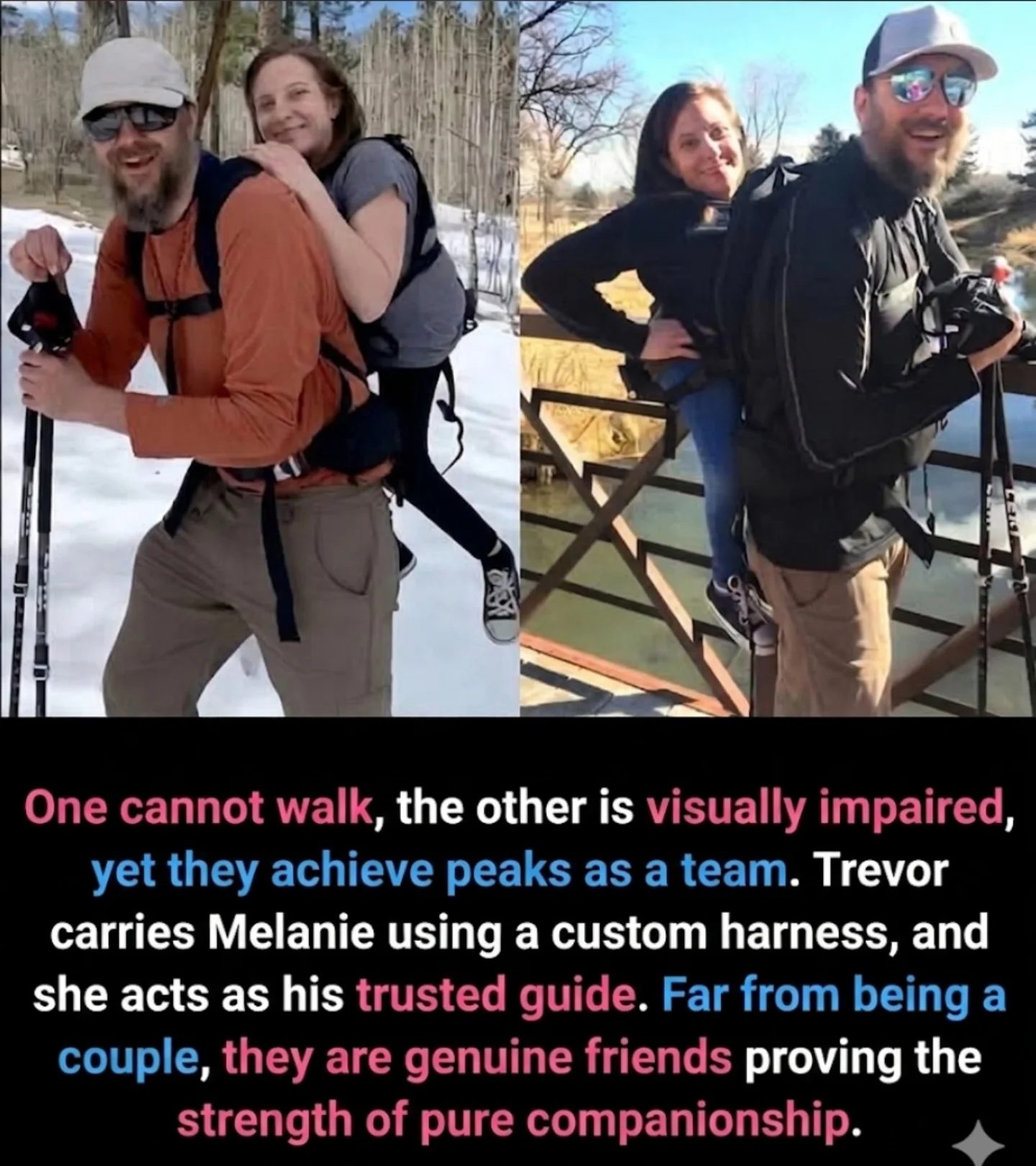
Adaptive Hiking: The Story of Trevor Hahn and Melanie Knecht
Adaptive hiking opens up the world of outdoor exploration to individuals with disabilities, combining innovative equipment and supportive friendships. Trevor Hahn and Melanie Knecht, two friends from Colorado, have embraced this concept, creating a unique system that allows them to enjoy hiking despite their individual challenges.
Context: Adaptive Hiking with a Custom Harness
Trevor and Melanie's story is a testament to the power of adaptive recreation. Melanie was born with spina bifida and uses a wheelchair, while Trevor lost his vision to glaucoma. Instead of letting these challenges hinder their love for the outdoors, they developed a custom-designed harness that enables Trevor to carry Melanie while she provides verbal directions to navigate the trails.
This innovative approach not only allows them to enjoy hiking but also serves as an inspiring example of how adaptive equipment can empower individuals with disabilities to participate in outdoor activities. Their partnership highlights the importance of adaptive recreation and the profound impact of supportive friendships.
The Custom Harness: A Key to Outdoor Freedom
The custom harness is the cornerstone of Trevor and Melanie's adaptive hiking system. This specialized equipment allows Trevor to securely carry Melanie on his back, ensuring her safety and comfort during their hikes. The harness is designed to distribute Melanie's weight evenly, reducing the physical strain on Trevor and enabling him to navigate various terrains with ease.
The harness is not just a tool but a symbol of their friendship and trust. It represents their commitment to supporting each other and overcoming physical barriers together. The harness allows Melanie to enjoy the outdoors in a way that is both safe and empowering, giving her a sense of independence and adventure.
The Role of Trust and Communication
In their unique hiking system, Melanie takes on the role of the guide. Despite Trevor's visual impairment, Melanie's verbal directions allow them to navigate trails confidently. This role reversal challenges traditional perceptions of who should lead and who should follow, emphasizing the importance of trust and communication in their partnership.
Melanie's role as a guide is essential, but it is also a testament to the strength of their friendship. She is not just providing directions; she is ensuring Trevor's safety and comfort, demonstrating a deep sense of care and responsibility. At the same time, Trevor's trust in Melanie allows them to explore new trails and conquer peaks, pushing the boundaries of what is possible.
Practical Tips for Adaptive Hiking
Adaptive hiking requires careful planning and the right equipment. Here are some practical tips for those looking to embark on their own adaptive hiking adventures:
Choose the Right Equipment
Selecting the right equipment is crucial for a successful adaptive hiking experience. A custom-designed harness, like the one used by Trevor and Melanie, can make a significant difference. Ensure that the harness is comfortable, secure, and adjustable to accommodate different terrains and conditions.
Plan Your Route
Planning your route is essential for a safe and enjoyable adaptive hiking experience. Choose trails that match your abilities and the equipment you have. Consider factors such as trail difficulty, terrain, and accessibility. Familiarize yourself with the route before you set out, and make sure to have a map or GPS device.
Communicate Clearly
Clear communication is key in adaptive hiking, especially when navigating trails. Ensure that both parties understand the route and the signals to be used. Regularly check in with each other to ensure safety and comfort.
Practice Good Safety Habits
Safety is paramount in adaptive hiking. Always carry a first aid kit, plenty of water, and snacks. Dress appropriately for the weather, and be prepared for changes in conditions. Stay on marked trails and avoid risky terrain.
Foster a Strong Partnership
A strong partnership is the backbone of adaptive hiking. Trust, communication, and mutual support are essential. Build a strong bond with your hiking partner, and be open to adapting to each other's needs and preferences.
Important Takeaways
Adaptive hiking is more than just a recreational activity; it is a journey of empowerment, trust, and companionship. The story of Trevor and Melanie underscores the importance of adaptive equipment and supportive friendships in overcoming physical barriers. Their unique system, involving a custom harness and clear communication, has allowed them to conquer various peaks and enjoy the outdoors together.
This partnership serves as a powerful example of how adaptive recreation can enrich the lives of individuals with disabilities, providing them with new experiences and a sense of adventure. It also highlights the transformative power of friendship and trust.
Conclusion
Adaptive hiking, as exemplified by the partnership of Trevor Hahn and Melanie Knecht, offers a profound glimpse into the world of inclusive outdoor recreation. Their journey showcases the transformative power of adaptive equipment and the importance of supportive friendships. Whether you are an individual with a disability or someone looking to support a friend, adaptive hiking can open up new horizons and create lasting memories.
Embrace the spirit of adventure and explore the great outdoors with adaptive hiking. The right equipment, clear communication, and a strong partnership can make all the difference, allowing you to conquer peaks and experience the beauty of nature.
Watch the Reel
Questions readers ask
What inspired Trevor and Melanie to create their custom hiking harness?
Trevor and Melanie were inspired by their shared passion for the outdoors and their desire to overcome the physical challenges they each face. Melanie, who uses a wheelchair, and Trevor, who is visually impaired, wanted to find a way to enjoy hiking together, leading them to develop a unique harness system.
How does the custom harness work for Trevor and Melanie?
The custom harness designed by Trevor and Melanie allows Trevor to securely carry Melanie on his back while they hike. Melanie, who is positioned behind Trevor, provides verbal directions to navigate the trail, ensuring a safe and enjoyable adventure for both of them.
What types of hikes can be adapted for individuals with disabilities?
Many hikes can be adapted for individuals with disabilities with the right planning and equipment. Trails that are relatively flat, have stable surfaces, and are free of obstacles are generally more accessible. Additionally, trails with clear signage and resting areas can greatly enhance the experience for hikers with various needs.
What other adaptive hiking gear is available for outdoor enthusiasts with disabilities?
There are various adaptive hiking gear options available, including all-terrain wheelchairs, hiking poles with specialized grips, and portable ramps. Some companies also offer customized equipment designed to meet specific needs, such as the harness system developed by Trevor and Melanie.
Related deep dives
Similar reads based on topic and creator.




Recent articles
Fresh deep dives from the latest Reels we unpacked.



Comments
Be the first to comment.