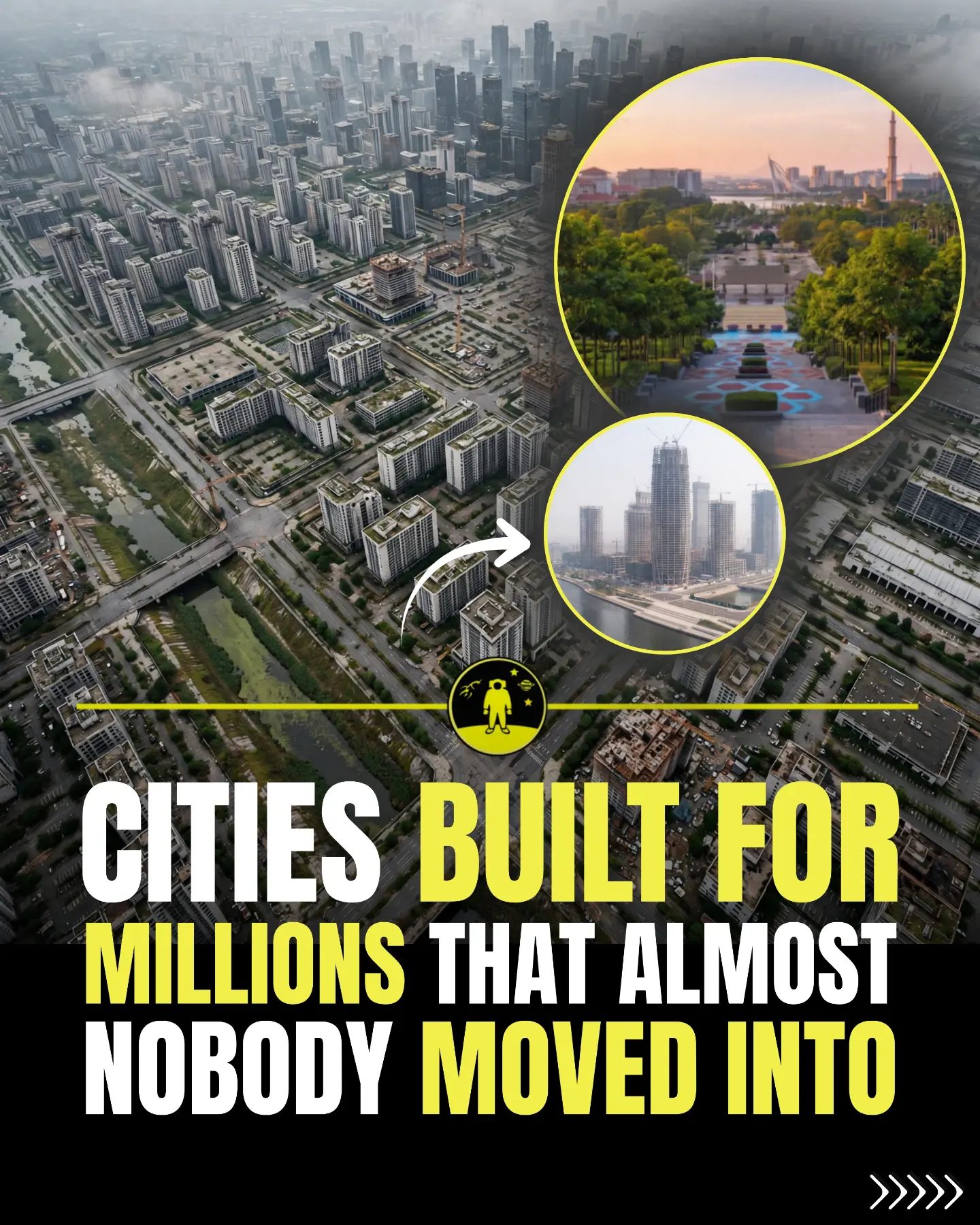
Ghost Cities: Ambitions and Abandonment
Across the globe, ambitious urban development projects have been launched with lofty goals. These cities, designed for vast populations, often fall short of expectations, leaving behind sprawling, near-empty landscapes. These areas, often called "ghost cities," are the result of grand visions that failed to materialize due to a mix of economic, infrastructure, and market factors. This phenomenon is particularly apparent in China and the Middle East, where several new cities have struggled to attract residents and businesses.
Why Cities Become Ghost Settlements
The transformation of a planned metropolis into a ghost city is a complex story. While some cities were constructed to ease overcrowding in urban areas, others were designed to attract investment and become economic hubs. However, several factors often hinder these ambitious plans. For instance, the absence of essential infrastructure, high housing costs, and shifting economic conditions can make these cities less appealing to potential residents and businesses.
Notable Examples
Kangbashi, China
Kangbashi, China, is one of the most notable examples of a ghost city. Located in Inner Mongolia, it was built to accommodate 300,000 residents. However, due to the lack of economic opportunities and harsh weather conditions, the population has remained significantly lower than anticipated. The city, which boasts impressive skyscrapers and wide roads, is often cited as a prime example of a failed urban development project.
Masdar City, UAE
Masdar City in the UAE is another case in point. Envisioned as a futuristic eco-city for 50,000 people, it was designed with state-of-the-art sustainable features. However, despite its advanced infrastructure, it has yet to reach its target population. The primary challenges have been the high cost of living and the city's remote location.
Rawabi, Palestine
Rawabi in Palestine is another city that illustrates the complexities of urban planning. Planned for 40,000 residents, the city has struggled to attract residents due to ongoing political instability and economic difficulties in the region. Although it has seen some growth, it has fallen short of its original population goals.
Forest City in Malaysia
Forest City in Malaysia is another example of a city that has struggled to attract residents. Built as a hub for international investment, it has faced challenges such as high housing costs and limited infrastructure. However, it continues to grow, albeit slowly.
Complex Realities Behind the Labels
The term "ghost city" often oversimplifies the realities on the ground. While many of these cities do have lower population densities and unfinished structures, they are not entirely abandoned. Some, like Rawabi and Masdar City, have seen gradual growth and are actively working to attract more residents and businesses.
Economic opportunities, infrastructure, and housing costs play a crucial role in the success of these cities. Without jobs, affordable housing, and good infrastructure, even the most beautifully designed cities can fail to thrive. Moreover, population figures for these cities are often outdated or approximate, making it difficult to gauge their true status.
Strategies for Urban Sustainability
The phenomenon of ghost cities highlights the need for a more holistic approach to urban planning. Building homes is only the first step; creating a sustainable city requires a comprehensive plan that includes job opportunities, transportation, schools, healthcare, and a vibrant community.
Economic Opportunities
One of the key factors in attracting residents to a new city is the availability of job opportunities. Without economic prospects, even the most appealing urban landscapes can remain vacant. Governments and developers must prioritize the creation of job opportunities and economic incentives to attract businesses and residents.
Infrastructure Development
Robust infrastructure, including efficient transportation systems, reliable utilities, and well-maintained public spaces, is crucial for the success of any urban development. Infrastructure not only supports the daily needs of residents but also enhances the city's overall attractiveness, making it a desirable place to live and work.
Affordable Housing
The cost of living, particularly housing costs, is another critical factor. High housing expenses can deter potential residents, especially in regions with lower economic opportunities. Developers and governments must focus on creating affordable housing options to ensure that a diverse range of people can afford to live in these cities.
Community Engagement
A vibrant community is essential for the long-term sustainability of a city. Developing cultural, recreational, and social amenities can foster a sense of community and belonging. Engaging residents in the planning and development process can also ensure that the city meets their needs and aspirations.
Practical Tips for Prospective Urban Planners
Conduct Comprehensive Feasibility Studies
Before embarking on a new urban development project, conduct thorough feasibility studies. Assess economic viability, infrastructure needs, and market demand to ensure the project's success.
Prioritize Economic Development
Building homes should go hand in hand with creating job opportunities. Prioritize economic development strategies that attract businesses and create employment opportunities for residents.
Engage the Community
Engage local communities in the planning and development process. Understanding the needs and aspirations of potential residents can help create a vibrant and sustainable city.
Ensure Affordability
Address the issue of affordability from the outset. Develop a mix of housing options to cater to different income levels, ensuring that the city is accessible to a broader range of residents.
Important Takeaways
The notion of ghost cities underscores the complexities of urban planning. These cities serve as lessons in the importance of a comprehensive and inclusive approach to urban development. By fostering economic opportunities, ensuring robust infrastructure, and prioritizing affordability, it is possible to avoid the pitfalls of ghost cities and create thriving urban centers. These efforts are essential for the long-term success and sustainability of new urban developments.
Conclusion
The rise of ghost cities, while a daunting reality, is a call to action for urban planners, developers, and governments. Understanding the factors that contribute to their failure and adopting a more holistic approach to urban development can pave the way for sustainable and thriving urban centers. By focusing on economic opportunities, infrastructure, affordability, and community engagement, urban planners can create cities that not only meet their original ambitions but also stand the test of time and contribute positively to the lives of their inhabitants.
Watch the Reel
Questions readers ask
What are ghost cities and where are they commonly found?
Ghost cities are sprawling urban areas designed to accommodate large populations that remain largely uninhabited. They are commonly found in countries like China and in the Middle East, where ambitious development projects have fallen short of expectations.
What are some examples of ghost cities in the Middle East?
One notable example is Masdar City in the UAE, which was envisioned as a zero-carbon city but has struggled to attract significant residency and business. Other examples include Rawabi in Palestine, and the King Abdullah Economic City in Saudi Arabia.
Why do ghost cities form in the first place?
Ghost cities form due to a combination of economic, infrastructure, and market factors. Often, the grand visions behind these projects fail to materialize, leading to underdeveloped areas that do not attract residents or businesses.
What role do economic factors play in the creation of ghost cities?
Economic factors are crucial in the formation of ghost cities. These include funding issues, lack of job opportunities, and insufficient market demand for the envisioned urban developments, making these cities unappealing to potential residents.
How do infrastructure issues contribute to the abandonment of urban projects?
Infrastructure issues, such as inadequate public transportation, utilities, and other essential services, can make ghost cities unattractive to inhabitants. Without a solid infrastructure, it is challenging to establish a functional and thriving community.
Are there any ghost cities in China? If so, what are some examples?
Yes, China has several ghost cities. Examples include Ordos City in Inner Mongolia, which was designed to accommodate a large number of residents, and Tianducheng, a replica of France's Paris which remains mostly empty.
Related deep dives
Similar reads based on topic and creator.




Recent articles
Fresh deep dives from the latest Reels we unpacked.




Comments
Be the first to comment.