Kenya Safari Itinerary
A Kenya safari is a dream for many adventurers, and planning a trip can be overwhelming. This 7-day, 6-night itinerary covers some of the most iconic destinations in Kenya, offering a blend of wildlife, landscapes, and cultural experiences.
Context / Why This Matters
Kenya is renowned for its diverse ecosystems and rich wildlife, making it a prime destination for safari enthusiasts. This itinerary focuses on some of the country's most celebrated locations, ensuring a holistic experience of Kenya's natural wonders.
Main Discussion
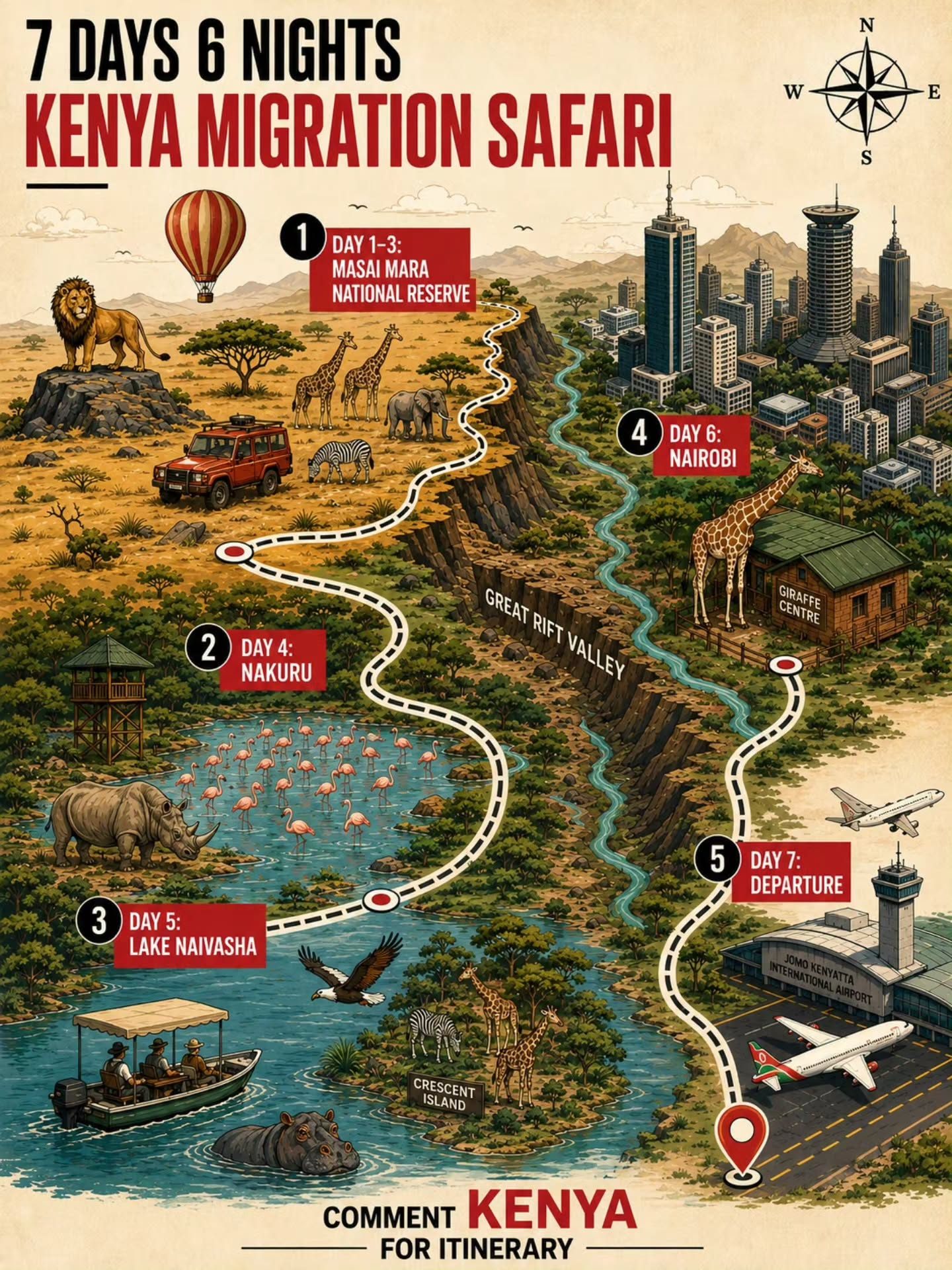
Day 1-3: Masai Mara National Reserve
The journey begins at the iconic Masai Mara National Reserve, one of the most famous wildlife parks in Africa. Spanning 1,510 square kilometers, the reserve is home to the Big Five—lions, leopards, buffaloes, elephants, and rhinoceroses. During these three days, visitors can expect thrilling game drives, witnessing the annual wildebeest migration, and encounters with the Maasai people.
Highlights of Masai Mara National Reserve:
- Game Drives: Multiple game drives are scheduled throughout the day, providing ample opportunities to spot a variety of wildlife.
- Migration Season: If timed right, the Great Migration, where millions of wildebeest, zebras, and gazelles move across the plains, is a spectacle to behold.
- Maasai Culture: Engaging with the Maasai people offers insights into their traditions, customs, and daily life.
Day 4: Lake Nakuru
After leaving Masai Mara, the next stop is Lake Nakuru, a sight to behold with its stunning flamingo-filled shores. The lake is part of the Lake Nakuru National Park, which also hosts a variety of wildlife, including the endangered white rhinoceros and the Rothschild's giraffe.
Highlights of Lake Nakuru:
- Flamingo Population: The lake's alkaline waters attract millions of flamingos, creating a breathtaking pink landscape.
- Diverse Wildlife: Apart from the flamingos, the park is home to a variety of animals, including lions, cheetahs, and over 400 species of birds.
- Picnic Spots: There are designated picnic areas for visitors to enjoy a meal amidst nature.
Day 5: Lake Naivasha
Lake Naivasha, located in the Great Rift Valley, is the next destination. Known for its fresh-water lake and surrounding forests, it offers a mix of relaxation and adventure.
Highlights of Lake Naivasha:
- Boat Safaris: Enjoy a boat ride on the lake, where you can spot hippos, buffaloes, and a variety of bird species.
- Nature Walks: The nearby Crescent Island offers guided nature walks where you can see zebras, giraffes, and other wildlife in a tranquil setting.
- Flower Farms: The area around Lake Naivasha is also known for its flower farms, adding a touch of color and beauty to the landscape.
Day 6: Nairobi
On the final day before departure, the itinerary includes a visit to Nairobi, Kenya's capital city. This vibrant metropolis provides a mix of urban excitement and natural beauty.
Highlights of Nairobi:
- Giraffe Centre: Visit the Giraffe Centre, a unique opportunity to interact with and feed giraffes in a natural setting.
- David Sheldrick Wildlife Trust: This orphanage for baby elephants offers a chance to learn about the conservation efforts and see these gentle giants up close.
- City Tour: Explore Nairobi's bustling markets, museums, and cultural landmarks, including the Nairobi National Park, which is home to a variety of wildlife.
Practical Tips
Packing Essentials
- Clothing: Pack light, breathable clothing and a warm layer for cooler evenings. Don’t forget a rain jacket and sturdy hiking boots.
- Medication: Bring a basic first-aid kit, including any personal medications, insect repellent, and sunscreen.
- Camera Gear: A good camera with a telephoto lens is essential for capturing wildlife. Don’t forget extra batteries and memory cards.
Travel Considerations
- Vaccinations: Ensure you have all necessary vaccinations and malaria prophylaxis before traveling to Kenya.
- Visa Requirements: Check visa requirements and ensure your passport is valid for at least six months beyond your intended stay.
- Currency: The local currency is the Kenyan Shilling. Credit cards are accepted in major cities, but cash is recommended for smaller establishments and tips.
Important Takeaways
- Timing is Crucial: Plan your visit during the Great Migration season (July to October) for an unforgettable experience in the Masai Mara.
- Variety of Experiences: From wildlife safaris to cultural encounters, this itinerary offers a diverse range of experiences.
- Comfort and Safety: Choose reputable safari operators and guides to ensure a comfortable and safe journey.
Conclusion
A 7-day, 6-night Kenya safari itinerary is a well-rounded adventure that covers some of the most iconic destinations in the country. From the wildlife-rich Masai Mara to the serene Lake Naivasha and the bustling city of Nairobi, this journey promises unforgettable experiences. Whether you're a first-time visitor or a seasoned traveler, Kenya's natural wonders and cultural richness will leave a lasting impression. Prepare for an adventure that combines the thrill of wildlife encounters with the beauty of diverse landscapes and the warmth of Kenyan hospitality.
Watch the Reel
Questions readers ask
What is the best time of year to visit the Masai Mara National Reserve?
The best time to visit Masai Mara is during the Great Migration from July to October, when millions of wildebeest, zebra, and gazelles cross the Mara River. Additionally, the dry season from December to February offers excellent wildlife viewing with lush landscapes. For birdwatching, especially flamingos at Lake Nakuru, the rainy season is ideal, from March to June and September to November.
How do I get from Nairobi to Masai Mara National Reserve?
Most travelers fly from Nairobi to Masai Mara via a local flight; this will save a lot of time. The flight takes about 45 minutes, and you will need to arrange a transfer to your lodge or camp from the airstrip. Alternatively, you can take a road trip lasting about 5-6 hours.
What are the main highlights of Lake Nakuru National Park?
The main highlights of Lake Nakuru National Park include the vast flocks of flamingos that line the lakeshore, creating a breathtaking sight. The park is also home to a wide variety of wildlife, including black and white rhinos, leopards, and numerous bird species. The unique landscapes, dominated by the lake and the surrounding hills, offer a stunning backdrop for wildlife viewing.
What activities can I do in Nairobi besides a safari?
Nairobi offers a mix of urban and natural experiences. Visit the Nairobi National Park for a short safari, or explore the Giraffe Centre to interact with endangered Rothschild giraffes. For a cultural immersion, visit the Karen Blixen Museum, or the David Sheldrick Wildlife Trust, a renowned elephant orphanage. For shopping, explore the Maasai Market for local crafts and souvenirs.
What is the typical accommodation like during a Kenya safari?
Accommodation options vary from luxurious lodges to more rustic tented camps. Luxury lodges often offer en-suite bathrooms, gourmet meals, and stunning views. Tented camps provide a more authentic safari experience, with comfortable beds and basic amenities. Many camps offer guided game drives, cultural experiences, and activities tailored to your interests.
What type of wildlife can be seen during a 7-day Kenya safari?
A 7-day Kenya safari offers a diverse range of wildlife experiences. In the Masai Mara, you can expect to see the Big Five—lion, leopard, buffalo, elephant, and rhino—and witness the Great Migration. Lake Nakuru is famous for its flamingos and large populations of other bird species, as well as white rhinos, leopards, and giraffes. In Nairobi, you can see animals such as rhinos, giraffes, and various plains game at the Nairobi National Park.
What is the best way to prepare for a Kenya safari?
Preparing for a Kenya safari involves packing appropriate clothing, such as neutral-colored, lightweight, and breathable fabrics, a hat, sunglasses, and sunscreen. Comfortable hiking boots or closed-toe shoes are essential for walking in the bush. Packing insect repellent is crucial to protect against mosquitoes, especially during the rainy seasons. Bring a good camera with extra batteries and memory cards to capture the memorable moments, and make sure to bring travel insurance for peace of mind.
Related deep dives
Similar reads based on topic and creator.
Recent articles
Fresh deep dives from the latest Reels we unpacked.
Comments
Be the first to comment.