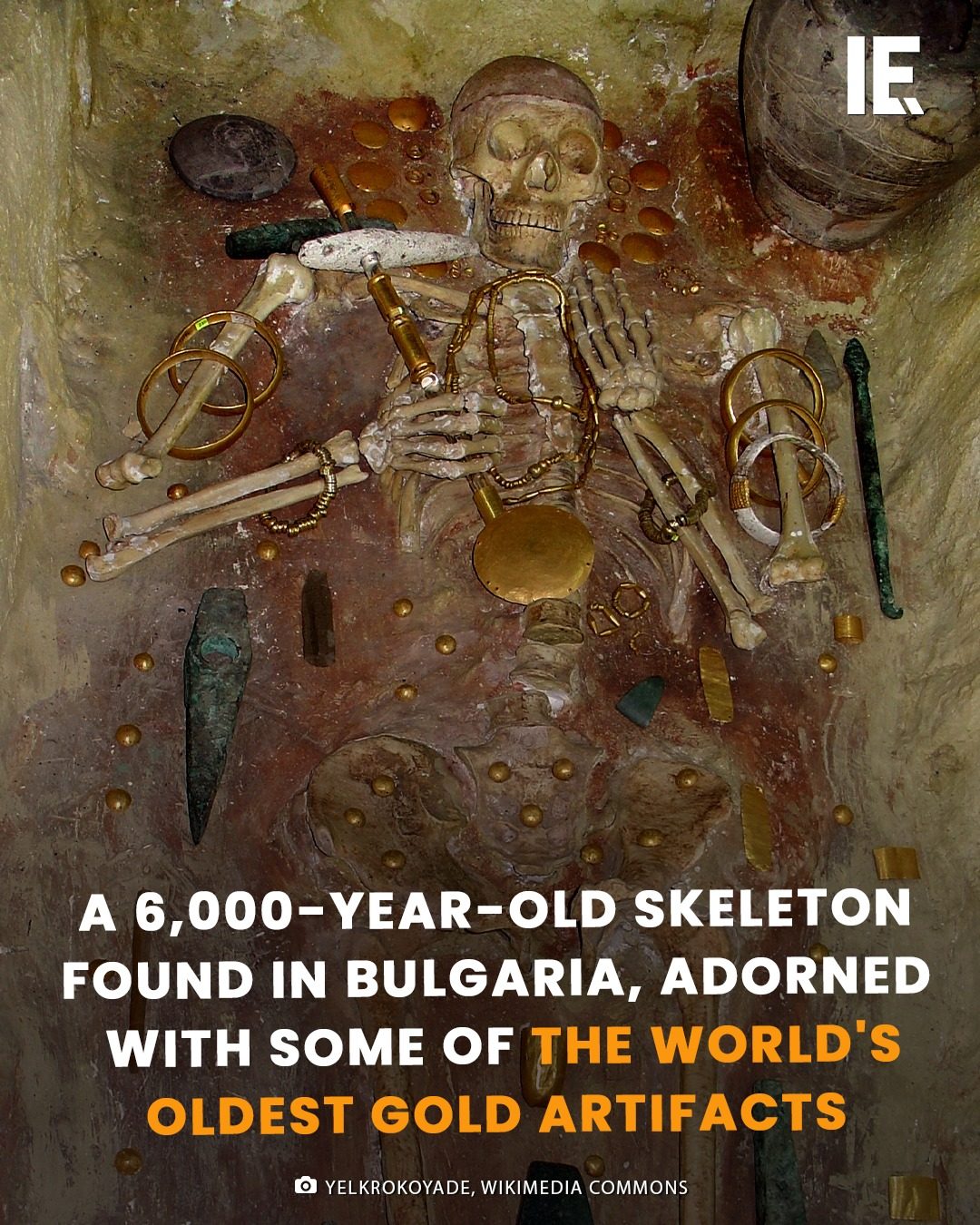
The 6,000-Year-Old Skeleton of Varna Necropolis
In Bulgaria's Varna Necropolis, archaeologists uncovered a 6,000-year-old skeleton adorned with some of the world's oldest gold artifacts. This remarkable find sheds light on the early metallurgy and complex social structures of prehistoric societies.
Context / Why This Matters
The discovery of the 6,000-year-old skeleton in Varna Necropolis is significant for several reasons. Firstly, it provides invaluable insights into the metallurgical techniques of prehistoric societies. The gold artifacts found with the skeleton are some of the oldest known, indicating that humans had developed sophisticated metalworking skills much earlier than previously thought. Secondly, the presence of these artifacts in a burial context suggests that these early societies had complex social hierarchies and rituals, as the adornment of the deceased with precious metals typically signifies status and importance. This discovery challenges and refines our understanding of early human societal structures and technological advancements.
Main Discussion
The Significance of Varna Necropolis
Varna Necropolis, located in modern-day Bulgaria, is renowned for its wealth of archaeological finds dating back to the Chalcolithic and Eneolithic periods. This site has yielded numerous artifacts, but the 6,000-year-old skeleton stands out for its unique association with gold. The necropolis is considered one of the most significant archaeological sites in Europe due to its rich history and the remarkable state of preservation of its artifacts.
The Gold Artifacts
The gold artifacts found with the skeleton are particularly noteworthy. These pieces, some of the oldest known, include intricate ornaments and adornments, suggesting a high level of craftsmanship. The use of gold in this period indicates that early humans had mastered the art of mining, smelting, and shaping this precious metal. This level of metallurgical skill was previously thought to have developed much later in human history.
Social Implications
The presence of such valuable items in a burial context suggests a complex social structure. It is likely that the individual buried with these artifacts held a significant status within their community. This implies the existence of social stratification, where certain individuals were revered or held positions of power and influence. The artifacts themselves may have served as symbols of wealth, power, and possibly even religious significance.
Technological Advancements
The discovery of these gold artifacts provides a more comprehensive understanding of the technological advancements of prehistoric societies. The ability to work with gold requires a deep understanding of metallurgy, including the extraction, purification, and shaping of metals. This knowledge was likely passed down through generations, indicating a level of social organization and specialization that was previously unrecognized.
Comparative Analysis
Comparing this discovery with other archaeological finds from the same period reveals that Varna Necropolis is unique in its richness and the sophistication of its artifacts. Similar sites in Europe and the Middle East have yielded valuable artifacts, but none as old or as well-preserved as those found in Varna. This rarity emphasizes the significance of the site and the importance of continued research and excavation.
Practical Tips
Understanding the significance of the 6,000-year-old skeleton and its artifacts can be beneficial for both archaeologists and the general public. Here are some practical tips for appreciating and studying such discoveries:
Visiting Archaeological Sites
Visiting archaeological sites like Varna Necropolis can provide a deeper understanding of human history. Many sites offer guided tours and educational programs that can help visitors appreciate the significance of the finds and the techniques used to uncover them. Engaging with these resources can provide a more immersive and enlightening experience.
Research and Study
For those interested in furthering their knowledge, delving into academic literature and attending lectures or seminars on archaeology can be invaluable. Many universities and research institutions offer courses and public lectures that cover topics such as early metallurgy and prehistoric societies. This can provide a solid foundation for understanding the latest discoveries and their implications.
Supporting Archaeological Research
Supporting organizations and initiatives dedicated to archaeological research is another practical way to engage with these discoveries. Many non-profit organizations and museums rely on public support to continue their work. Donating to or volunteering with these organizations can help ensure that future discoveries are made and preserved for generations to come.
Important Takeaways
The discovery of the 6,000-year-old skeleton in Varna Necropolis is a testament to the technological and social advancements of prehistoric societies. The gold artifacts and their association with a burial context provide unique insights into early metallurgy and social structures. This discovery challenges and refines our understanding of human history and underscores the importance of continued archaeological research and preservation.
Conclusion
The 6,000-year-old skeleton found in Varna Necropolis, adorned with some of the world's oldest gold artifacts, is a remarkable find that sheds new light on the technological and social advancements of prehistoric societies. This discovery not only highlights the early mastery of metallurgy but also reveals the complexity of social structures in these early communities. By appreciating and studying such findings, we can gain a deeper understanding of our collective past and the journey that has led us to the present.
Watch the Reel
Questions readers ask
What makes the Varna Necropolis skeleton discovery significant?
The Varna Necropolis skeleton is notable for its age and the gold artifacts accompanying it, which are among the oldest known. This discovery pushes back the timeline of advanced metallurgy and indicates complex social hierarchies in prehistoric times.
What types of artifacts were found with the 6,000-year-old skeleton?
The skeleton was adorned with ancient gold artifacts, including jewelry and other items that demonstrate the sophistication of early human metalworking techniques.
Why are the gold artifacts from Varna Necropolis considered some of the oldest in the world?
The gold artifacts found with the 6,000-year-old skeleton date back approximately 6,000 years, making them among the earliest known examples of gold metallurgy. This places them in a unique historical context, predating many other known gold artifacts.
What insights do the Varna Necropolis discoveries provide into prehistoric societies?
The findings from Varna Necropolis offer a glimpse into the social structures and metallurgical capabilities of prehistoric societies. The presence of gold artifacts in a burial context suggests that certain individuals held significant status and importance in their communities.
How does the Varna Necropolis find contribute to our understanding of ancient Bulgarian artifacts?
The discovery of the 6,000-year-old skeleton and its accompanying gold artifacts provides a rare and valuable look into the metallurgical and cultural heritage of ancient Bulgaria, highlighting the region's role in early human technological development.
What techniques were used to create the ancient gold artifacts in Varna Necropolis?
The gold artifacts from Varna Necropolis were crafted using sophisticated metalworking techniques, including hammering, casting, and possibly annealing. These methods demonstrate the advanced skills of early metallurgists.
Are there other notable discoveries from the Varna Necropolis?
Yes, the Varna Necropolis is renowned for its rich archaeological finds, including numerous gold artifacts and other precious items. These discoveries collectively provide a comprehensive view of the region's prehistoric history and cultural practices.
Related deep dives
Similar reads based on topic and creator.


Recent articles
Fresh deep dives from the latest Reels we unpacked.




Comments
Be the first to comment.