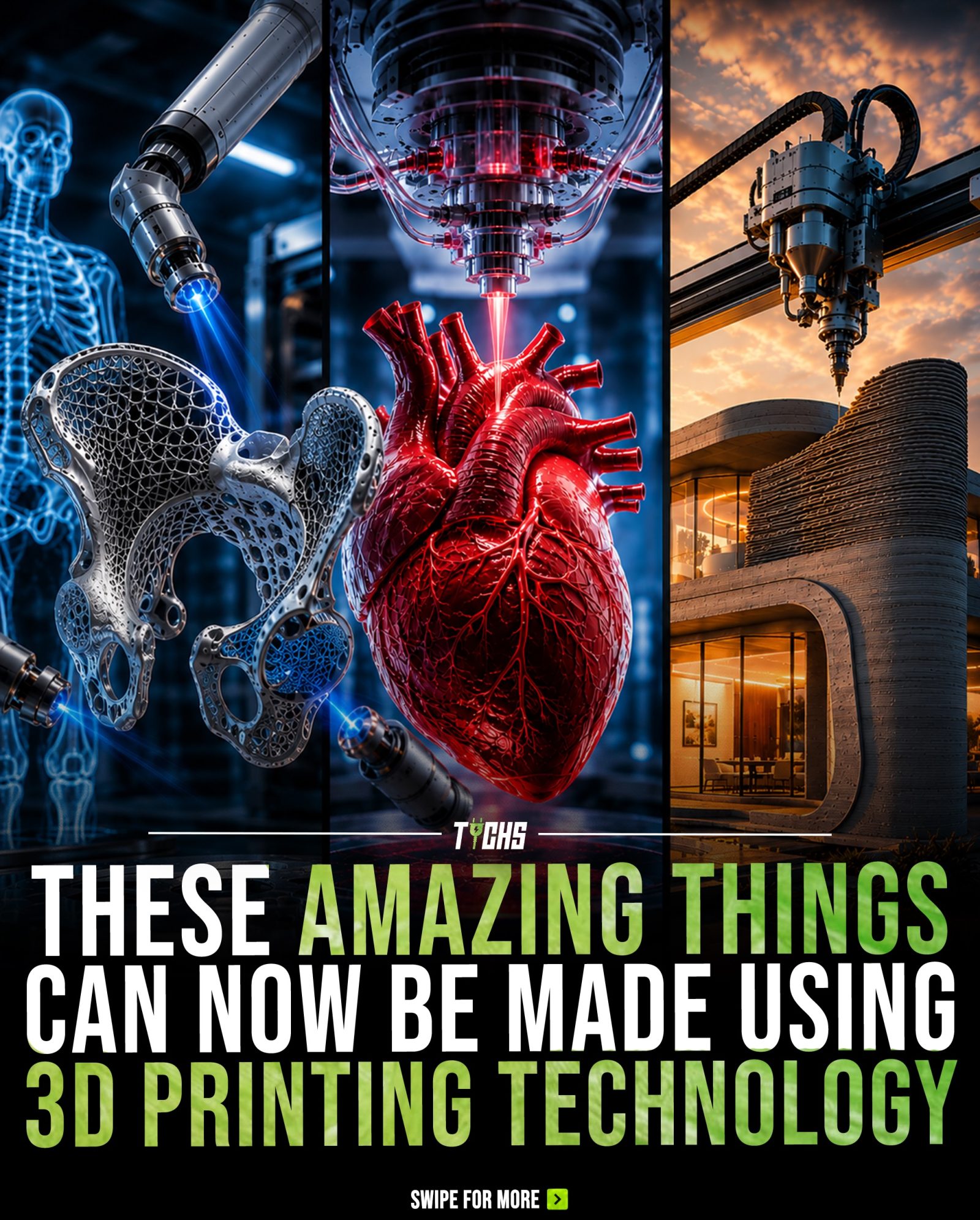
3D Printing Applications
Three-dimensional (3D) printing technology has evolved far beyond its origins in producing plastic prototypes. Today, it is capable of creating everything from living tissues and custom medical implants to homes, rocket engines, and even real meat. This versatile technology is transforming multiple industries, including healthcare, construction, food production, and space exploration.
Why This Matters
The advancements in 3D printing are not just about creating complex structures; they are about revolutionizing how we approach manufacturing, medicine, and even daily life. The ability to design and produce custom medical implants, bioprint human tissues, and construct houses layer by layer has significant implications for efficiency, sustainability, and personalized care.
Main Discussion
Healthcare and Medical Applications
One of the most groundbreaking applications of 3D printing is in the medical field. TYCHS and other innovators are utilizing this technology to bioprint human heart tissue, living skin, and blood vessels. These advancements hold immense potential for future medical applications, such as organ transplantation and tissue regeneration.
Doctors are already producing patient-specific bone implants and custom bionic limbs tailored to individual needs. This personalized approach not only improves the fit and functionality of prosthetics but also enhances the quality of life for patients. For example, a dog with bionic limbs showcases how 3D printing can create custom solutions for various species, not just humans.
Construction and Infrastructure
3D printing is also making waves in the construction industry. Entire houses can now be printed layer by layer, offering a more efficient and less wasteful method of building. This technology allows for faster construction times and reduced material costs, making it an attractive option for both residential and commercial projects.
Food Production
In the realm of food production, 3D printing is being used to create cultivated steaks and other meat products. This innovation addresses several challenges, including sustainability and ethical considerations related to traditional meat production. By printing meat, we can reduce the environmental impact and ensure a more consistent supply of protein.
Aerospace and Space Exploration
The aerospace industry is another beneficiary of 3D printing technology. Companies like TYCHS are using 3D printers to manufacture lightweight rocket engines with fewer parts. This approach significantly reduces the weight and complexity of rocket components, making space exploration more efficient and cost-effective.
Future Prospects
As materials and bioprinting techniques continue to improve, the potential applications of 3D printing are virtually limitless. From creating complex objects like human organs and buildings to revolutionizing industries like healthcare, construction, and space exploration, 3D printing is quickly becoming a practical manufacturing technology that is reshaping the world.
Practical Tips
For Healthcare Professionals
- Explore Bioprinting: Consider integrating bioprinting into medical practices for creating custom implants and prosthetics. This technology can offer personalized solutions that improve patient outcomes.
- Stay Updated: Keep abreast of the latest developments in 3D printing. Attend conferences, webinars, and workshops to learn from experts in the field.
For Construction Professionals
- Adopt 3D Printing: Investigate the use of 3D printing for construction projects. This technology can reduce build times and material waste, making it a cost-effective solution.
- Partner with Innovators: Collaborate with companies specializing in 3D printing to bring innovative construction methods to your projects.
For Food Production Professionals
- Experiment with 3D Printing: Explore how 3D printing can be used to produce meat and other food products. This can help address sustainability and ethical concerns in the food industry.
- Invest in Research: Conduct research and development to improve 3D printing techniques for food production. This can lead to more efficient and sustainable methods.
For Aerospace Engineers
- Leverage 3D Printing: Utilize 3D printing to create lighter and more efficient rocket components. This can reduce the weight and complexity of spacecraft, making space missions more feasible.
- Stay Informed: Keep up with the latest advancements in 3D printing technology. This can help you identify new opportunities and improve existing designs.
Important Takeaways
- Customization: 3D printing allows for the creation of customized medical implants and prosthetics, improving patient outcomes.
- Efficiency: The technology enables faster and more cost-effective construction methods, reducing material waste.
- Sustainability: 3D printing can help address sustainability and ethical concerns in food production and space exploration.
- Versatility: The applications of 3D printing are vast, ranging from medical implants to rocket engines and cultivated meat.
Conclusion
3D printing technology is rapidly evolving, offering unprecedented possibilities across various industries. From bioprinting human tissues to constructing entire homes and printing rocket engines, the potential applications are vast and transformative. By embracing this technology, we can pave the way for a future where customized, efficient, and sustainable solutions are the norm.
Watch the Reel
Questions readers ask
How is 3D printing transforming healthcare?
3D printing is revolutionizing healthcare by enabling the creation of custom medical implants tailored to individual patients, reducing the need for multiple surgeries and improving patient recovery times. Additionally, bioprinting technologies are being developed to create living tissues and organs, which could potentially address the shortage of donor organs and revolutionize transplantation procedures.
What are 3D printed houses and how do they benefit the construction industry?
3D printed houses are built layer by layer using concrete or other materials, offering a faster and more cost-effective construction process. This technology reduces waste, lowers labor costs, and allows for innovative designs that traditional construction methods cannot achieve.
Can 3D printing produce food, and if so, how?
Yes, 3D printing is making inroads into food production by creating customized food items, such as meats, pastries, and chocolates. This technology allows for precise control over ingredients and nutritional content, catering to specific dietary needs, and reducing waste in the food production process.
What role does 3D printing play in space exploration?
3D printing is crucial in space exploration for manufacturing replacement parts and tools on demand, reducing the need for extensive storage on spacecraft. It also enables the creation of complex structures, like rocket engines, with high precision and efficiency, making space missions more feasible and cost-effective.
How does 3D printing contribute to the creation of bionic limbs?
3D printing allows for the production of customized bionic limbs that fit the unique anatomy of each individual. This technology enables the creation of lightweight, durable, and functional prosthetics, improving the quality of life for amputees and individuals with limb differences.
What are the environmental benefits of 3D printing?
3D printing can significantly reduce waste by producing only the required amount of material for a given object, unlike traditional manufacturing methods that often result in excess material. Additionally, 3D printing can lower carbon emissions by enabling local production, reducing the need for long-distance transportation of goods.
Related deep dives
Similar reads based on topic and creator.

Recent articles
Fresh deep dives from the latest Reels we unpacked.




Comments
Be the first to comment.