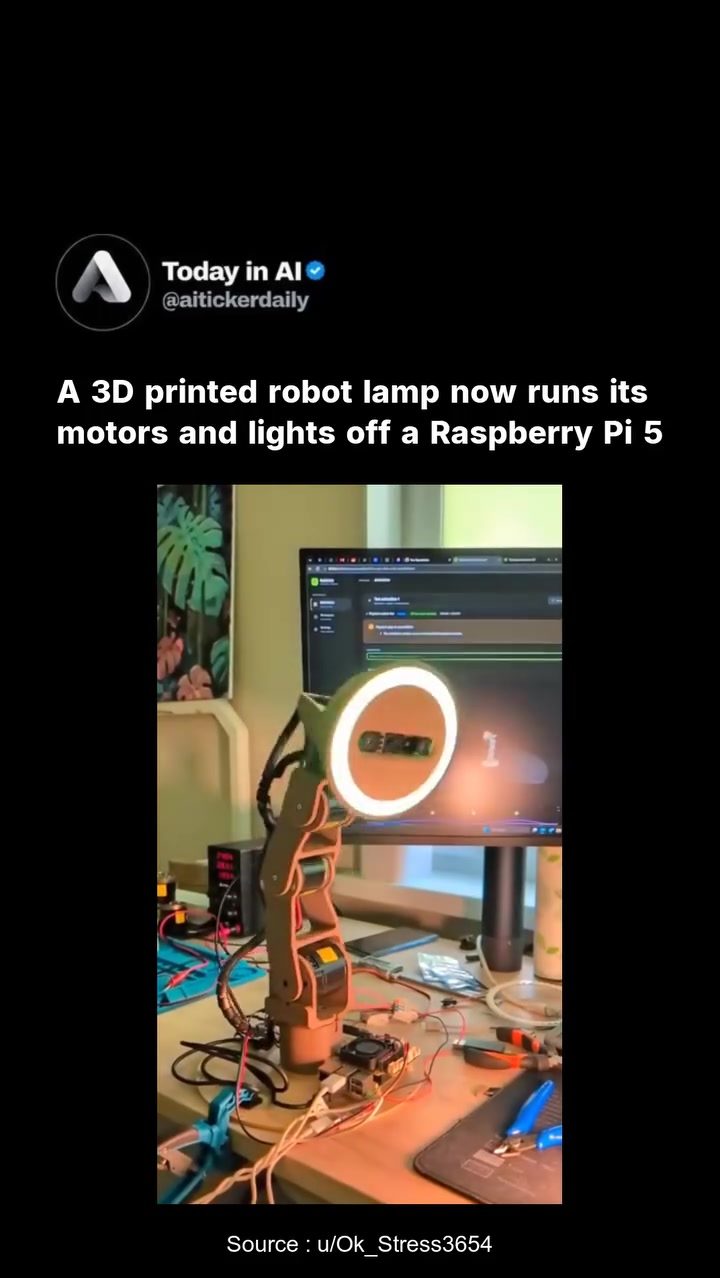
3D Printed Robot Lamps: A Fusion of 3D Printing and Raspberry Pi Technology
3D printed robot lamps are a fascinating blend of modern technology and creativity, exemplifying the potential of 3D printing and microcomputers like the Raspberry Pi. These innovative devices are more than just decorative; they integrate advanced features like motor control and customizable lighting. By moving the control system to a Raspberry Pi 5, hobbyists can enhance functionality and eliminate the need for constant PC connectivity.
The Integration of 3D Printing and Raspberry Pi
The combination of 3D printing and Raspberry Pi technology allows for the creation of highly functional and customizable gadgets. The Raspberry Pi 5, a powerful microcomputer, serves as the control center for the 3D printed robot lamp. This setup enables precise control over the lamp's motors, allowing it to move and adjust its position smoothly. Additionally, the inclusion of addressable LED rings behind a 3D-printed diffuser in the lamp's head adds a layer of visual appeal, with seamless integration of lighting and brightness transitions.
Why This Matters
The integration of 3D printing and Raspberry Pi technology opens up new possibilities for hobbyists and professionals alike. This fusion allows for the creation of unique, functional, and aesthetically pleasing gadgets. The ability to control motors and lighting through a microcomputer like the Raspberry Pi 5 provides unprecedented flexibility and customization options, making it easier to create personalized and interactive devices. Whether you're a hobbyist looking to build a unique project or a professional seeking innovative solutions, this technology offers endless opportunities.
Key Components and Functionality
3D Printing
3D printing is the foundation of the robot lamp, enabling the creation of intricate and functional designs. The lamp's structural components, including the base, arm, and head, are printed using 3D technology. This allows for precise engineering of the mechanical parts and ensures that the lamp is both durable and aesthetically pleasing. The 3D-printed diffuser in the lamp's head is designed to disperse light evenly, enhancing the overall visual effect.
Raspberry Pi 5
The Raspberry Pi 5 is the brain of the robot lamp, managing all control functions. It runs the 24V BLDC (Brushless DC) servo motors over CAN (Controller Area Network), ensuring smooth and efficient movement. The CAN protocol allows for reliable and high-speed communication between the motors and the Raspberry Pi, resulting in precise control. By eliminating the need for a PC to be connected, the Raspberry Pi 5 provides a standalone solution, making the lamp more portable and user-friendly.
Practical Tips for Building Your Own 3D Printed Robot Lamp
-
Choose the Right Materials: Select high-quality filaments for 3D printing to ensure durability and precision. Common materials include PLA and ABS, but you can experiment with others based on your needs and budget.
-
Design the Components: Use 3D modeling software like Fusion 360 or TinkerCAD to design the structural components of your lamp. Ensure that the design includes precise dimensions and connections for the motors and lighting elements.
-
Select the Right Motors: Choose 24V BLDC servo motors for smooth and efficient movement. These motors are reliable and can be controlled precisely using the Raspberry Pi 5.
-
Implement the Raspberry Pi 5: Set up the Raspberry Pi 5 to control the motors and lighting. Write and upload the necessary code to manage the motor functions and synchronize them with the lighting effects.
-
Add Lighting Elements: Incorporate addressable LED rings and a 3D-printed diffuser to enhance the visual appeal of your lamp. The diffuser ensures that the light is evenly distributed, creating a soft and inviting glow.
-
Test and Iterate: Once the lamp is assembled, test all the functions to ensure everything works as intended. Make any necessary adjustments and iterate on your design based on your findings.
Important Takeaways
-
Versatility and Customization: The integration of 3D printing and Raspberry Pi technology allows for a high degree of customization and versatility, making it possible to create unique and functional gadgets.
-
Efficiency and Performance: The use of 24V BLDC servo motors and the Raspberry Pi 5 ensures smooth and precise control over the lamp's movements and lighting, enhancing its overall performance.
-
Portability and Independence: By moving the control system to the Raspberry Pi 5, you eliminate the need for a constant PC connection, making the lamp more portable and user-friendly.
Conclusion
3D printed robot lamps represent the pinnacle of modern technology, combining the precision of 3D printing with the power of the Raspberry Pi 5. These lamps are not just decorative; they are functional and interactive, offering a glimpse into the future of smart home gadgets. Whether you're a hobbyist looking to build a unique project or a professional seeking innovative solutions, the integration of 3D printing and Raspberry Pi technology offers endless possibilities. Embrace the fusion of these technologies and create your own 3D printed robot lamp, harnessing the power of modern gadgets to elevate your space.
Watch the Reel
Questions readers ask
What are 3D printed robot lamps and how do they work?
3D printed robot lamps are customizable desk lamps that combine 3D printing with Raspberry Pi technology. They work by using a Raspberry Pi as the control center to manage motor movements and lighting adjustments, allowing users to interact with the lamp in unique ways.
Can I control a 3D printed robot lamp without a computer?
Yes, by using a Raspberry Pi 5, you can control a 3D printed robot lamp independently, eliminating the need for constant PC connectivity. The Raspberry Pi 5 serves as a standalone microcomputer to manage the lamp's functionalities.
What are the benefits of using a Raspberry Pi for a 3D printed lamp?
Using a Raspberry Pi for a 3D printed lamp offers several benefits, including motor control, customizable lighting, and the ability to create interactive features. The Raspberry Pi can also reduce the need for external computing resources, making the lamp more versatile and user-friendly.
What kind of customizations can I make to a 3D printed robot lamp?
You can customize a 3D printed robot lamp in numerous ways, including designing unique shapes and sizes, adjusting the color and intensity of the lighting, and programming different motor movements through the Raspberry Pi.
Where can I find ideas and designs for 3D printed robot lamps?
You can find a wealth of ideas and designs for 3D printed robot lamps on various online platforms, including hobbyist forums, maker communities, and 3D printing repositories. These resources provide inspiration and templates to help you create your own unique robot lamp.
Are 3D printed robot lamps suitable for beginners?
Yes, 3D printed robot lamps can be a great project for beginners. With the Raspberry Pi 5, even those new to robotics and 3D printing can create functional and interactive gadgets. There are plenty of beginner-friendly tutorials and resources available to guide you through the process.
How can a 3D printed robot lamp enhance my smart home lighting?
A 3D printed robot lamp can enhance your smart home lighting by providing customizable and interactive features. Through the Raspberry Pi, you can program the lamp to change colors, adjust brightness, and even integrate with other smart home devices, creating a more dynamic and personalized lighting experience.
Related deep dives
Similar reads based on topic and creator.




Recent articles
Fresh deep dives from the latest Reels we unpacked.




Comments
Be the first to comment.