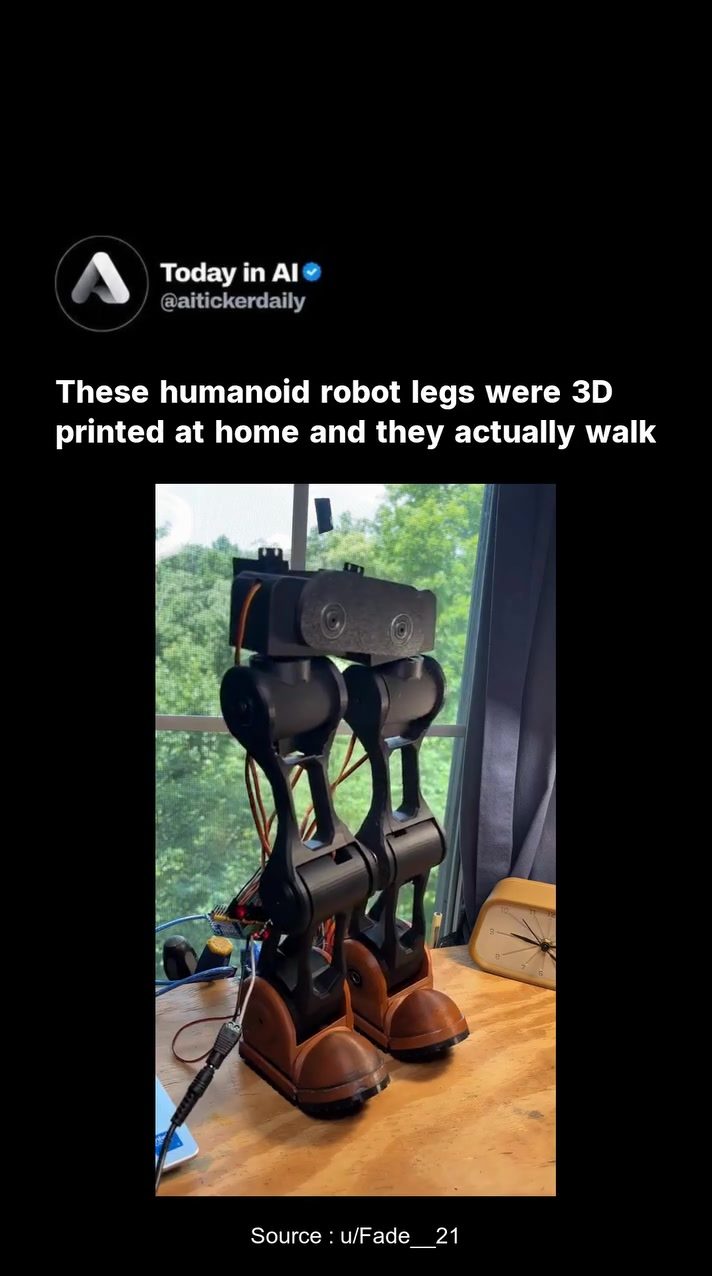
Humanoid Robot Legs: A DIY 3D-Printed Marvel
The world of robotics is continually evolving, with DIY enthusiasts pushing the boundaries of what’s possible. One of the most intriguing developments in this space is the creation of 3D-printed humanoid robot legs. These legs, designed and built by a maker, demonstrate the incredible potential of 3D printing and open-source technologies in bringing complex robotic systems to life.
Why This Matters
The ability to 3D print functional robot legs at home opens up new avenues for hobbyists, educators, and even professionals. This technology democratizes access to advanced robotics, allowing more people to experiment, innovate, and contribute to the field. Understanding the intricacies of these DIY projects can inspire more individuals to engage in robotics, fostering a community of makers and innovators.
Main Discussion
The Making of 3D-Printed Humanoid Robot Legs
The process of creating 3D-printed humanoid robot legs involves several key steps. The maker begins by designing the legs using CAD software, which allows for precise modeling and adjustments. The designs are then 3D printed, layer by layer, using materials that offer the necessary strength and flexibility. The legs are driven by cheap mg996R hobby servos and an Arduino, making the project both cost-effective and accessible.
Components and Hardware
The hardware components play a crucial role in the functionality of these robot legs. The mg996R hobby servos are chosen for their reliability and affordability. These servos provide the necessary torque and precision to control the movement of the legs. The Arduino, a versatile microcontroller, is used to control the servos. The current setup involves hardcoded walking angles, which means the legs follow a predetermined motion pattern.
Future Enhancements
The initial design is a significant milestone, but the plan doesn't stop there. The next steps involve moving beyond hardcoded angles to more adaptive and responsive movements. This can be achieved through several methods, including inverse kinematics and reinforcement learning. Inverse kinematics allows for more natural and fluid movements by calculating the necessary angles based on the desired position. Reinforcement learning, on the other hand, enables the legs to learn and adapt to different terrains and conditions, becoming more autonomous and responsive.
Practical Tips
Getting Started with 3D-Printed Robot Legs
If you're inspired to create your own 3D-printed robot legs, here are some practical tips to get you started:
-
Choose the Right Software: Start with a good CAD software like OnShape, Fusion 360, or Tinkercad. These tools will help you design and refine your robot leg models.
-
Select the Right Materials: The material you choose for 3D printing is crucial. PLA and ABS are commonly used, but you might need to experiment to find the best fit for your project.
-
Understand Your Servos: Familiarize yourself with the specifications and capabilities of your servos. The mg996R servos are a good starting point due to their affordability and reliability.
-
Programming Basics: Brush up on your Arduino programming skills. Understanding how to control servos and sensors is essential for making your robot legs functional.
-
Community and Resources: Engage with online communities and forums. Sites like Reddit's r/robotics and other maker communities can provide valuable insights, troubleshooting help, and inspiration.
Important Takeaways
Creating 3D-printed humanoid robot legs is a complex but rewarding project. It's a testament to the potential of DIY robotics and the growing accessibility of advanced technologies. By using off-the-shelf components and open-source software, makers can bring sophisticated robotic systems to life in their own homes. The journey from hardcoded movements to adaptive learning is an exciting one, filled with opportunities for innovation and learning.
Conclusion
The creation of 3D-printed humanoid robot legs represents a significant step forward in DIY robotics. From the initial design and printing to the integration of servos and microcontrollers, every aspect of this project showcases the ingenuity and creativity of makers. As we look to the future, the application of advanced control methods like inverse kinematics and reinforcement learning will further enhance the capabilities of these robotic systems, paving the way for more sophisticated and autonomous robots. Whether you're a seasoned maker or just starting out, the world of 3D-printed robotics offers endless possibilities for exploration and innovation.
Watch the Reel
Questions readers ask
What materials are typically used to 3D print humanoid robot legs at home?
3D printed humanoid robot legs are commonly made using plastics like PLA or ABS, which are affordable and easy to print with. Some advanced models may also incorporate metal parts for added durability, but these are less common in DIY projects.
What is the MG996R servo, and why is it important in 3D printed robot leg designs?
The MG996R servo is a high-torque servo motor often used in DIY 3D printed robot legs due to its power and precision. It allows the legs to lift and control their movements, simulating the natural walking motion of a humanoid.
How do 3D printed robot legs achieve walking movements at home?
3D printed robot legs use a combination of servo motors, like the MG996R, and programmed sequences to control the angles and movements of the legs. This allows the robot to lift, swing, and place its feet in a coordinated manner to achieve walking.
What software and technologies are typically used to design 3D printed robot legs?
DIY enthusiasts often use open-source CAD software like FreeCAD or Fusion 360 to design 3D printed robot legs. These tools allow for precise modeling and customization. Additionally, open-source robotics platforms like Arduino are commonly used to control the movements of the legs.
Can 3D printed robot legs be customized for different purposes or environments?
Yes, 3D printed robot legs can be customized to suit various purposes and environments. Designers can modify the leg dimensions, servo placements, and programming to adapt the robot for different terrains, walking speeds, or even specialized tasks like dancing or navigating obstacles.
What are the benefits of building 3D printed humanoid robot legs at home?
Building 3D printed humanoid robot legs at home allows enthusiasts to gain hands-on experience in robotics, understand the mechanics of humanoid movements, and customize designs to their specific needs. It also fosters innovation and creativity in the hobby robotics community.
What types of challenges might DIY enthusiasts encounter when building 3D printed walking legs?
DIY enthusiasts may face challenges such as precise calibration of servo motors, ensuring smooth and coordinated leg movements, and troubleshooting 3D printing issues. Additionally, programming the walking sequences to mimic natural humanoid motion can be complex and time-consuming.
Related deep dives
Similar reads based on topic and creator.




Recent articles
Fresh deep dives from the latest Reels we unpacked.




Comments
Be the first to comment.