The 2026 FIFA World Cup: A Comprehensive Look at the Expanded Tournament
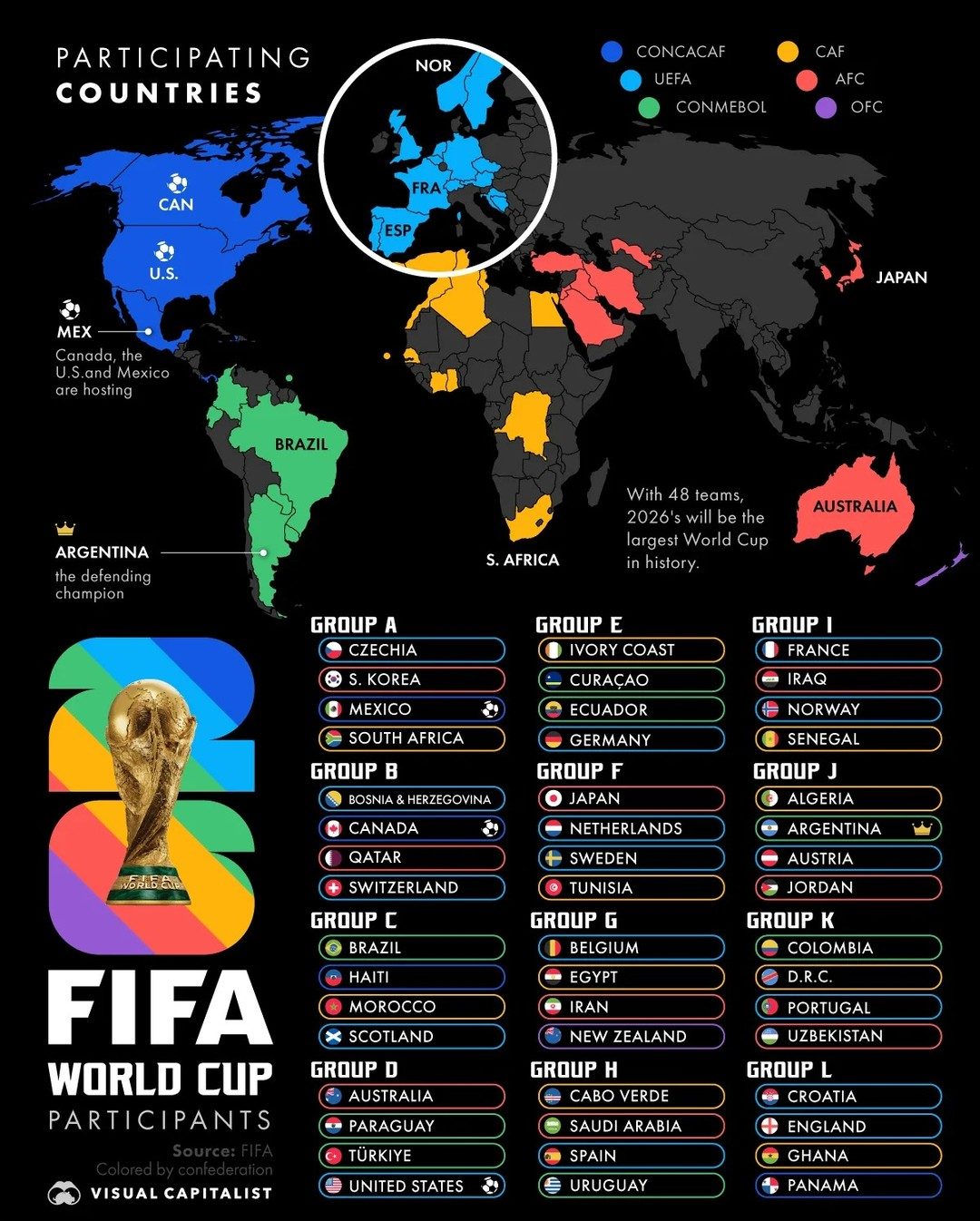
The 2026 FIFA World Cup is poised to be one of the most anticipated and expansive tournaments in the history of international football. With 48 nations set to compete, the tournament will feature 16 more teams than the previous iteration, marking a significant increase in participation and excitement. Cape Verde, Curaçao, Jordan, and Uzbekistan will make their inaugural appearances, adding fresh talent and diversity to the competition. Meanwhile, four-time champion Italy will notably miss out for the third consecutive tournament, leaving a void that new contenders will be eager to fill.
The 2026 World Cup is being jointly hosted by Canada, the United States, and Mexico, making it the first time in history that three nations will share the hosting responsibilities. This tri-nation hosting arrangement promises to bring a unique blend of cultures and football traditions to the tournament, enhancing the overall experience for both players and spectators.
Context: Why This Expansion Matters
The decision to expand the World Cup from 32 to 48 teams is more than just a numerical increase; it represents a strategic move by FIFA to enhance the global reach and inclusivity of the tournament. By doubling the number of participating nations, FIFA aims to foster greater regional involvement and attract new fan bases, particularly in areas where football is rapidly gaining popularity.
Expanding the tournament also ensures that more nations have a chance to qualify, fostering a sense of inclusivity and opportunity. The increased participation can also drive economic growth and infrastructure development in the host countries, as significant investments are made to prepare for the event. This expansion not only benefits the host nations but also propels the sport forward globally, encouraging more youth to engage in football and potentially nurturing future stars.
Main Discussion
The New Format and Group Structure
The 2026 World Cup will see a revamped format to accommodate the additional 16 teams. The tournament will now feature 12 groups, with each group containing four teams. The top two teams from each group will advance to the knockout stage, which will consist of 32 teams.
This new format introduces a more competitive environment, as each match becomes crucial for teams aiming to advance. The increased number of matches and teams also means that fans can expect more thrilling moments and unexpected upsets, adding to the excitement and unpredictability of the tournament.
The 12 groups are partitioned as follows:
- Groups: A through J
- Participants (in order of appearance):
- Group A: United States, Canada, Mexico
- Group B: Brazil, France, Australia
- Group C: Argentina, Scotland, Norway
- Group D: England, Spain, Germany
- Group E: Netherlands, Colombia, Switzerland
- Group F: Tunisia, Belgium, Portugal
- Group G: Croatia, Ghana
- Group H: CONCACAF, UEFA
- Group I: CONMEBOL, AFC
- Group J: AFC, OFC
Hosting Nations and Logistics
The tri-nation hosting arrangement is a groundbreaking step for FIFA, as it allows for a broader distribution of matches and infrastructure development. Canada, the United States, and Mexico will each host a significant portion of the matches, ensuring that fans from all three countries have easy access to the tournament. The logistical challenges of hosting such a large-scale event are immense, but the collaborative effort among the three nations promises to deliver a seamless and memorable experience.
The shared hosting responsibilities also mean that the tournament will span multiple time zones, offering flexibility for viewers worldwide. This setup allows for more diverse viewing times, ensuring that fans in different regions can catch the action without being restricted by broadcast schedules.
The Impact on Participating Nations
For countries like Cape Verde, Curaçao, Jordan, and Uzbekistan, qualifying for the 2026 World Cup is a monumental achievement. These nations, which have never participated in the tournament before, will bring a fresh perspective and unique playing styles to the competition. Their inclusion not only enriches the diversity of the tournament but also serves as an inspiration for other aspiring nations.
On the flip side, the absence of Italy marks a significant shift in the tournament's dynamics. As a four-time champion, Italy's absence leaves a void that other European powerhouses like France, Germany, and Spain will be eager to fill. The lack of Italy in the tournament adds an element of unpredictability, as new contenders emerge and established teams vie for dominance.
Practical Tips for Fans
If you’re a football enthusiast planning to attend or follow the 2026 FIFA World Cup, here are some practical tips to enhance your experience:
- Plan Ahead: With matches spread across three countries, plan your travel and accommodation well in advance. Consider the logistical challenges of moving between venues and ensure you have reliable transportation options.
- Stay Connected: Utilize official apps and digital platforms to stay updated on match schedules, results, and news. These tools will help you navigate the tournament seamlessly.
- Explore the Culture: Take advantage of the unique cultural experiences each host nation offers. From local cuisine to historical landmarks, immersing yourself in the local culture can enrich your overall experience.
- Engage with Fellow Fans: The 2026 World Cup is a global event, so expect to meet fans from all over the world. Engage with fellow enthusiasts, share your passion for the game, and create lasting memories together.
- Consider Time Zones: With matches spanning multiple time zones, plan your viewing schedule accordingly. Use online tools to convert times and ensure you don’t miss any crucial matches.
Important Takeaways
The 2026 FIFA World Cup promises to be an unforgettable event, marked by increased participation, diverse talent, and a new competitive format. The expansion to 48 teams and the tri-nation hosting arrangement will bring the tournament to new heights, offering fans a rich and exciting experience.
Conclusion
The 2026 FIFA World Cup will be a landmark event in the history of international football. With 48 nations competing, the tournament will showcase a diversity of talent and playing styles, making it a truly global spectacle. The tri-nation hosting arrangement will bring unique cultural experiences and logistical challenges, ensuring that fans worldwide have an unforgettable time. As the countdown to the tournament begins, football enthusiasts around the globe are eagerly anticipating the thrilling matches, historic moments, and unforgettable memories that the 2026 World Cup will undoubtedly deliver.
Watch the Reel
Questions readers ask
Which countries are making their debut at the 2026 FIFA World Cup?
The 2026 FIFA World Cup will introduce several new nations to the world stage, including Cape Verde, Curaçao, Jordan, and Uzbekistan, all of whom will be competing in the tournament for the very first time.
Why is the 2026 FIFA World Cup significant in terms of the number of participating teams?
The 2026 FIFA World Cup is significant because it will feature 48 teams, which is 16 more than the previous tournaments. This expansion allows for more countries to participate, adding to the overall excitement and diversity of the competition.
Which countries are hosting the 2026 FIFA World Cup?
The 2026 FIFA World Cup will be jointly hosted by Canada, the United States, and Mexico. This is the first time in FIFA World Cup history that three nations will co-host the tournament, promising a unique blend of cultures and footballing experiences.
Why isn't Italy participating in the 2026 FIFA World Cup?
Italy, a four-time World Cup champion, will not be participating in the 2026 tournament. This is the third consecutive World Cup that Italy will miss, leaving an opportunity for new teams to make their mark on the global football scene.
How will the expansion to 48 teams affect the tournament format?
The expansion to 48 teams will introduce a new format to the tournament, including an initial group stage with 12 groups of four teams each. This change will increase the number of matches and provide more opportunities for upsets and exciting football moments. The top two teams from each group, along with the best eight third-placed teams, will advance to the knockout stage.
What is the significance of the host countries for the 2026 FIFA World Cup?
The joint hosting by Canada, the United States, and Mexico brings a fresh dynamic to the tournament. This tri-nation hosting will offer fans and players a diverse range of cultures, stadiums, and footballing styles, enhancing the overall experience of the competition.
What can fans expect from the 2026 FIFA World Cup?
Fans can expect a vibrant and exciting tournament with a mix of traditional football powerhouses and new nations making their mark. The expanded format, diverse host cities, and the exciting blend of cultures will provide a unique and memorable experience for everyone involved.
Related deep dives
Similar reads based on topic and creator.




Recent articles
Fresh deep dives from the latest Reels we unpacked.




Comments
Be the first to comment.