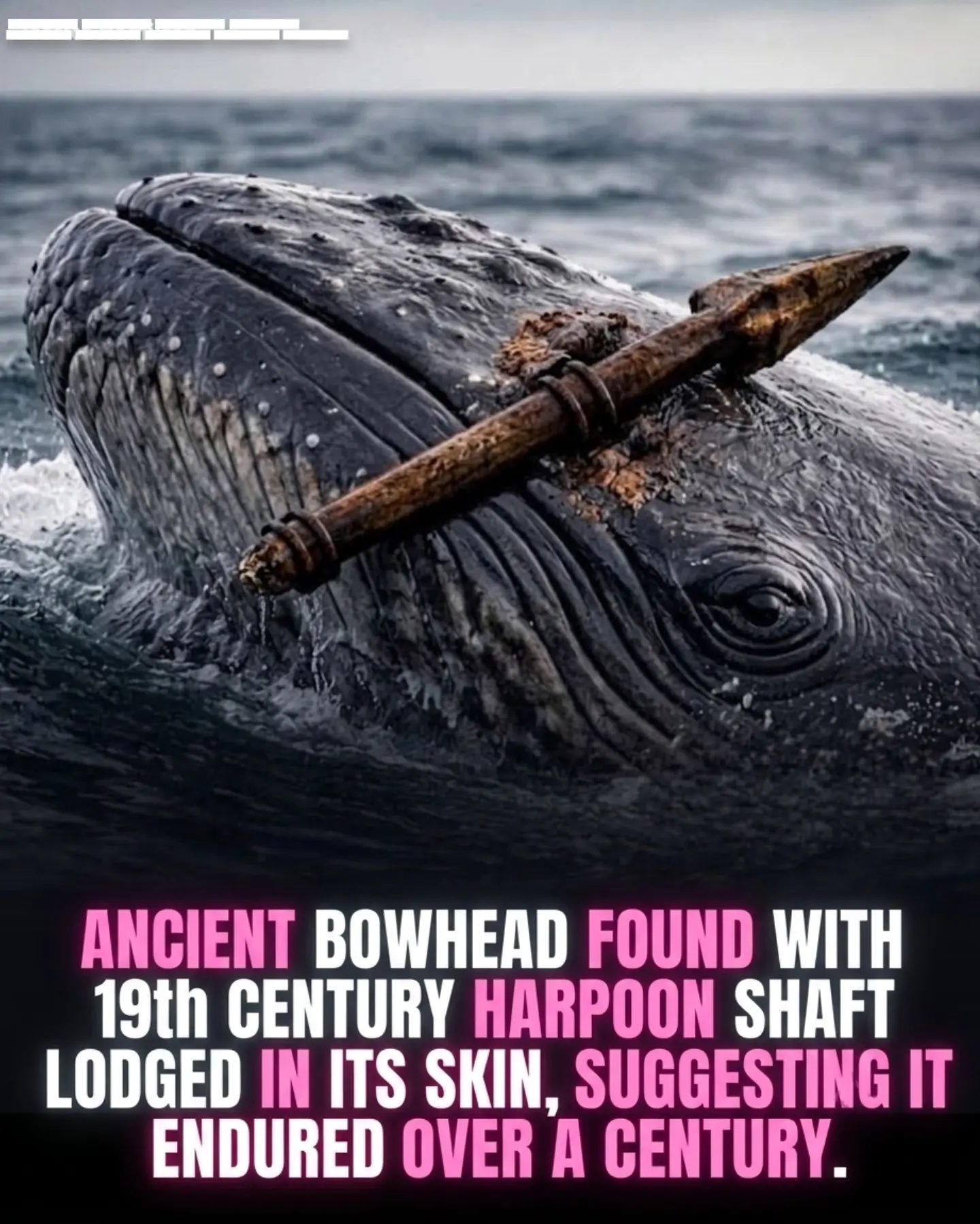
Ancient Bowhead Whale: A Living Time Capsule
The discovery of an ancient bowhead whale with a 19th-century harpoon shaft lodged in its skin offers a unique glimpse into history and the resilience of marine life. This extraordinary find, made by whalers in Alaska during a 2007 hunt, has provided valuable insights into the longevity and endurance of these majestic creatures.
Why this matters
This remarkable discovery is more than just an anecdote; it provides concrete evidence that bowhead whales can live exceedingly long lives, potentially over 100 years. This challenges the way we understand the lifespan of marine mammals and underscores the importance of conservation efforts for these ancient creatures.
The Discovery and Its Significance
The story begins in 2007 when whalers in Alaska captured a 50-ton bowhead whale during a subsistence hunt. Upon examining the whale, researchers found a small metal fragment embedded in its shoulder bone. This fragment was identified as the tip of an exploding "bomb lance," a weapon manufactured in New Bedford, Massachusetts, around 1879. The bomb lance was a harpoon designed to explode upon impact, ensuring a fatal injury to the targeted whale.
The Timeline and Age Estimation
Biologists and historians collaborated to determine the age of the whale. By analyzing the weapon and the historical context, they concluded that the whale must have been struck by the bomb lance sometime between 1885 and 1895. Given that the whale survived this injury and lived until 2007, it was estimated to be at least 130 years old. This age estimation places the whale's existence during a time when Queen Victoria was on the throne and the Wild West was coming to an end.
The Implications of Longevity
The discovery of this ancient bowhead whale has significant implications for our understanding of marine life. It suggests that bowhead whales can live for nearly 200 years, making them one of the longest-living mammals on Earth. This longevity is a testament to the resilience and adaptability of these creatures, which have survived for centuries despite facing numerous challenges, including whaling and climate change.
The Resilience of Bowhead Whales
The fact that this whale endured a harpoon injury and lived for over a century is a testament to the resilience of bowhead whales. Their ability to survive such a severe injury and continue living for so many years is remarkable. This resilience is likely due to a combination of factors, including their robust immune system, slow metabolism, and adaptable behavior.
Adaptations for Long Life
One of the key adaptations that contribute to the longevity of bowhead whales is their slow metabolism. Unlike many other mammals, bowhead whales have a low metabolic rate, which allows them to conserve energy and live longer. Additionally, their robust immune system helps them fight off infections and heal from injuries more effectively.
Behavioral Adaptations
Bowhead whales also exhibit behavioral adaptations that contribute to their longevity. For instance, they are known to migrate long distances, which helps them access different food sources and avoid predators. They also have a strong social structure, which provides support and protection for the herd.
Practical Tips for Observing and Protecting Bowhead Whales
While observing and protecting these ancient creatures, it’s crucial to follow certain guidelines to ensure their well-being and conservation:
Ethical Observation
When observing bowhead whales, it is essential to maintain a safe and respectful distance. This not only ensures the safety of the whales but also allows them to behave naturally without feeling threatened. Additionally, using non-invasive observation methods, such as binoculars or drones, can help minimize disturbance.
Supporting Conservation Efforts
Supporting conservation efforts is vital for the protection of bowhead whales. Organizations dedicated to whale conservation work tirelessly to protect these creatures and their habitats. Contributing to these organizations through donations or volunteering can make a significant difference in their preservation.
Important Takeaways
Several key takeaways emerge from the discovery of the ancient bowhead whale:
- Longevity: Bowhead whales can live for nearly 200 years, making them one of the longest-living mammals.
- Resilience: These whales exhibit remarkable resilience and adaptability, as evidenced by their ability to survive severe injuries and environmental challenges.
- Conservation: Protecting these ancient creatures and their habitats is crucial for preserving their legacy and ensuring their continued existence.
Conclusion
The discovery of an ancient bowhead whale with a 19th-century harpoon shaft lodged in its skin is a poignant reminder of the interconnections between history and nature. It highlights the incredible longevity and resilience of these majestic creatures and underscores the importance of conservation efforts to protect them. By understanding and appreciating the history and biology of bowhead whales, we can better appreciate the wonders of the natural world and our role in preserving it.
Watch the Reel
Questions readers ask
How old was the ancient bowhead whale discovered in 2007?
The bowhead whale captured in 2007 in Alaska was estimated to be at least 130-170 years old, making it one of the oldest marine mammals ever recorded. The age was determined by the presence of a 19th-century harpoon lodged in its skin.
What does the 2007 discovery tell us about bowhead whale lifespans?
The discovery of the bowhead whale with a 19th-century harpoon shaft provided evidence that bowhead whales can live much longer than previously thought, with lifespans potentially exceeding 200 years.
Where and when was the ancient bowhead whale found?
The ancient bowhead whale was discovered in 2007 in the waters near Alaska. It was captured by whalers during a hunt, revealing the harpoon embedded in its skin.
Why is the 2007 bowhead whale discovery significant for conservation efforts?
The 2007 discovery underscored the need for prioritizing bowhead whale conservation by highlighting their extraordinary longevity and resilience. This knowledge can inform and motivate efforts to protect these ancient creatures.
How was the age of the ancient bowhead whale determined?
The age of the bowhead whale was estimated by analyzing the harpoon lodged in its skin, which was identified as being from the 19th century. This historical artifact provided a timeline for the whale's minimum age.
What impact did the 2007 discovery have on our understanding of marine mammals?
The discovery of a 130-170 year old whale with a 19th-century harpoon shaft challenged conventional wisdom about the lifespan of marine mammals, particularly bowhead whales, highlighting their remarkable longevity.
What does the presence of a 19th-century harpoon in the whale's skin indicate?
The 19th-century harpoon found in the bowhead whale's skin indicates that the whale was alive during the 19th century and survived an encounter with a harpoon. This provides a benchmark for the whale's minimum age of at least 100 years, possibly much older.
Related deep dives
Similar reads based on topic and creator.


Recent articles
Fresh deep dives from the latest Reels we unpacked.




Comments
Be the first to comment.