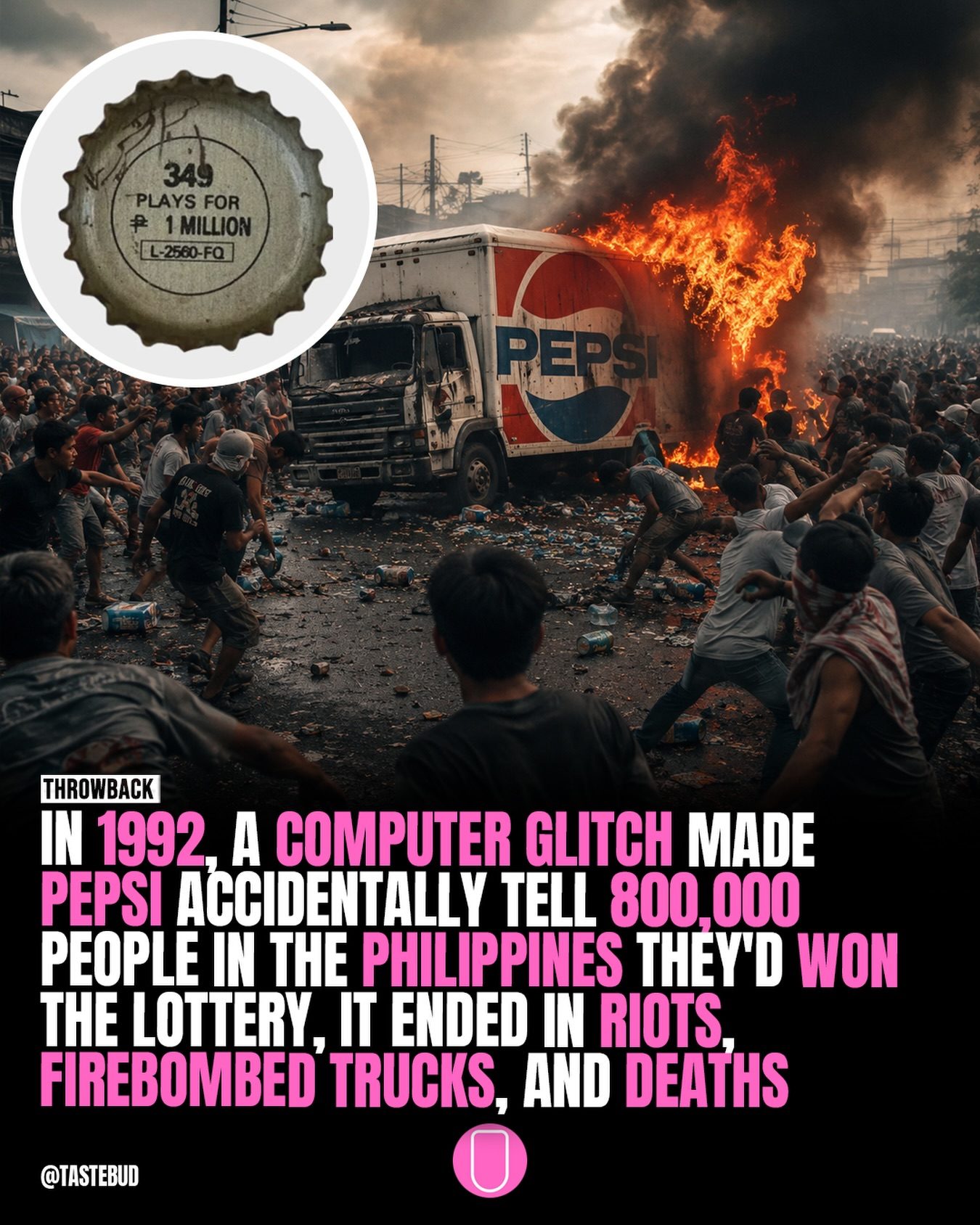
The 1992 Pepsi Philippines Promo Debacle
In 1992, Pepsi launched a promotional campaign in the Philippines that quickly spiraled into one of the most infamous marketing disasters. The campaign involved bottle caps with numbers tied to cash prizes, including a grand prize of $1 million.
Context / Why this matters
The promotional campaign was designed to boost sales and engage consumers. However, a catastrophic error in the manufacturing process led to a massive misprint of the winning cap number, which was supposed to be incredibly rare. Instead, the winning number was printed on hundreds of thousands of caps, leading to widespread chaos.
Main discussion
The Campaign
Pepsi's strategy involved printing unique numbers on bottle caps, with a few select numbers corresponding to cash prizes. The grand prize was $1 million, a substantial amount at the time. The goal was to create excitement and encourage consumers to purchase more Pepsi products in the hopes of winning.
The Glitch
However, a computer glitch in the manufacturing process resulted in the winning number being printed on a vast number of caps—hundreds of thousands, to be exact. This massive error was completely unintentional, but it set off a chain of events that would have lasting repercussions for both Pepsi and the Philippines.
The Fallout
When Pepsi announced the winning number, hundreds of thousands of people, believing they had won the grand prize, stormed the streets in celebration. The excitement quickly turned to outrage when Pepsi refused to pay out all the claimed prizes, asserting that only a few caps were valid winners. This refusal sparked protests, lawsuits, and even violence. The situation escalated to the point where Pepsi trucks were firebombed, and there were reports of deaths as a result of the unrest.
The Aftermath
The chaos that ensued was unprecedented. The situation became so volatile that it forced Pepsi to address the issue on a national scale. While the company initially tried to contain the damage by claiming that only a handful of caps were valid, the public outcry made it clear that they had to reconsider. The company had to handle a deluge of legal battles, public relations disasters, and loss of consumer trust. Ultimately, the campaign was halted, and Pepsi had to work tirelessly to mitigate the damage they had caused.
The Ripple Effects
The 1992 Pepsi promo debacle is still remembered today as one of the biggest marketing mistakes in history. It serves as a cautionary tale for companies about the importance of quality control and the potential consequences of underestimating the impact of a promotional campaign. This incident underscored the need for thorough testing and verification processes, especially when dealing with high-stakes promotions.
Practical tips
For companies planning promotional campaigns, especially those involving large prizes or high levels of consumer engagement, there are several key takeaways:
-
Thorough Testing: Always conduct rigorous testing of any promotional materials or systems before rolling them out. This includes ensuring that all print materials, whether paper or digital, are accurate and free from errors.
-
Quality Control: Implement robust quality control measures to catch any mistakes early. This can help prevent the kind of catastrophic error that Pepsi encountered.
-
Clear Communication: Be transparent and clear in communicating the terms and conditions of the promotion. This can help manage expectations and reduce the likelihood of consumer backlash.
-
Contingency Planning: Have a contingency plan in place to handle any potential issues that may arise. This could include legal advice, public relations strategies, and customer service protocols.
-
Consumer Engagement: Engage with consumers openly and honestly. If a mistake is made, acknowledge it, apologize, and work towards a resolution that is fair and transparent.
Important takeaways
The 1992 Pepsi promo debacle in the Philippines highlights the importance of precision and preparation in promotional campaigns. It is a stark reminder of how quickly things can spiral out of control when errors go unchecked. The incident also underscores the power of consumer trust and the potential for significant backlash when that trust is broken.
Conclusion
The 1992 Pepsi promotion in the Philippines provides a valuable lesson in the importance of meticulous planning and execution in marketing campaigns. While the company intended to create excitement and engagement, the unforeseen consequences of a manufacturing error led to widespread chaos and damage to the brand's reputation. By learning from this incident, companies can better prepare for potential pitfalls and ensure that their promotional efforts have the desired impact, rather than causing unintended harm.
Watch the Reel
Questions readers ask
What caused the 1992 Pepsi Philippines promotional campaign to fail?
The failure was due to a printing error that caused the winning number to be printed on thousands of bottle caps instead of just one. This led to an overwhelming number of consumers claiming the prize.
How did the public respond to the Pepsi Bottle Cap Glitch?
The public responded with widespread chaos, protests, and even violence. Consumers demanded their prizes, leading to confrontations with Pepsi and a state of unrest across the country.
What was the grand prize for the 1992 Pepsi Philippines Lottery?
The grand prize for the promotional campaign was set at $1 million. However, the prize became the subject of controversy due to the extensive glitch in the bottle cap printing.
What were the consequences of the 1992 Pepsi Philippines promotional failure?
The consequences included widespread chaos, protests, and confrontations between consumers and Pepsi representatives. The campaign, intended to boost sales, ended up causing significant unrest.
How did the 1992 Pepsi Philippines marketing disaster unfold?
The disaster unfolded as consumers began finding the winning number on their bottle caps and demanded their prizes. Pepsi struggled to manage the situation, leading to protests and riots.
What precautions should companies take to avoid such promotional chaos?
Companies should implement stringent quality control measures during manufacturing to prevent misprints. Additionally, having a clear plan for handling unexpected high volumes of winners can mitigate potential chaos.
What was the impact of the Pepsi Philippines lottery controversy on the company’s reputation?
The controversy significantly tarnished Pepsi's reputation in the Philippines. The company faced widespread backlash, and the event is often cited as a cautionary tale in marketing circles.
Related deep dives
Similar reads based on topic and creator.



Recent articles
Fresh deep dives from the latest Reels we unpacked.




Comments
Be the first to comment.